
Modern Vending Machine Services in the Tri-Cities, IL
Not a coin-op machine. A cashless, self-checkout micro-market for your building, installed, stocked, serviced and insured at zero cost to the property. We are a Fox Valley business serving all three cities plus Elburn, West Chicago and the surrounding Kane County towns.
$0 to your property · 99.9% uptime · Installed in 2–8 weeks · Fox Valley owned & operated
What is a micro-market, and how is it different from a vending machine?
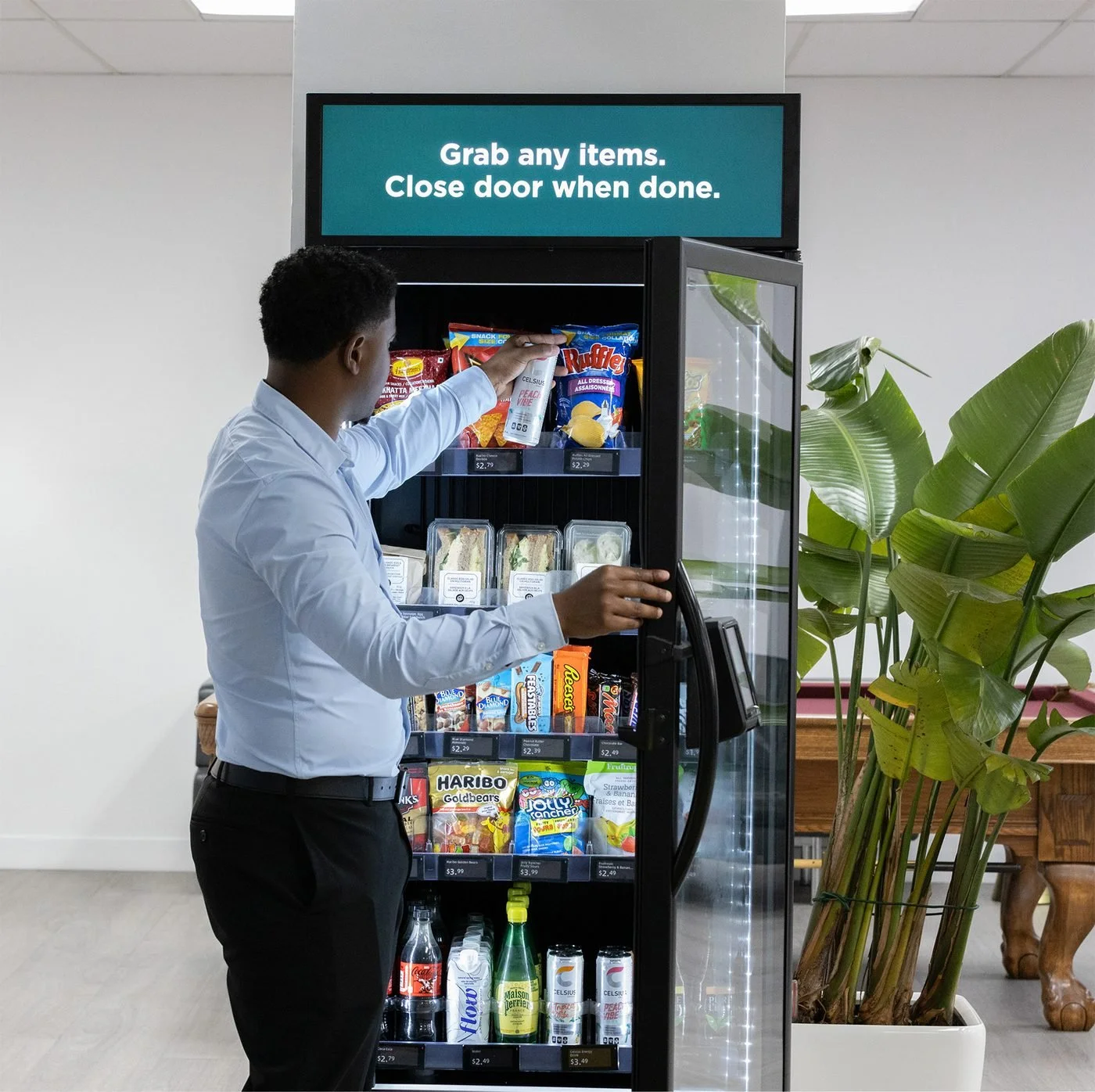
A micro-market is a self-checkout, glass-front smart store that replaces a traditional vending machine. You open the door, take what you want, close it, and the sale is charged to your tapped card automatically. There are no coils and no dollar-bill slots. For a Tri-Cities property, the practical difference is that a micro-market carries roughly three to four times the product variety of a coil machine, accepts only cashless payment, and reports its inventory in real time so it gets restocked before it runs empty.
Everything else stays the same as the vending arrangement you already understand: we own the equipment, we stock it, we service it, we carry the insurance, and the property pays nothing. Here is the full breakdown of how it works.
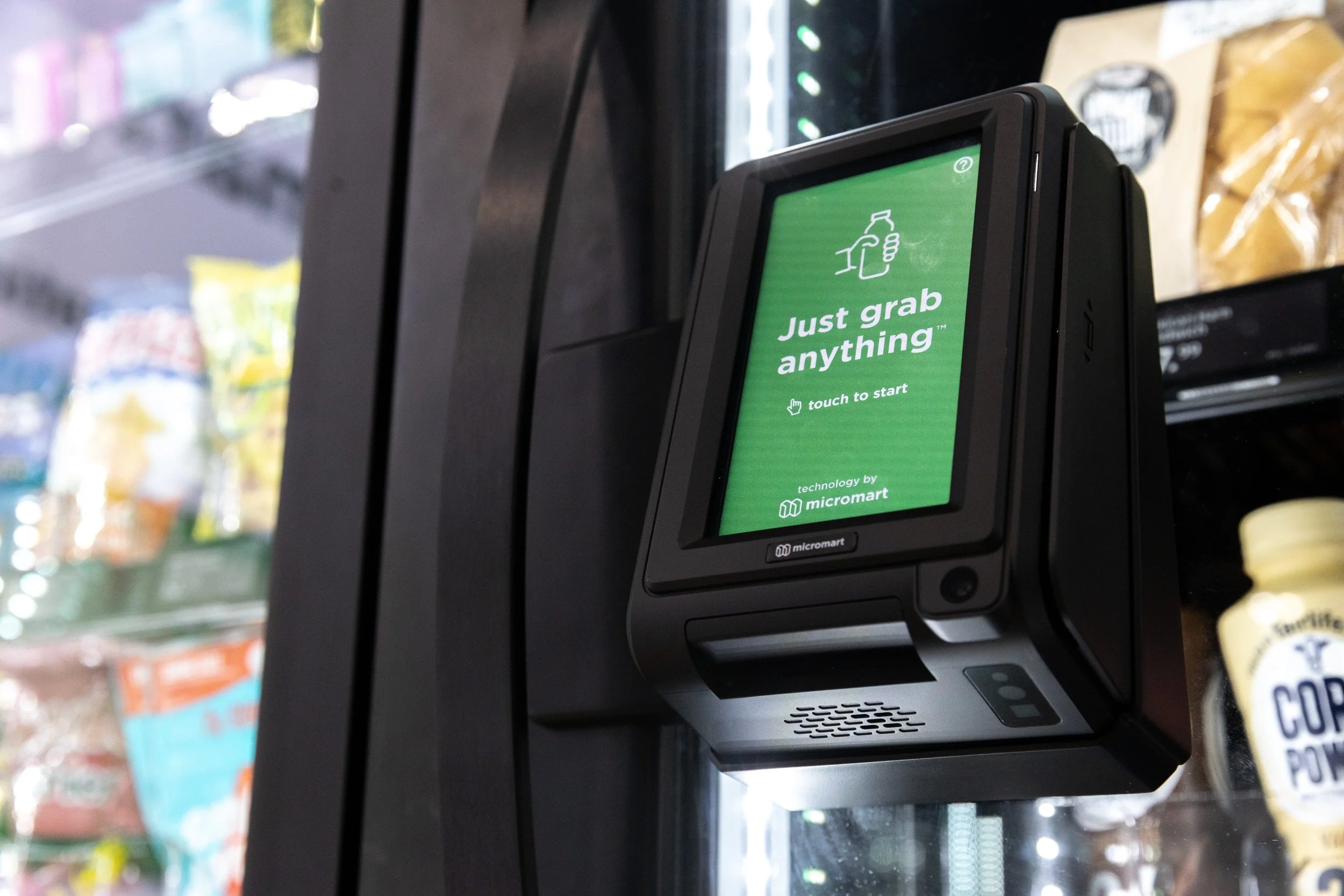
Vending machine vs. micro-market, side by side
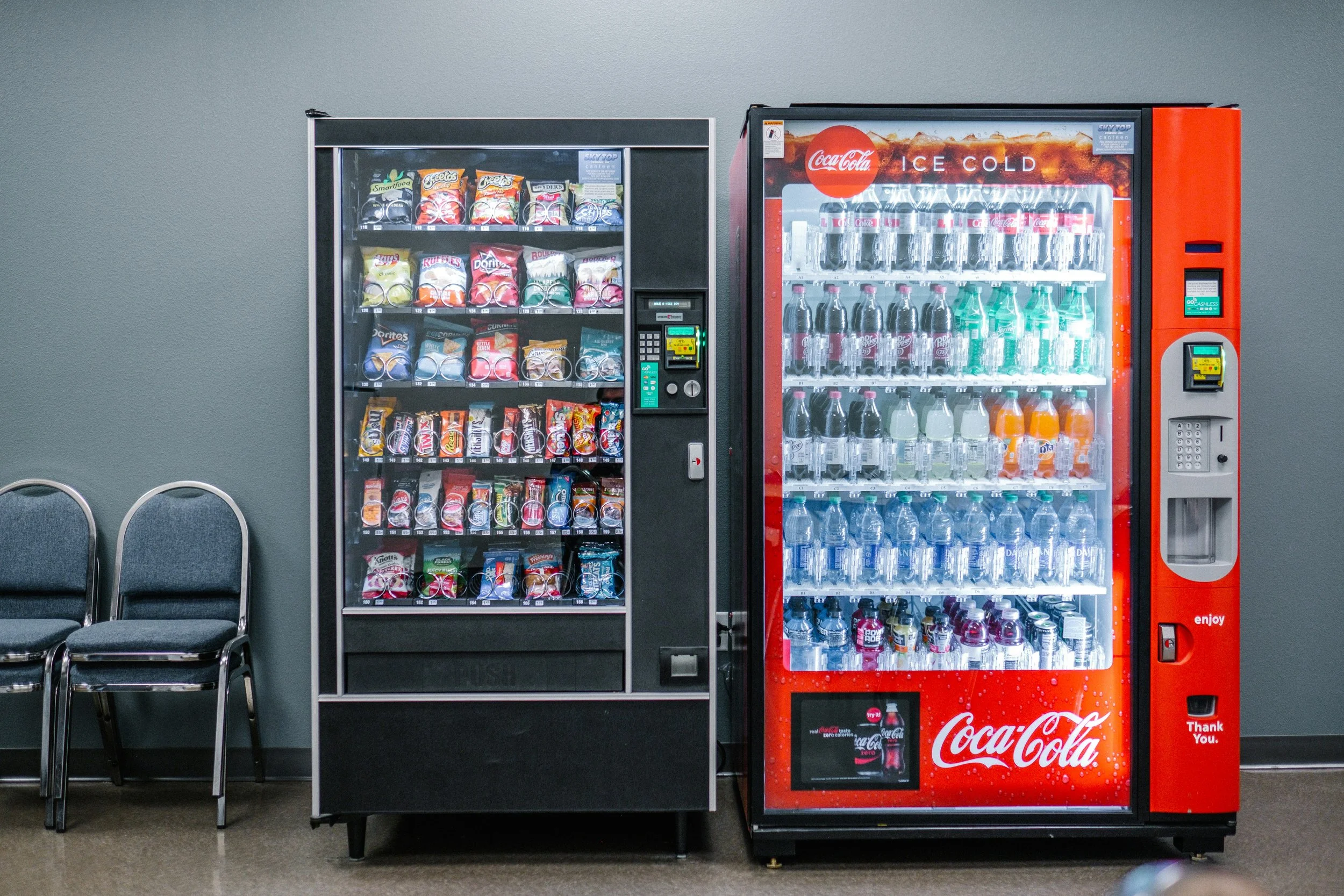
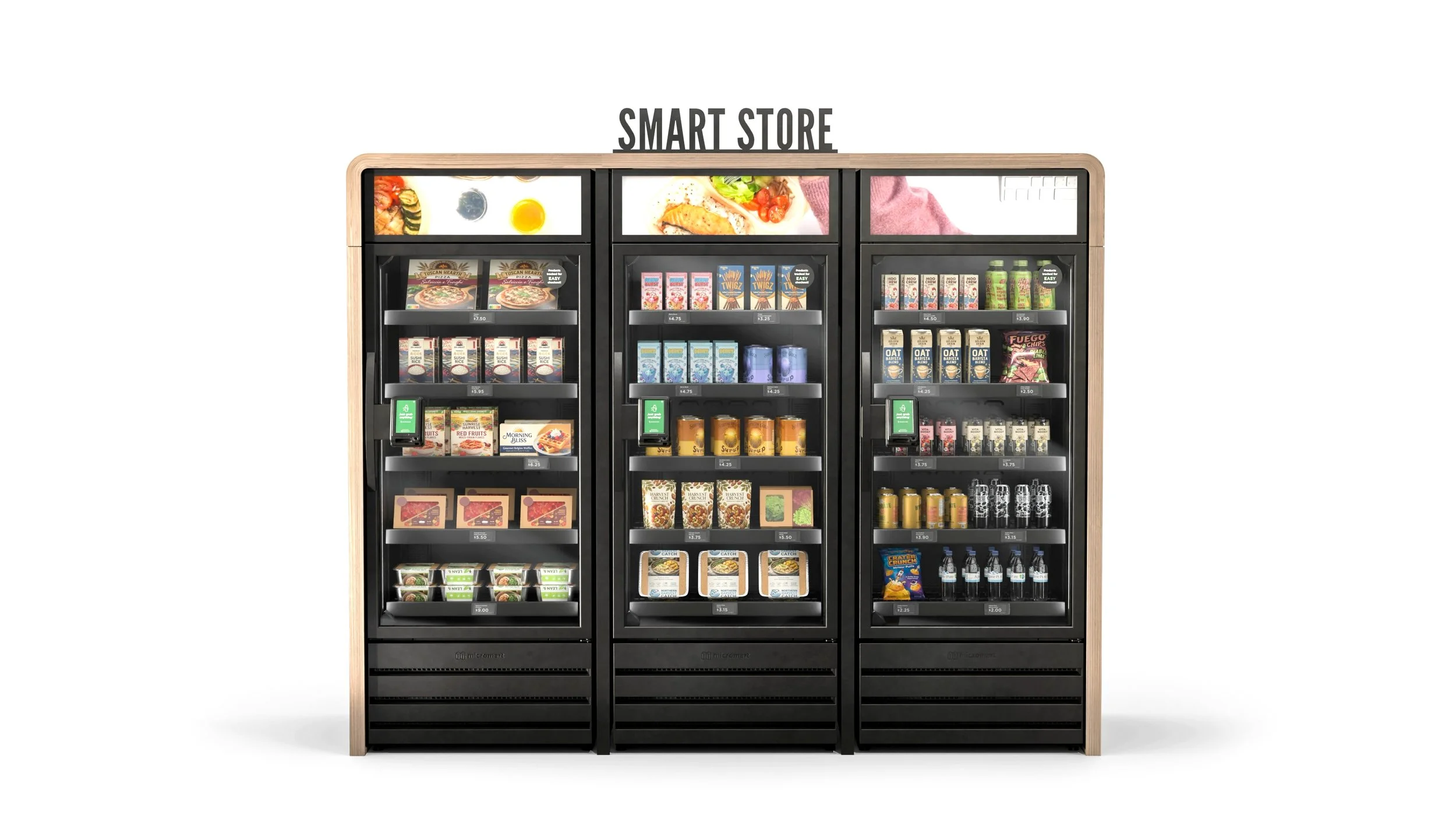
| Traditional vending machine | GrabNGo micro-market | |
|---|---|---|
| Product format | Fixed coils sized around small packaged snacks | No coils. Open shelving and cooler space that expands to fit larger items, multipacks and fresh food |
| Look & feel | A utilitarian metal box in the corner | A modern glass-front market that reads as a building amenity |
| Selection | Roughly 30 to 40 items | 100+ items across shelf and cooler |
| Payment | Cash, coins, sometimes a card reader | Tap card or phone only. No cash on site |
| Stuck product | A routine complaint with coil mechanisms | You take the item by hand. Nothing to jam |
| Restocking | Fixed route schedule, often empty by late shift | Real-time inventory data drives the visit |
| Refunds & complaints | Often lands on your front desk or facilities team | Handled by us, directly with the customer |
| Cost to the property | Varies by operator | $0. No purchase, lease, install fee or stocking cost |
Want the longer version with pricing math? Read micro-market vs. vending machine for Chicago-area properties.
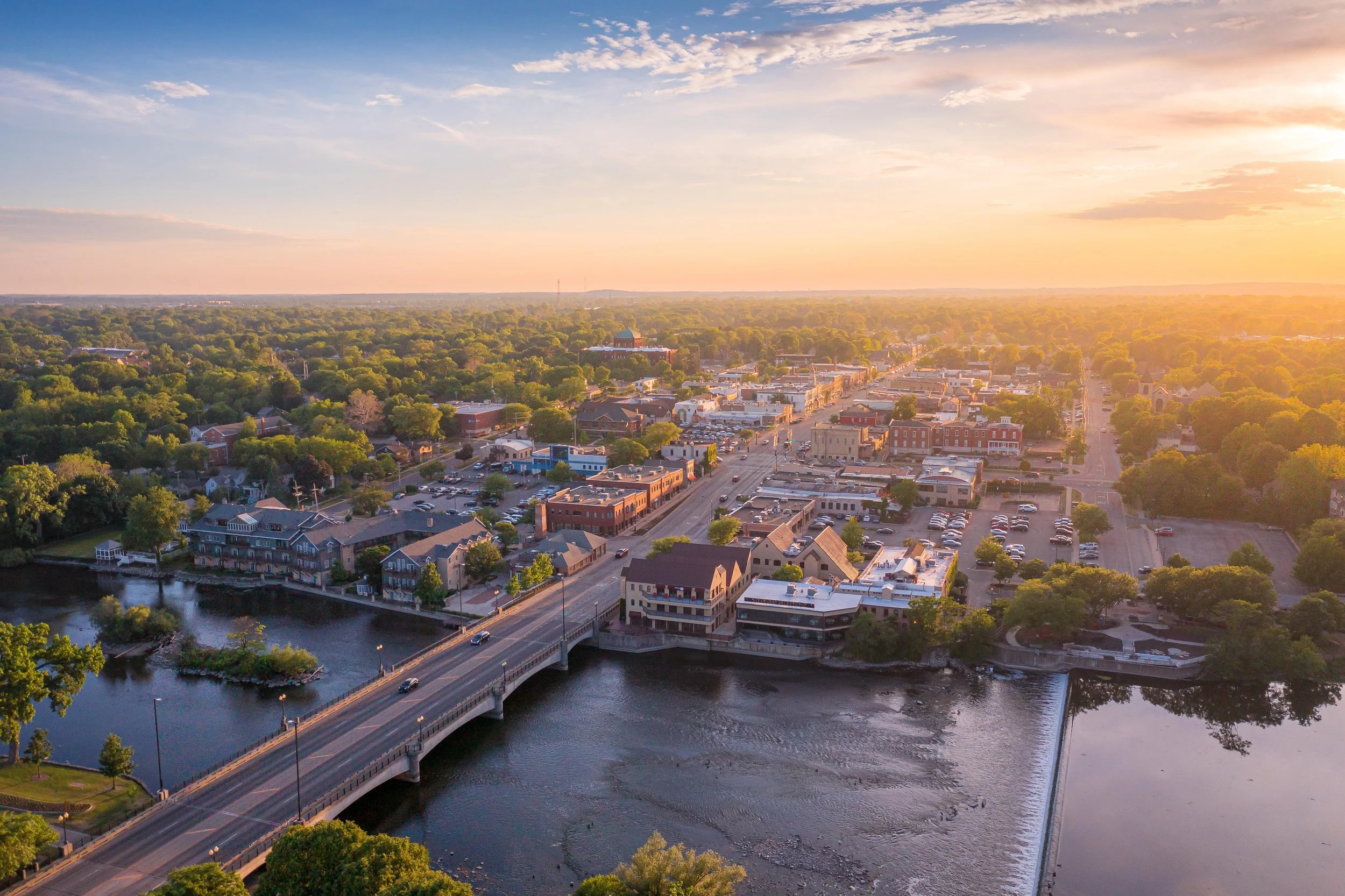
Three river towns, one gap in the break room
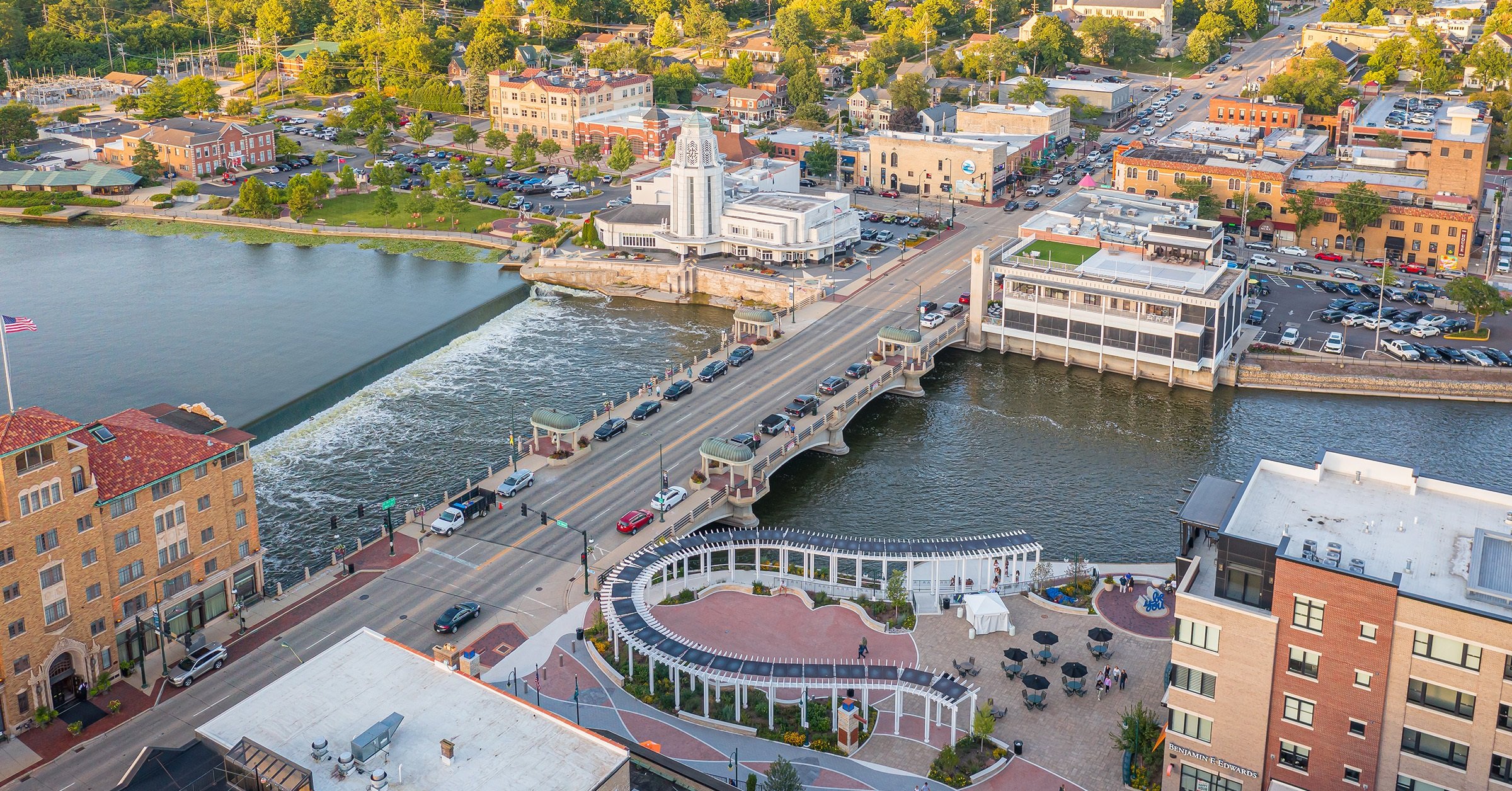
The name has been around since 1910, when an Elgin publisher put out the first Tri-City Directory covering Batavia, Geneva and St. Charles together. More than a century later the three still function as one place: roughly 80,000 people across four ZIP codes, strung along the same stretch of the Fox River, mostly in Kane County with pieces of Batavia and St. Charles reaching into DuPage.
What makes them different from Aurora or Elgin is scale. There are no towers here. What there is instead is a particle physics laboratory, a Fortune-scale grocery headquarters, a Magnet-recognized hospital, a county seat with all its courts and offices, three historic downtowns, and a genuinely deep manufacturing base tucked along Kirk Road and the rail corridors.
And almost all of it sits just far enough from a retail strip that a fifteen-minute break does not cover getting in the car. That is the entire case for a micro-market: not that people are hungry, but that leaving costs more time than they have.
Town by town
Each of the three has a different mix of buildings, and the right market looks different in each.
St. Charles
The showpiece of the three, and the one with the most visitor traffic. Hotel Baker has anchored Main Street since 1928, the Arcada has been running on the same block since 1926, and the Kane County Fairgrounds flea market still pulls crowds from three counties on a first weekend. The Municipal Building at 2 E. Main sits right on the river.
Behind the postcard, though, the working properties are the ones we place in: the Q Center conference campus, the professional and medical buildings along Randall Road, the east-side industrial and flex space, and the office parks off Route 64. A conference campus in particular has the exact profile a market is built for, hundreds of people on site with nowhere convenient to go between sessions.
Geneva
This one we know first-hand. Our owner works in Geneva, so this is not a town we researched, it is a town we are in every week.
Geneva has been the Kane County seat since 1835, which means the courthouse, the Judicial Center and the county offices all sit here, full of staff and visitors on a weekday and short on anywhere quick to eat. Northwestern Medicine Delnor Hospital on Randall Road was the first hospital in Illinois to earn nursing Magnet status, and it runs every shift, every day. Third Street's historic district and the Geneva Business Park out by DuPage National Airport round out the mix, along with manufacturers like Burgess Norton and Peacock Engineering.
If you have ever tried to grab lunch downtown during Swedish Days, you already understand why a market inside the building beats walking out for one.

Batavia
Batavia is the industrial engine of the three and it is not close. Fermilab sits on the east side with a two-mile particle accelerator underneath it and a federal research budget behind it. ALDI's entire US corporate headquarters is at 1200 N Kirk Road and has been expanded twice, adding a five-story and a six-story office building. The Kirk Road corridor keeps growing, with a 540,000-square-foot logistics center going up at Kirk and Fabyan.
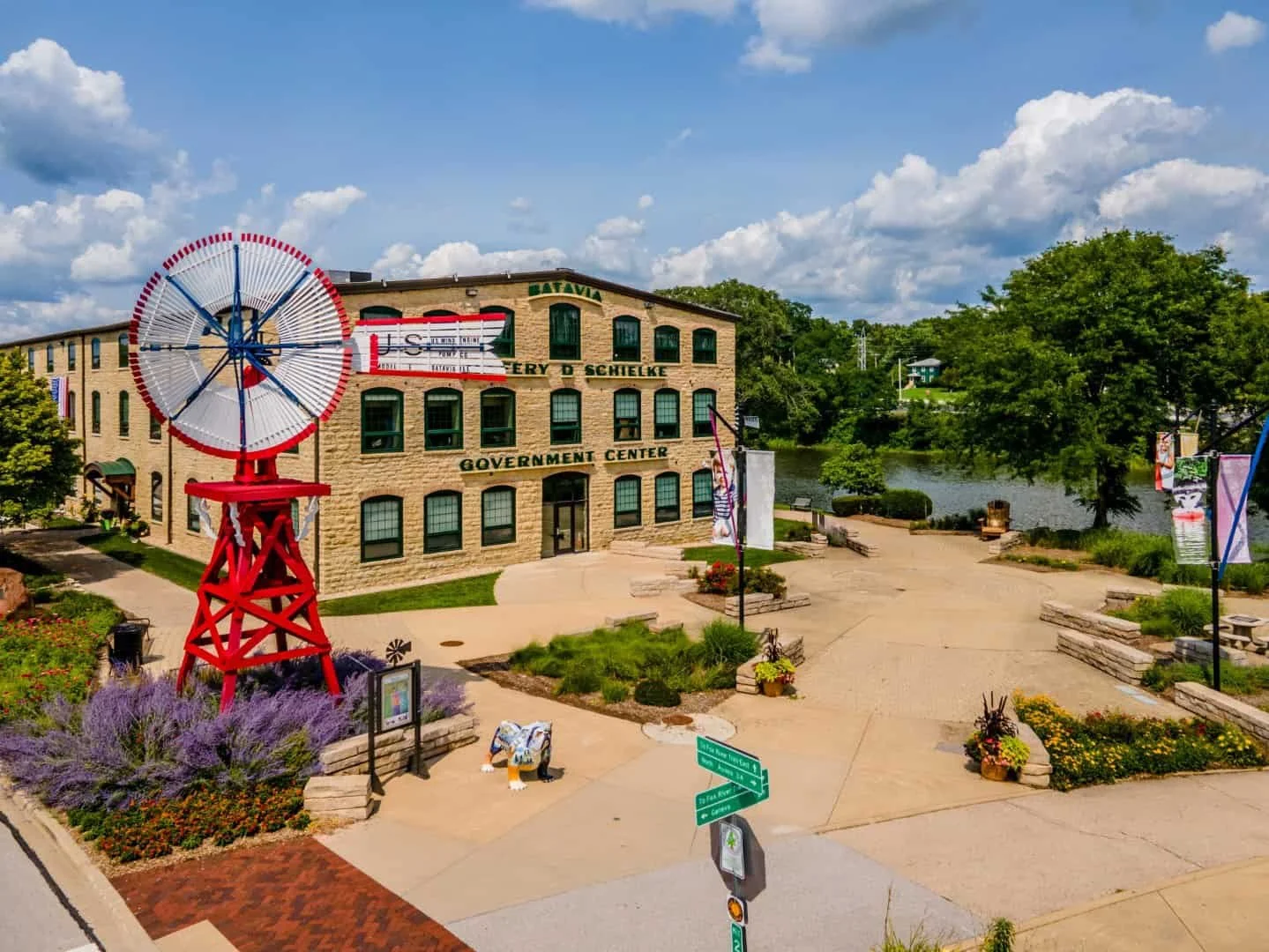
The old nickname was Windmill City, from the manufacturers that once shipped windmills out of here across the country, and the Dutch mill on the Riverwalk is still standing as the reminder. The town has always made things. It still does, on shifts, past the hour when anything on Randall is open.
We also serve the towns around them

Elburn
The western end of the Metra Union Pacific West line, which makes it the last stop before the corn starts. Growing residential, municipal facilities and light industrial, with almost nothing open late. Village of Elburn →
West Chicago
A railroad town that turned into a warehousing and manufacturing town, with DuPage National Airport on its western edge. Multi-shift buildings and one of the strongest use cases we serve. City of West Chicago →
Where a micro-market fits in the Tri-Cities
The product mix is built per building. A plant floor on Kirk Road and a downtown professional office do not want the same shelf.
Medical & healthcare
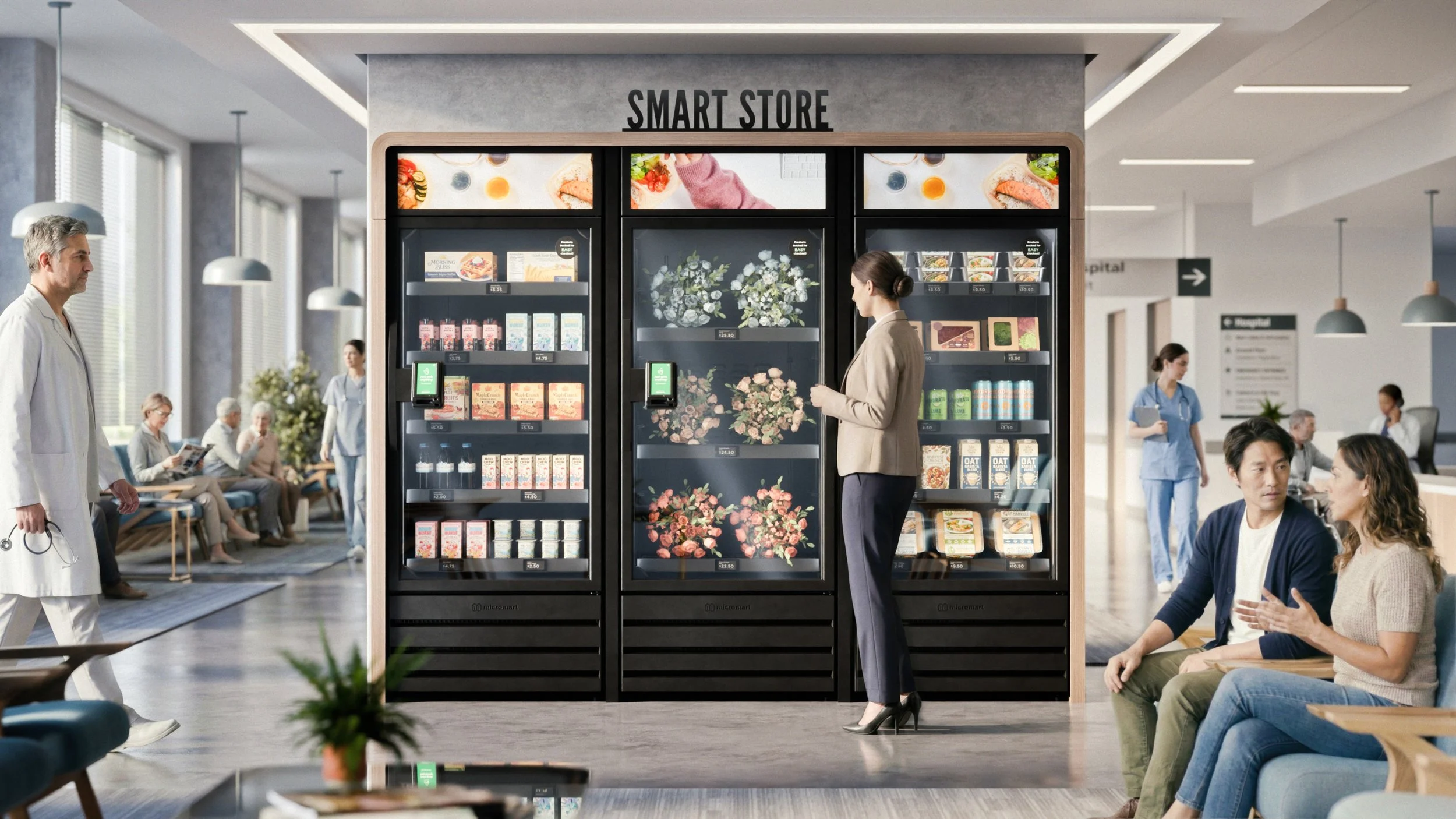
The Randall Road medical corridor running through Geneva and St. Charles, anchored by Delnor. Clinical staff who cannot leave between patients and families waiting through long procedures are both served by 24/7 access. Medical →
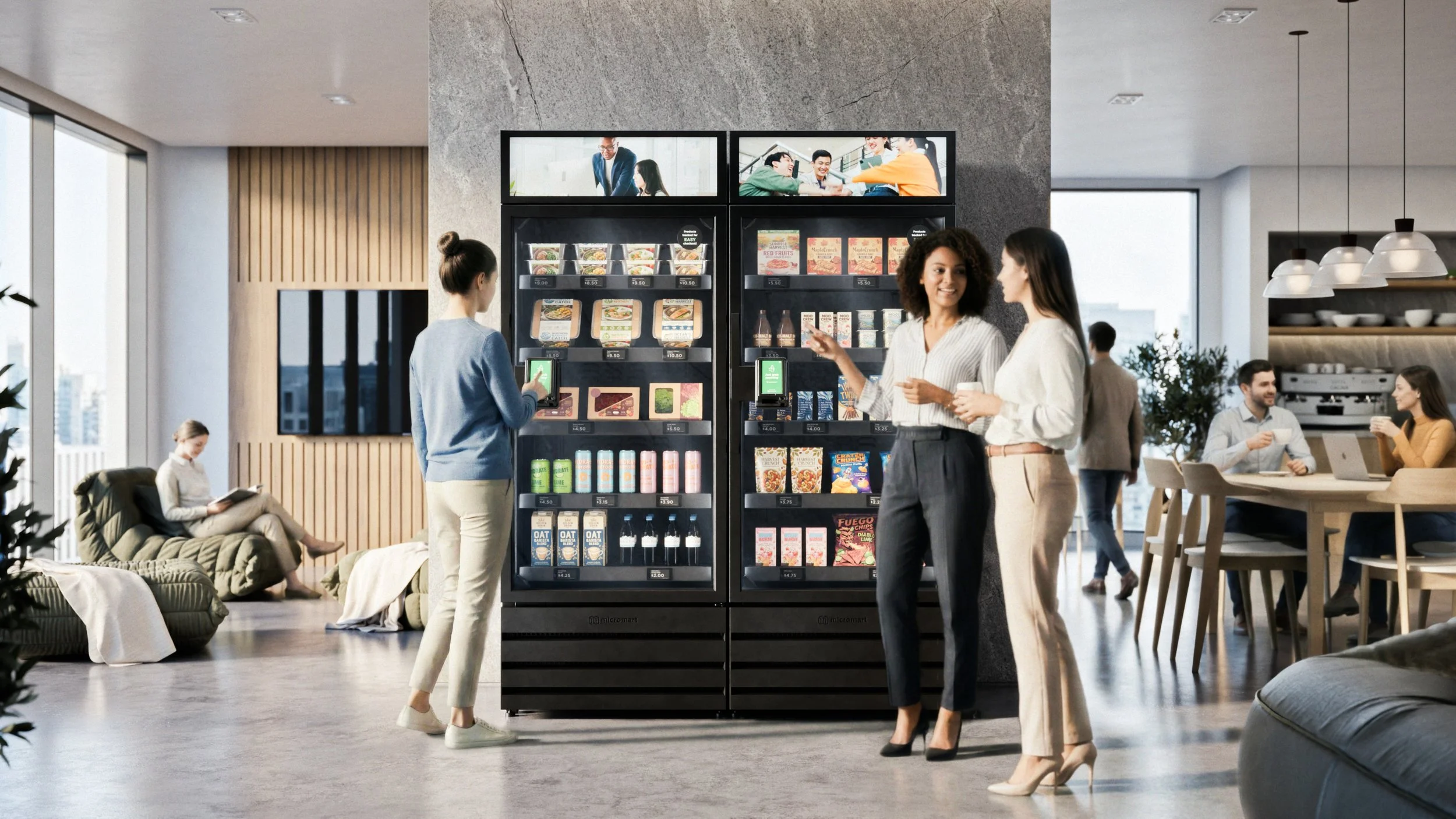
Offices & corporate campuses
Kirk Road's corporate campuses, the Geneva Business Park, the Route 64 office parks and the professional buildings in all three downtowns. Coffee drinks, protein and real food keep people on site. Offices →
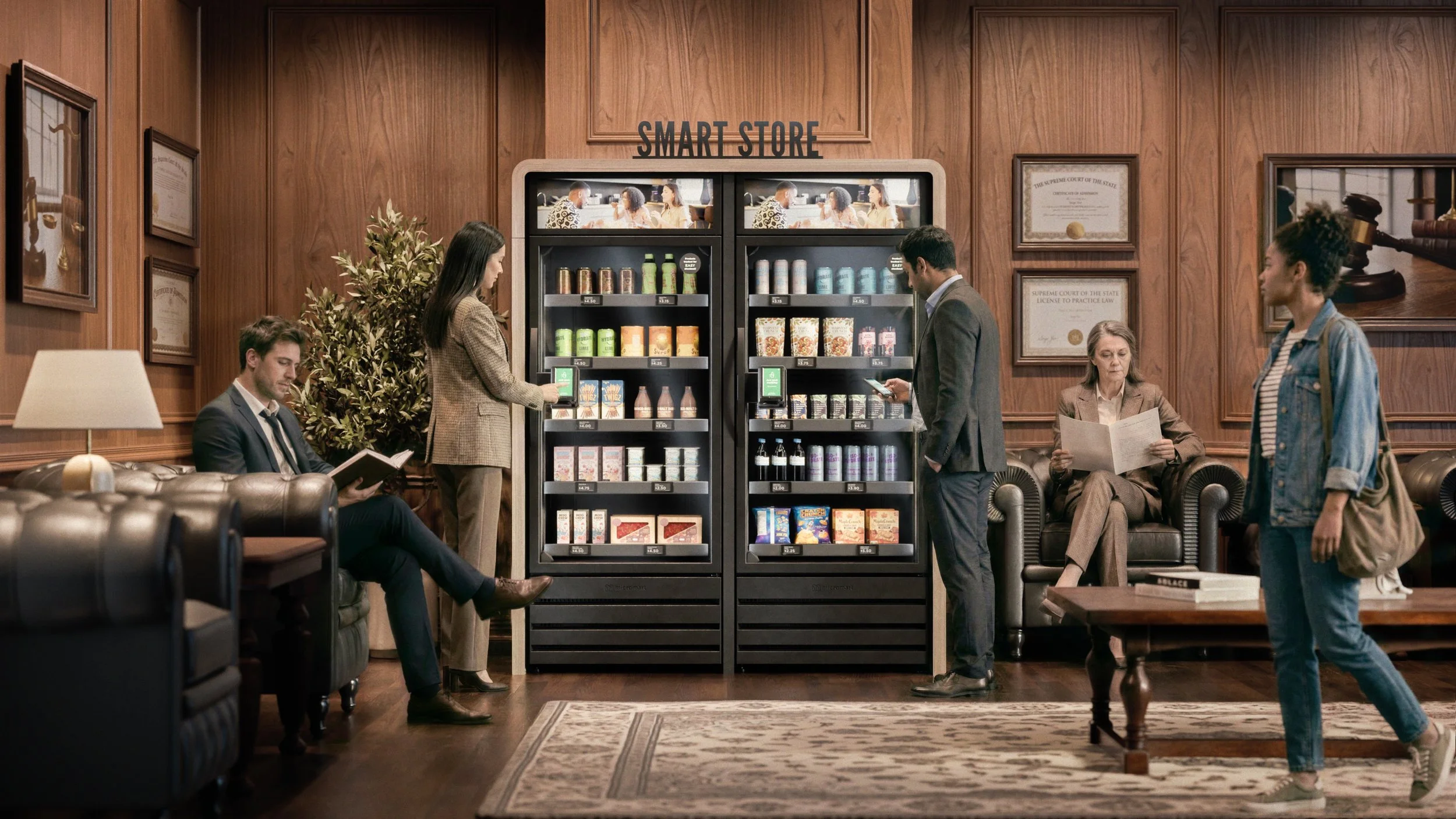
Government & public safety
Geneva carries the Kane County seat, and all three cities run their own public works garages, police and fire stations. Zero cost sidesteps competitive-bid thresholds in many municipalities, and we carry full insurance documentation for the file. Government →
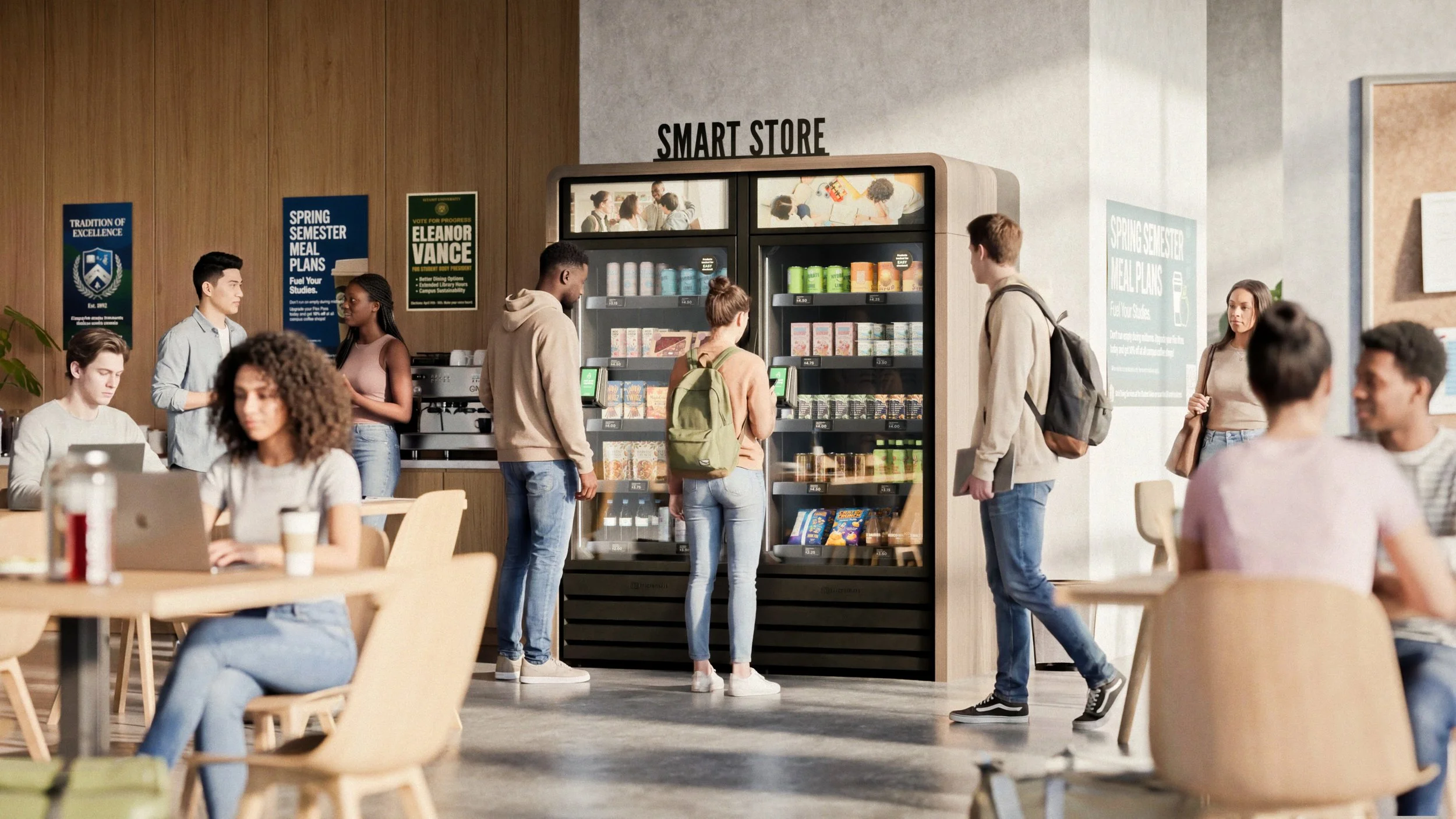
Schools & campuses
St. Charles 303, Geneva 304 and Batavia 101 each run multiple buildings with staff lounges that never make the budget. A zero-cost, staff-side placement avoids that conversation entirely. Schools →
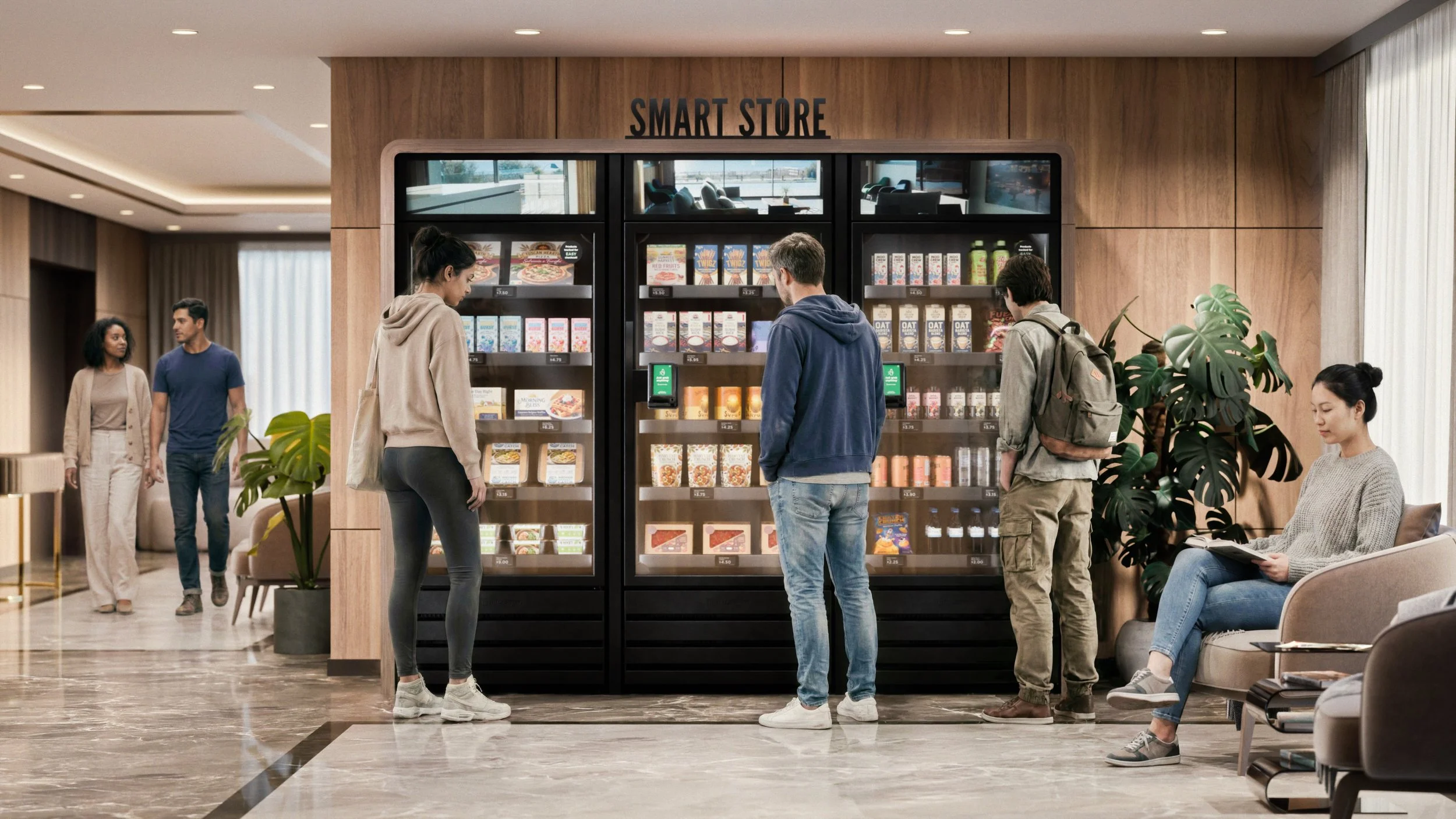
Apartments & residential
The established communities on the east and west sides of all three towns, plus the newer riverfront development. Residents get a real amenity and maintenance gets nothing new on the ticket queue. Apartments →
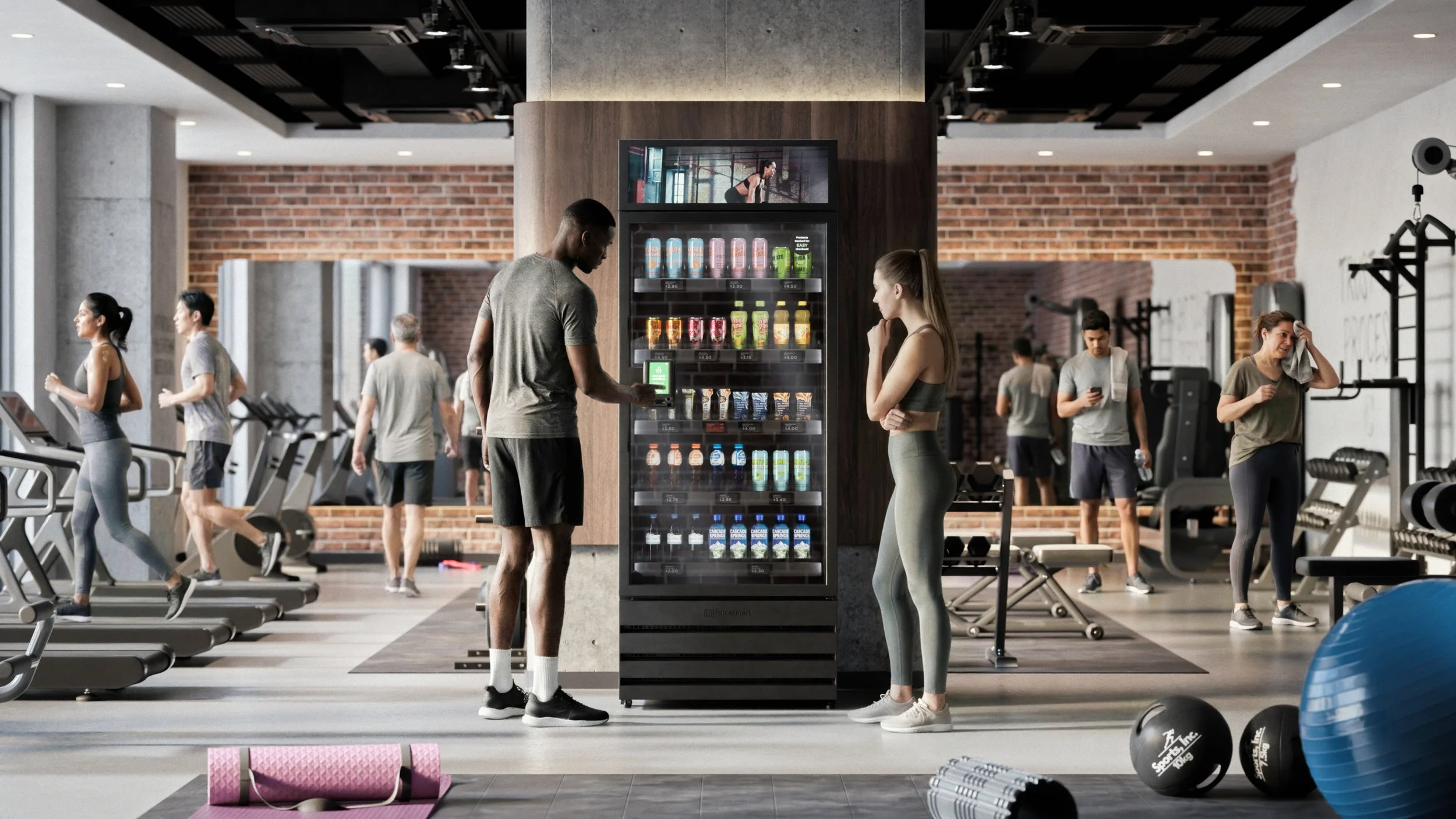
Gyms & fitness
Members want protein and hydration in the two minutes after training, including during unstaffed overnight hours. Fully cashless means nothing on site worth breaking into, and nothing for your staff to manage. Gyms →
The Kirk Road and rail-corridor manufacturing and warehousing buildings are our single strongest property type anywhere we operate. See warehouse & industrial →
Our Tri-Cities coverage
Full service across the 60174, 60175, 60134 and 60510 ZIP codes, plus Elburn, West Chicago, Wayne, Campton Hills and South Elgin.
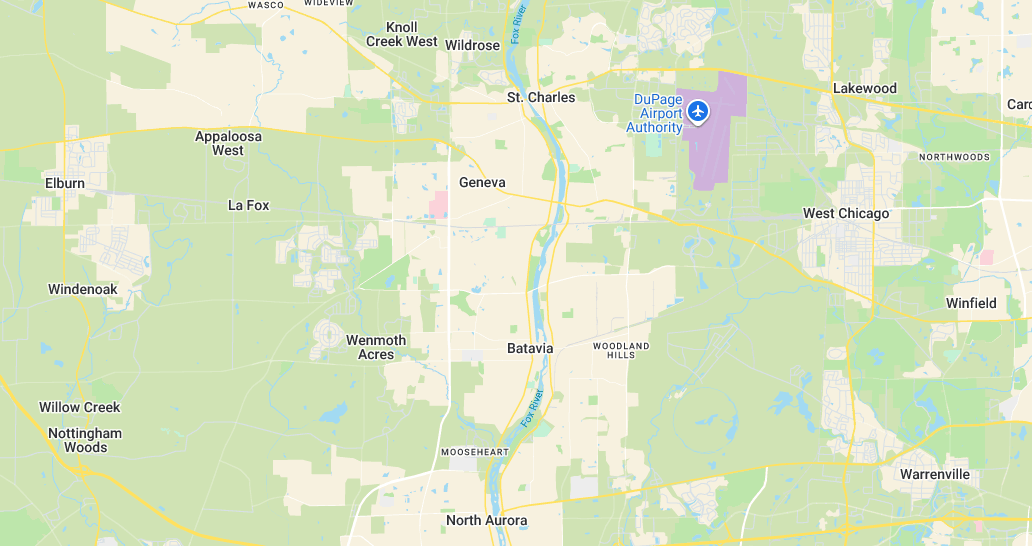
Kirk Road corridor
Fermilab, the ALDI corporate campus and the manufacturing and logistics belt running the length of Batavia into Geneva. Multi-shift buildings and our best-performing property type.
Randall Road
Delnor Hospital, the surrounding medical and professional buildings, and the retail-adjacent office and fitness properties running north to south through all three towns.
Kane County government campus
The courthouse, Judicial Center and county offices in Geneva, plus the three municipal complexes and their public works and public safety facilities.
The three downtowns
Main Street in St. Charles, Third Street in Geneva and Wilson Street in Batavia. Professional buildings and riverfront residential where parking makes a quick run out genuinely inconvenient.
Route 64 & the east side
St. Charles industrial and flex space, the Q Center campus, and the office parks running east toward the DuPage line.
The deal, in numbers
No purchase, no lease, no install fee, no stocking cost. We make our margin on what sells, priced competitively with nearby stores. We own the equipment, carry the insurance, absorb ordinary shrink, and handle every customer issue directly. Your part is a spot, a standard outlet, and a 15-minute walkthrough. Contracts, exclusivity and exit terms are answered plainly in the FAQ.
Getting one into your building
- Free site evaluation. Fifteen minutes on site. We look at the traffic through the spot, the placement, power and security. You get a straight yes or no.
- Configuration & agreement. We size the market to your building and your people, then walk you through a plain-language placement agreement with no financial obligation on your side.
- Install & go live. Typically two to eight weeks from signature. We deliver, install, stock and test. Your team does nothing.
- Ongoing. We monitor inventory remotely, restock on data rather than a fixed route, and handle every refund and service call ourselves.
This is our valley, not our expansion territory
GrabNGo Markets is based in Aurora, one town down the river. Our owner works in Geneva. The Tri-Cities are not a market we opened a page for, they are the towns we drive through on a normal week, and that is the difference between naming Third Street and naming a ZIP code.
We are independent and owner-operated. Not a national route company, not a franchise. When something needs handling at your building, you are dealing with the owner, working to documented service standards, rather than a call center three states away.
We also qualify every site before installing. We want a visible spot, a secure area, and enough traffic through it to keep the market genuinely full. If your building fits, we will tell you. If it does not, we will tell you that too, and we would rather say so at the walkthrough than install something that serves nobody. More about the business →
Tri-Cities vending & micro-market FAQ
Do we have to pay for the machines?
No. There is no purchase price, lease, installation fee or stocking cost to the property. GrabNGo owns the equipment, carries the insurance and earns its margin on what sells. Your contribution is floor space, a standard electrical outlet and a short walkthrough.
Do you serve all three cities, or just one?
All three, equally. St. Charles, Geneva and Batavia are all inside our primary service radius, roughly fifteen to twenty-five minutes from our Aurora base, and none of them is a stretch for us. We also cover Elburn, West Chicago, South Elgin, Wayne and Campton Hills.
What if we're unhappy with our current vending company?
Start by checking your existing agreement for its notice period and whether it grants exclusivity. Most vending contracts allow an exit with written notice, and many are month to month. We can walk your building and give you a configuration and timeline before you give notice, so there is no gap between the old machine leaving and the new market going live.
Can we choose what products go in the market?
You tell us what your people want and we build the mix around it, including requests that come in after we go live. Final selection stays with us because we carry the inventory cost and the spoilage risk, and because sales data tells us fairly quickly what a specific building actually buys. In practice the mix ends up shaped almost entirely by your site.
How often is the market restocked?
On data, not on a fixed route day. Inventory reports remotely, so restock visits are scheduled around what is actually selling down in your building. High-volume sites get serviced more often than a route schedule would allow, and slower sites do not get visits they do not need.
What happens if the market breaks down?
They contact us, not you. Every unit carries our support number and a refund QR code, and issues are resolved directly with the customer. System status is monitored remotely, so most problems are visible to us before anyone reports them. Nothing routes through your front desk or maintenance team.
Does a manufacturing or warehouse break room work for this?
Those are the best placements we do. High-captivity buildings where people genuinely cannot leave during a shift outperform every other property type, and the Kirk Road corridor is full of them. What we need is a visible spot near where breaks actually happen, a standard outlet and reasonable security.
Contracts, exclusivity, install timelines, permitting and exit terms are all answered on the full FAQ page.

Get a micro-market in your Tri-Cities building
A free 15-minute walkthrough tells us the right spot, the right configuration and the right product mix, and tells you whether it is a fit. No pressure, no obligation, no cost either way. And we are already up the road.