
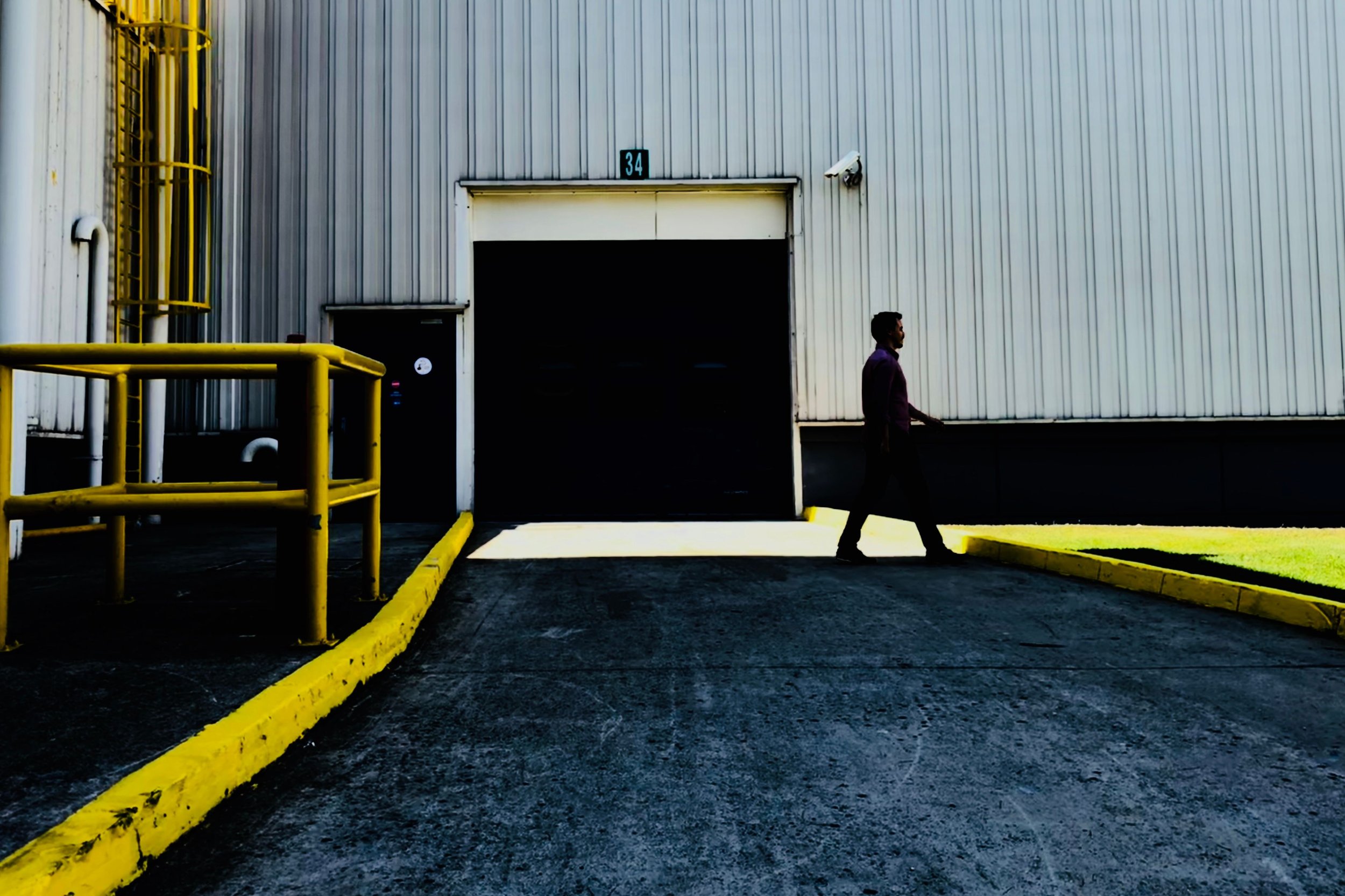
Vending Machines & Micro-Markets for Warehouses & Plants
A cashless, glass-front market for your break room that is open at 2 a.m. when the cafeteria is not. We own it, stock it, service it and insure it at zero cost to the facility — no capex request, no PO, no line item to defend. Tap a card or a phone, no app to download. Serving the Chicagoland industrial belt: Elk Grove Village, Bensenville, West Chicago, Carol Stream, Elgin, Aurora, Bolingbrook and the I-90, I-88 and I-55 corridors.
$0 capex & $0 ongoing · No cash on site · Every shift, every hour · No app required
The cafeteria closed at two. Your shift ends at eleven.
He came in at 2:30 straight from dropping a kid off and did not pack anything. Nine hours later the only food in the building is behind a coil that has been sold out since spring.
So he walks out to the lot, drives to the gas station on the corner, and eats a hot dog off a roller at 9:40 at night. Nobody writes that down anywhere. It shows up eleven months later as a line in your turnover report.

First shift has options. They have a cafeteria, a lunch truck and daylight to get there. Second and third shift have a break room and whatever is in it. That gap is the entire pitch on this page.
He forgot his lunch.
Now he's the problem.
Second shift. Thirty-minute unpaid break at 6:00. He didn't pack anything, and there's nothing in the building worth eating. Here's how the next 33 minutes go.
Break starts.
He checks the machine on the way past. Two rows sold out, and the reader's been down since Tuesday.
Out to the lot.
Badge out, walk the length of the building, find his truck at the back of the employee lot.
Pulls out onto the road.
Nearest anything is a gas station six minutes out. He's already doing the math and it's tight.
Four cars in the drive-thru.
Nothing he can do about it. He's not leaving now — he's already spent half his break getting here.
Back in the lot.
He knows he's late. He's eating in the truck with one eye on the clock.
Back on the floor. Three minutes late.
His lead noticed. It goes in the file. Third one this quarter and it turns into a conversation neither of them wants to have.
6:00 out. 6:04 back on the line.
He taps his card, grabs a sandwich and a drink, and sits down with 26 minutes left. Nobody writes anything down. Nobody has a conversation about it.
He wasn't a bad employee at 6:33. He was a guy who couldn't buy food in the building he works in.
Three crowds, one unit

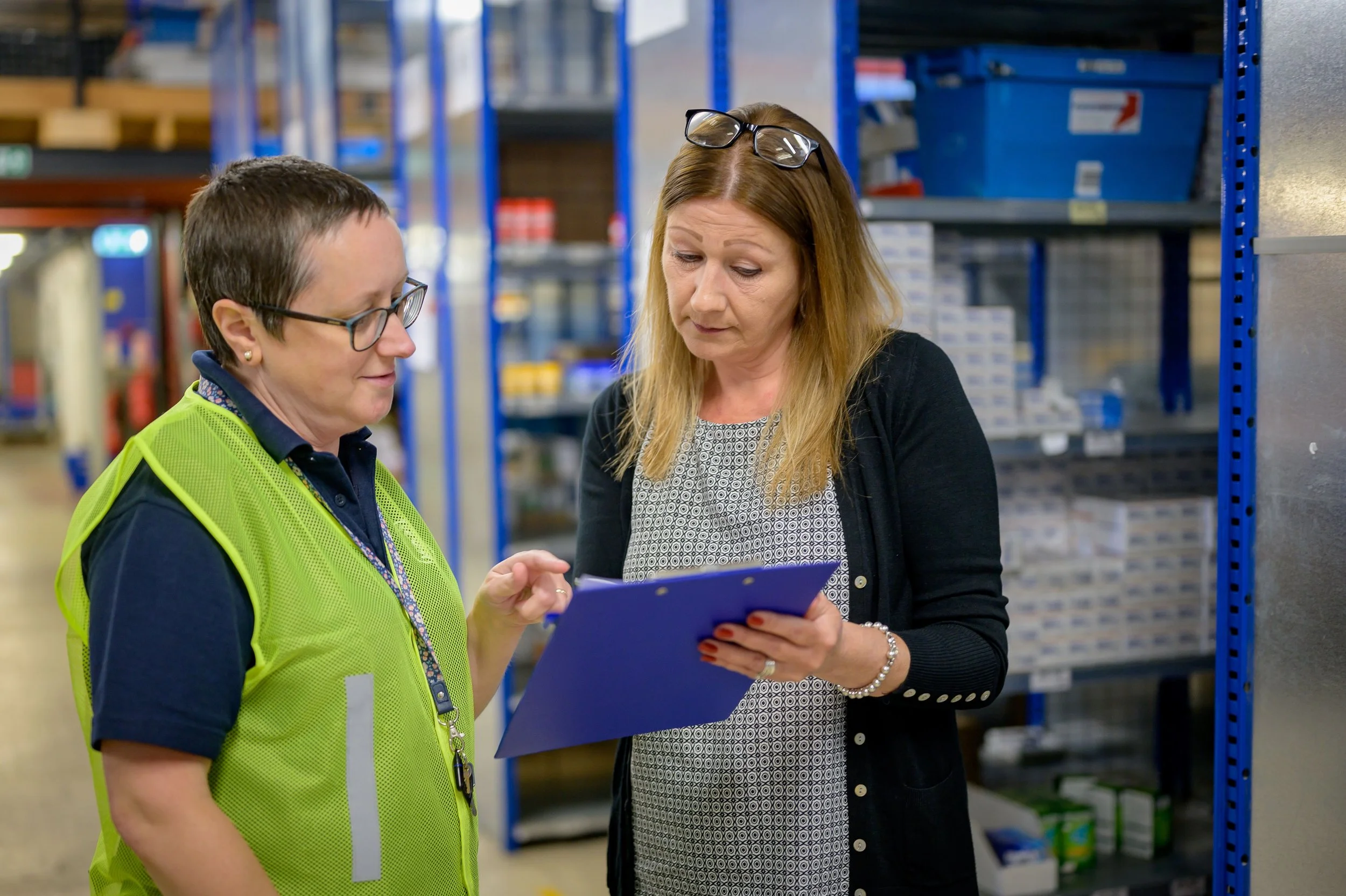
2nd and 3rd shift
The reason this page exists.
Real food, not just chips. Cold drinks, energy drinks, sandwiches, electrolytes in August. The hours your cafeteria is dark are the hours this thing earns its floor space.
Drivers, dock and carriers
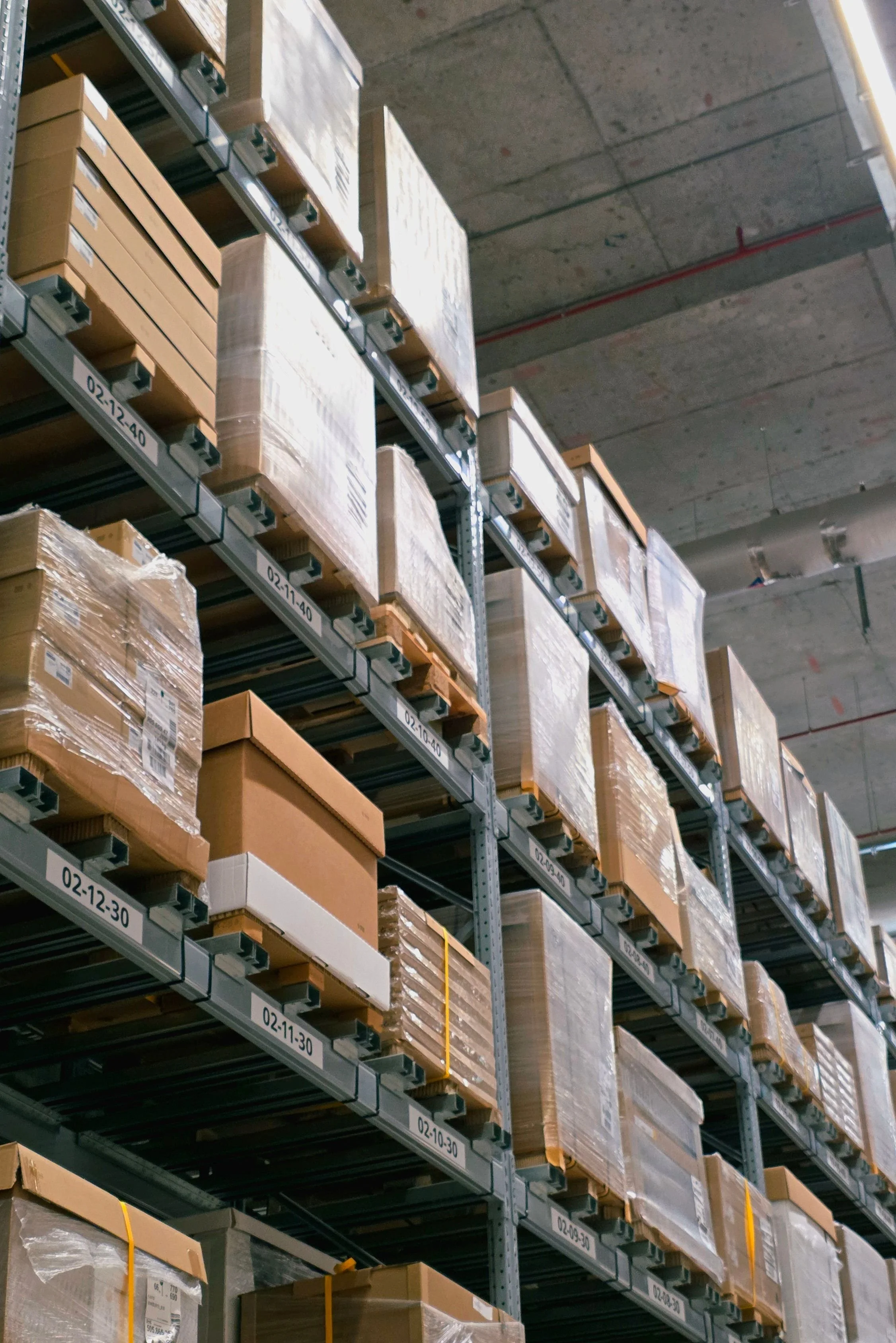
Twenty minutes in your driver lounge.
Outbound drivers waiting on a load, carrier reps, yard jockeys. Nobody wants them wandering the plant looking for a machine, and a driver who is fed is a driver who is not idling in your yard longer than he needs to.

Supervisors and front office
The people who never leave for lunch.
Shift leads, planners, QA, maintenance, the office side that eats at their desk. Same unit, same wall, no second install and no second conversation.
A small store, not a vending machine
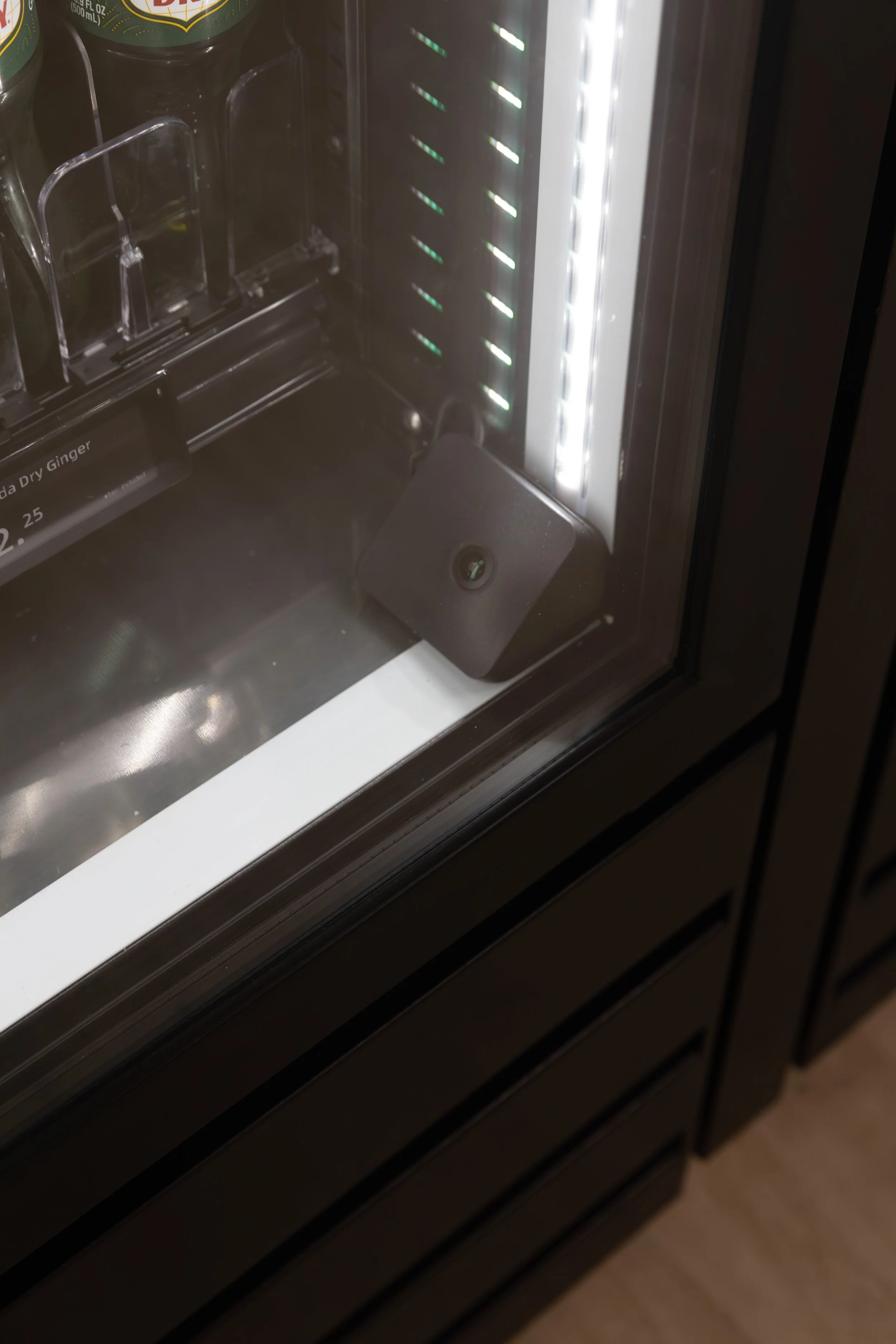
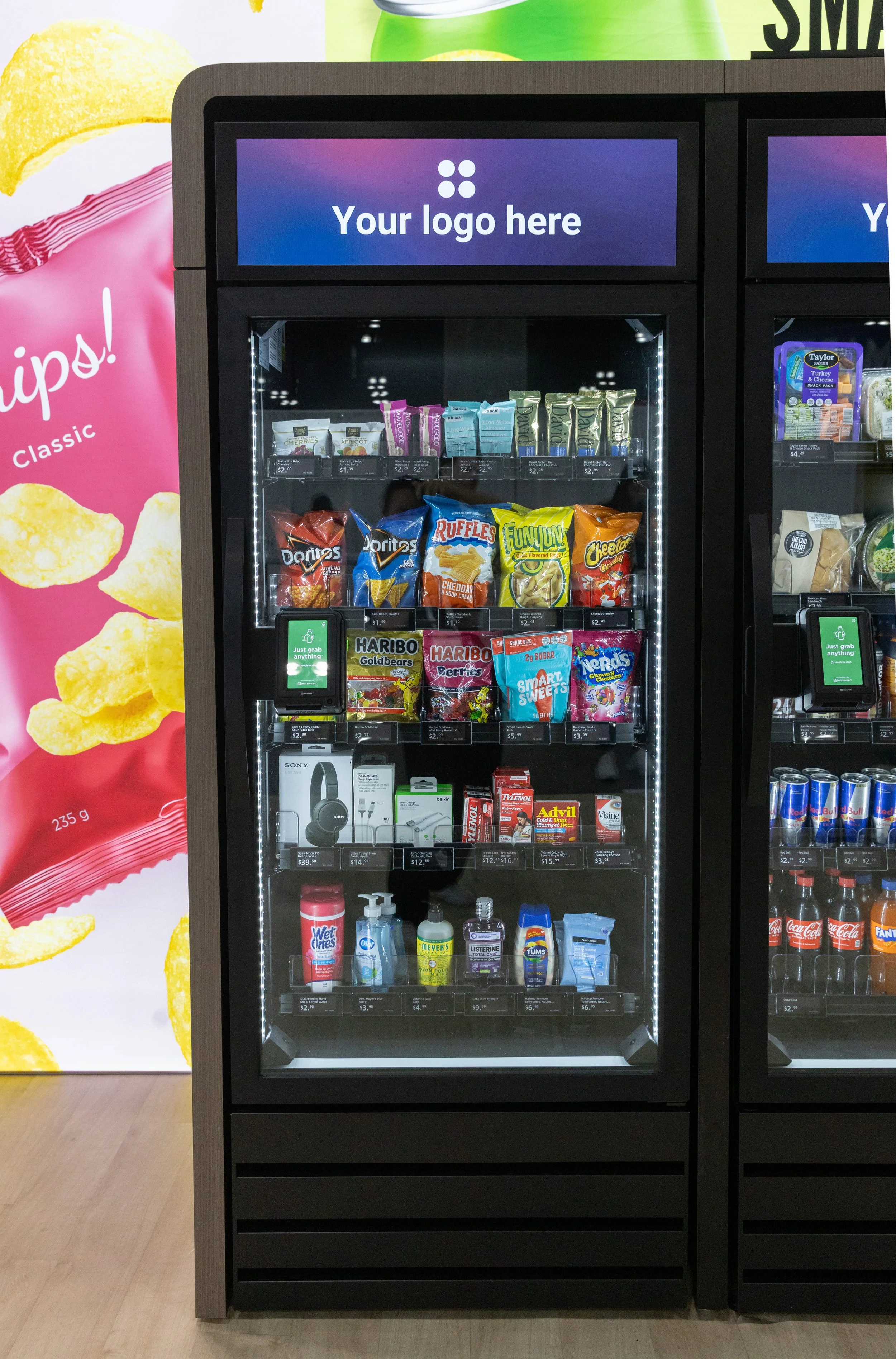
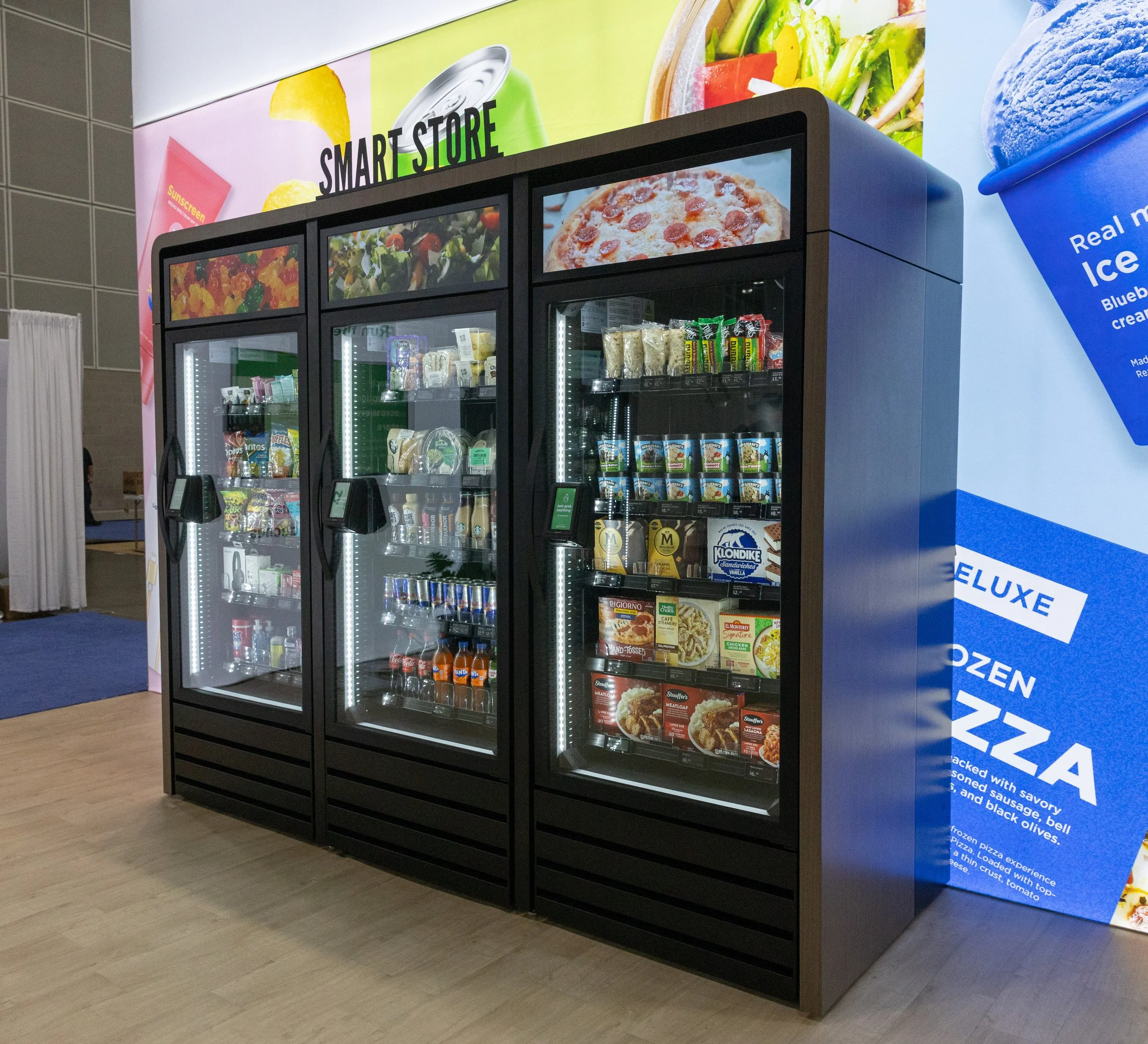
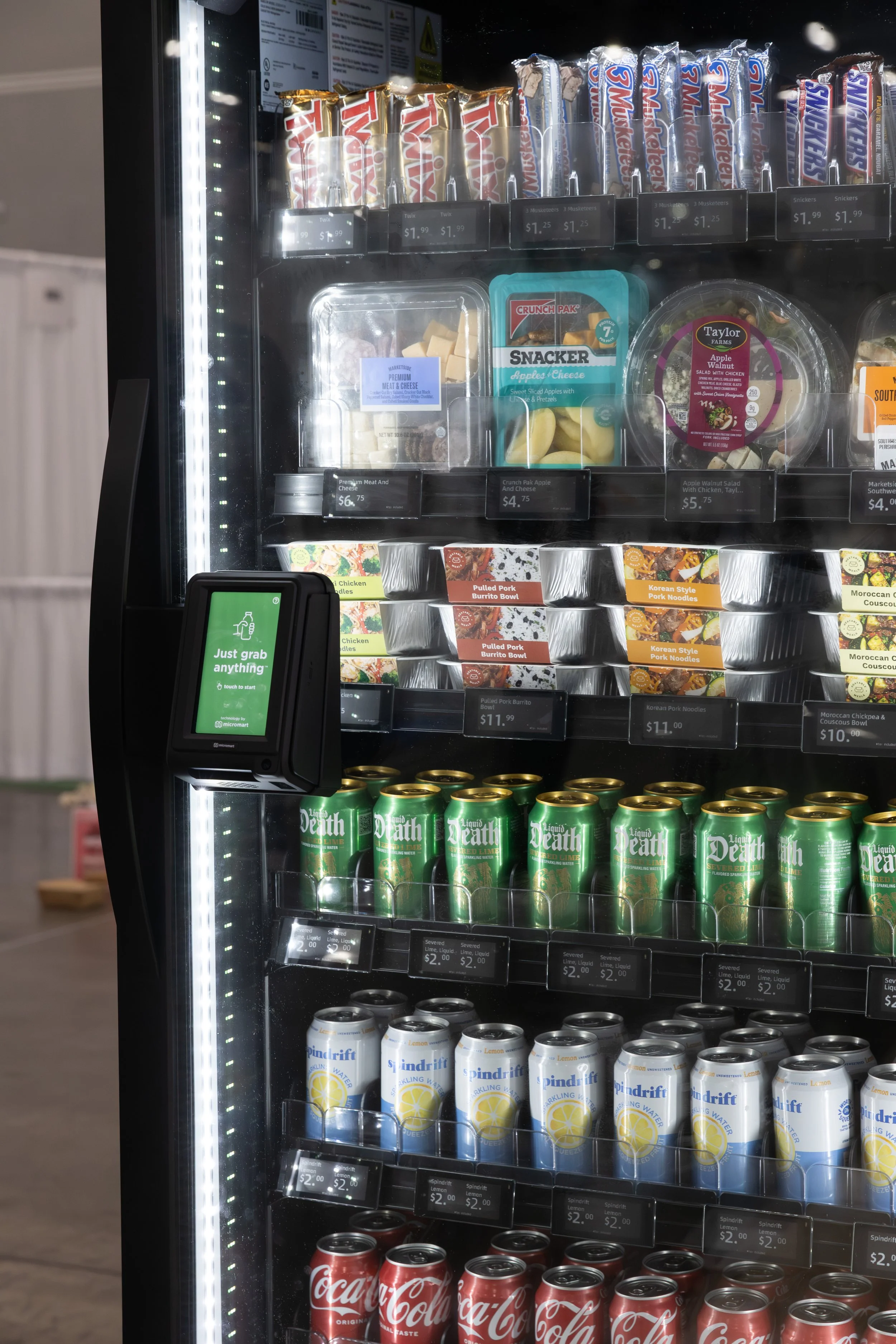
Tap a card, open the door, take it, close it. The charge posts on its own. No coins, no bill slot, no app to download, nothing your maintenance team has to learn.
- 3–4x the selection of a coil machine, including sandwiches, protein, real meals and cold drinks side by side
- Nothing to jam, because people take it by hand. No shaking, no rocking, no note taped to the glass
- No cash on site. Nothing worth prying open at 3 a.m., nothing for anybody to count
- Tap a card or a phone. No app, no account, no sign-up. Works the same for a 25-year veteran and a day-two temp
- $0 to the facility. We own, stock, service and insure it
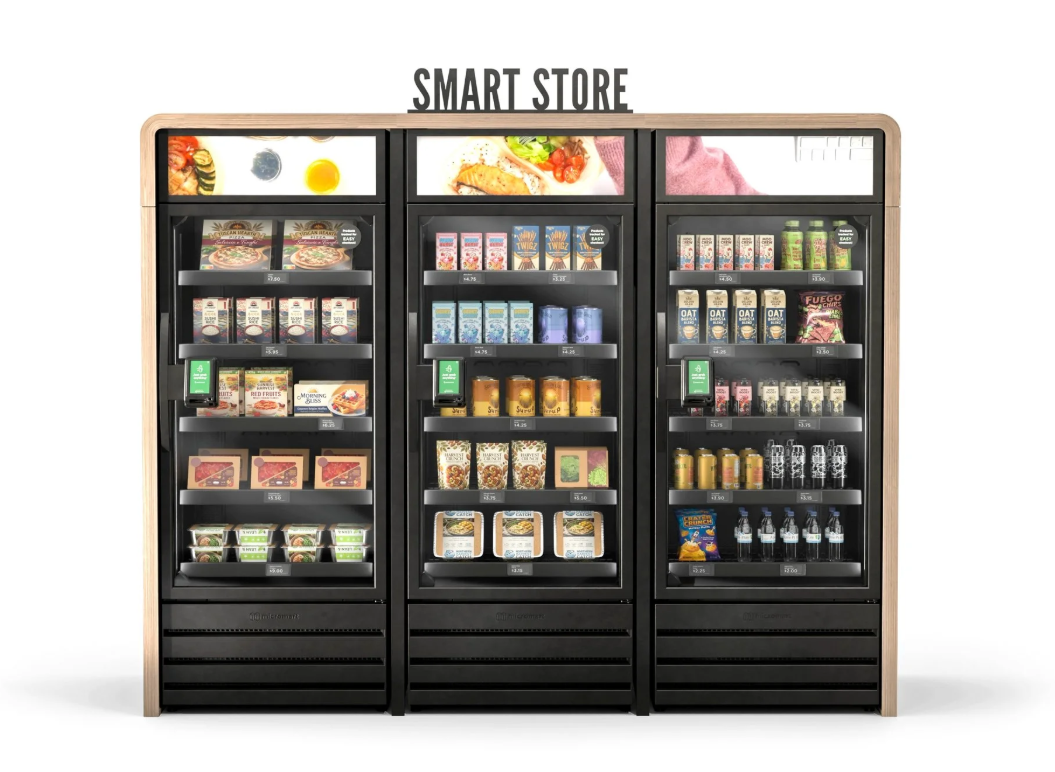
One of these is in your
break room right now
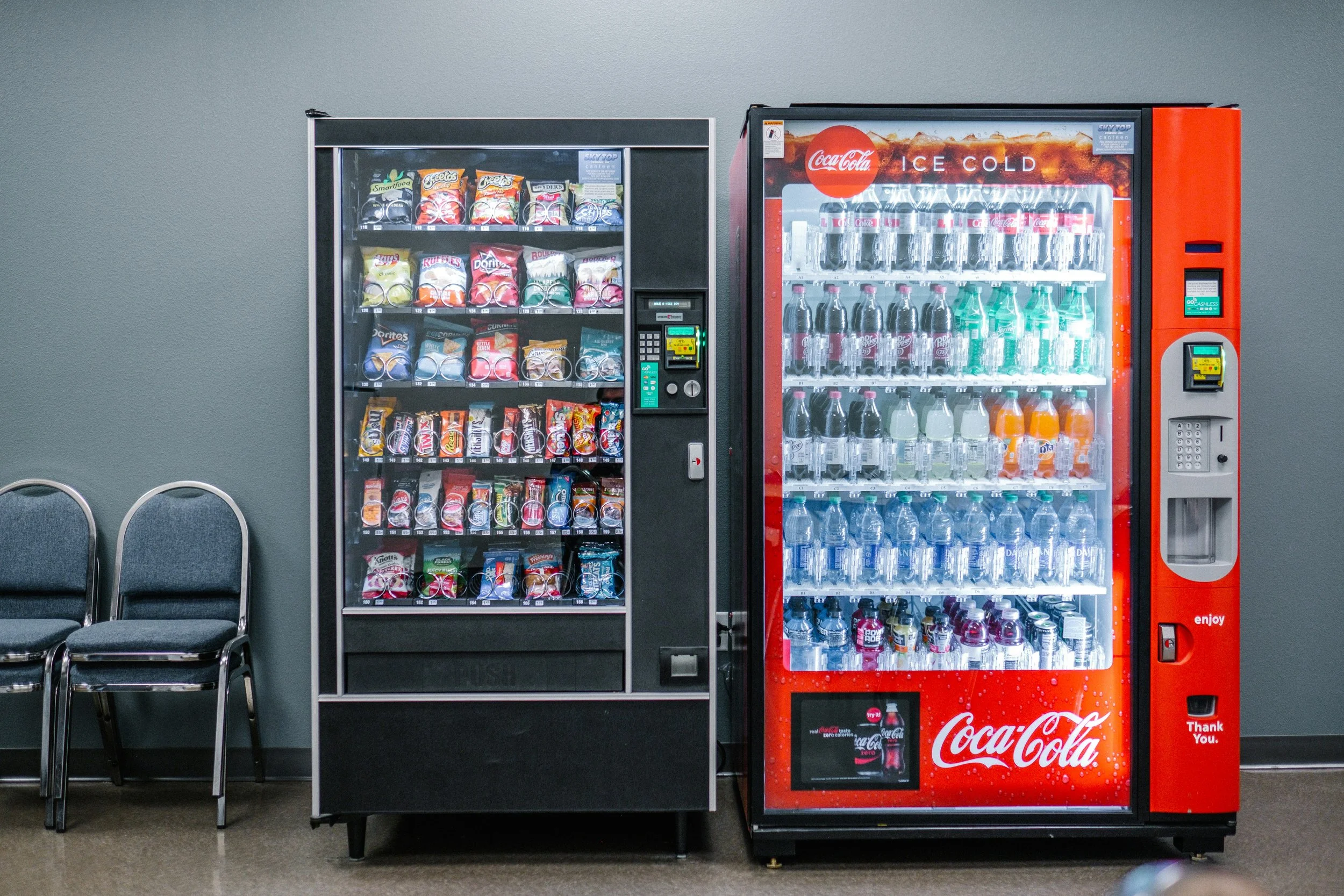
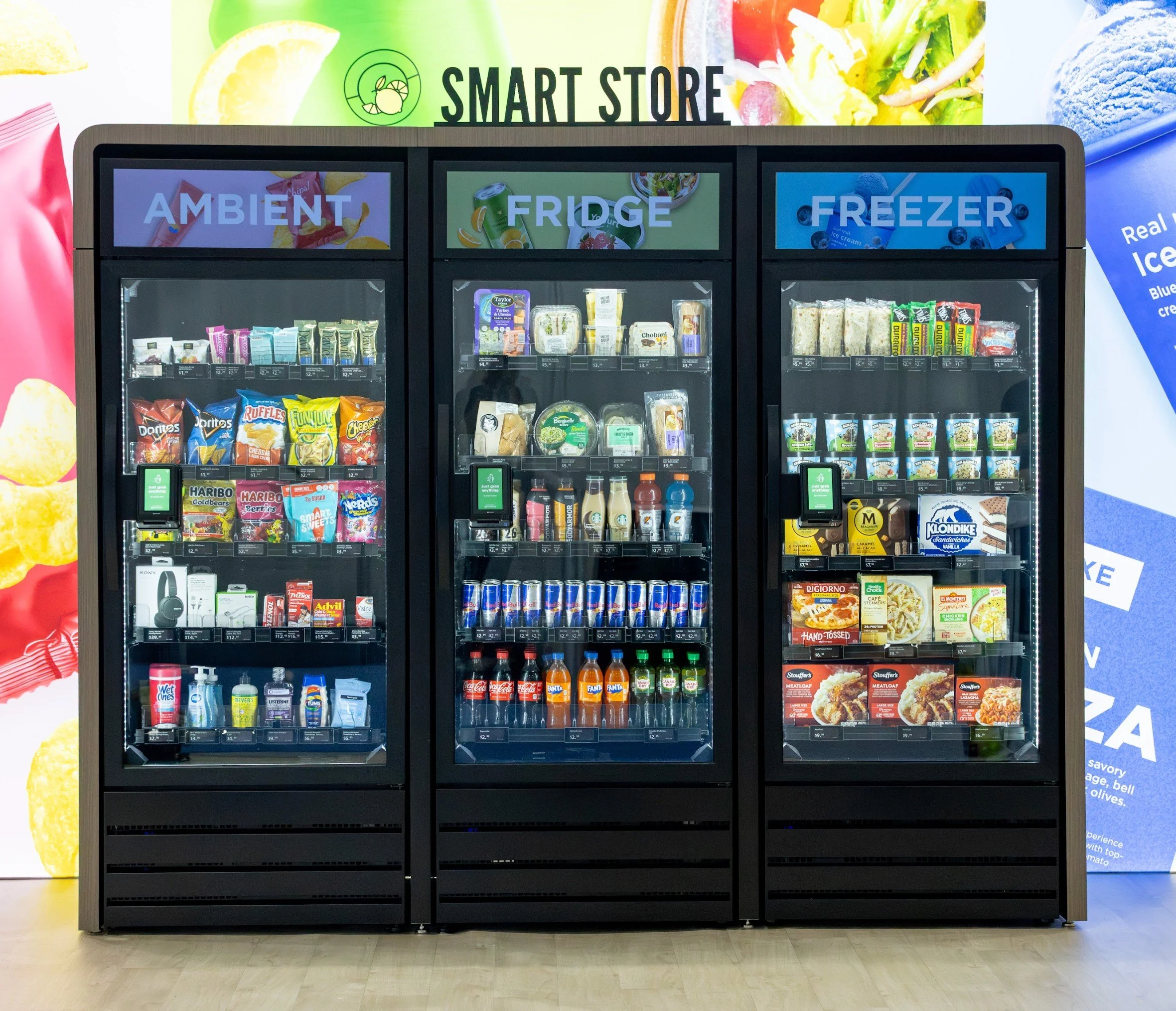
Coils, a bill slot, and a Post-it that says the dollar reader is broken.
Tap, take, go. Restocked on live sales data, not a route day.
See the full side-by-side comparison
| Vending machine | GrabNGo micro-market | |
|---|---|---|
| Selection | 30 to 40 items, snacks and soda | 100+ items: sandwiches, protein, real meals, cold drinks, energy, electrolytes |
| Payment | Cash, coins, maybe a reader that works | Tap a card or a phone. No app, no account, no cash on site |
| Jams | A standing complaint, and people rock the machine | Taken by hand. Nothing to jam, nothing to tip |
| Hours it sells | Whenever it happens to be working and stocked | Every hour of every shift, including 2:15 a.m. |
| Restocking | A route day, whether it is empty or not | Live inventory. We come when your building actually buys it down |
| Complaints | Land on your supervisors and your maintenance queue | Come to us. Support number and refund QR code on the unit |
| Cost to the facility | Varies, and there is usually a service call in it | $0. No capex, no PO, no monthly |
Four numbers corporate will ask you for
Capital request
No purchase, lease, install fee or monthly charge. Nothing to route through capex, no PO number needed.
Work orders
Nobody on your side orders, hauls, stocks, counts or fixes anything. It never enters your maintenance queue.
Standard outlet
120V, no dedicated circuit, no plumbing, no drain, no anchoring, no construction and no permit pulled by you.
Days to walk away
90-day mutual trial, 14-day notice, no fee. We unplug it and take it out with no restoration cost to the building.
We own the equipment, carry the insurance, absorb ordinary shrink and handle every employee issue directly. Your part is a spot, an outlet, and 15 minutes.
You either have machines
you're tired of, or nothing at all
You already have vending
And you can probably describe its exact failure mode from memory.
- The bill reader rejects anything that has been folded once
- The route driver comes Tuesdays whether it is empty or not, and it is empty by Thursday on 2nd shift
- People rock it, then tell a supervisor, who tells maintenance, who tells you
- Nobody knows what actually sells here, including the vendor
What we do: walk the plant and give you a configuration and a timeline before you give anyone notice, so there is no gap between the old machines leaving and the market going live. Check your agreement's notice period first — most are 30 days and many are month to month.
You have nothing
Which usually does not mean nothing. It means somebody is doing it by hand.
- A fridge a supervisor stocks on his own card and never gets reimbursed for properly
- A warehouse-store run somebody's admin makes on a Sunday
- Water and electrolytes you buy for the floor in July, out of the facilities budget
- Everybody agrees the break room is a problem. Nobody has the hours for it
What we do: replace an unmanaged side project with a real assortment that runs itself, at no capital cost and no ongoing expense. If there are six things your floor already expects to be there, tell us and they stay in the mix.
A real amenity on your floor, with nothing on your P&L.
It has to be fine at 3 a.m. without anybody watching it
If your building runs on badges and cameras after nine, the last thing you need is one more thing that becomes your Monday morning problem.
- No cash on site. No coin box, no bill stacker, nothing worth prying open on a weekend
- Locked to a card. The door only opens after a card is authorized, and the session is tied to it
- Ordinary shrink is our cost, not yours. It is priced into our model. You never get a bill for it
- Damage is our equipment and our insurance. We replace it, you do not file anything or open a work order
- Sensors look at the shelf, not at the room and not at anyone's face. 99.5% product recognition, no badge integration, nothing that touches your systems
- Stock and temperature report to us remotely, so we usually know before your 1st shift lead does
If something breaks at two in the morning, it is our phone that rings.
People leave for a dollar.
They also stay for less.
Nobody is claiming a break room fixes turnover. But the exit interviews rarely say “the pay.” They say the pay and a list of small things.
The recruiting line
“We have a market, not a machine that eats your dollar.”
- A concrete thing to say on a plant tour, in a job post and at a hiring event
- Something a 3rd-shift hire can see on day one, before he has any reason to trust you yet
The huddle complaint
The one that comes up at every shift change and never gets solved.
- “The machine's empty again” stops being a standing agenda item
- Nobody has to leave the property mid-shift, which is a safety and a coverage answer both
Some plants go further and subsidize part of it — the company covers a set amount per item, or picks up a category outright like water and electrolytes in summer. Employees still tap their own card, the discount applies at the shelf, and you get one invoice for the difference. It is optional, and the standard setup still costs you nothing.
Sited like equipment, not like furniture
You own safety outcomes in this building. So we site the unit the way you would, and we confirm it with you at the walkthrough instead of after the truck shows up.
If your EHS lead wants to walk the placement before you sign anything, that is normal and we plan for it.
Where it goes in a plant
Placement decides whether a market works, so we pick the spot at the walkthrough and you approve it.
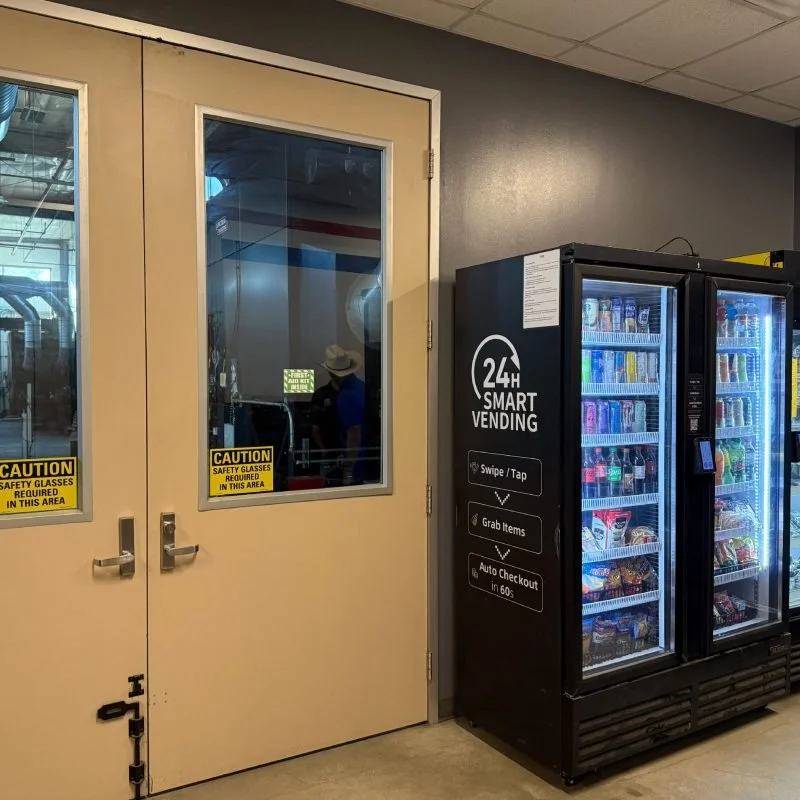
- Break room or lunchroom. The default, and usually the right answer. Longest dwell, every shift, already conditioned
- Between the time clock and the floor. Everyone passes it twice a shift, and the second pass is the one that sells
- Dock office or driver lounge. Carriers and yard staff who are not going to walk your plant looking for a machine
- Second break room on the far end. Big buildings lose 3rd shift to walking distance. Two units beats one badly placed one
From you: floor space, a standard outlet, internet. That is the list.
The Elk Grove Village Business Park is the largest industrial park in North America — roughly 62 million square feet across six square miles, with 5,600+ businesses, over 400 manufacturers and about 60,000 employees.
Where we cover
Warehouses, distribution centers, 3PL facilities and light manufacturing plants across the Chicagoland industrial belt — the O'Hare corridor through Elk Grove Village, Bensenville, Wood Dale, Itasca and Addison; West Chicago, Carol Stream and Elgin; and the I-88 and I-55 corridors down through Aurora, Warrenville, Bolingbrook and Romeoville.
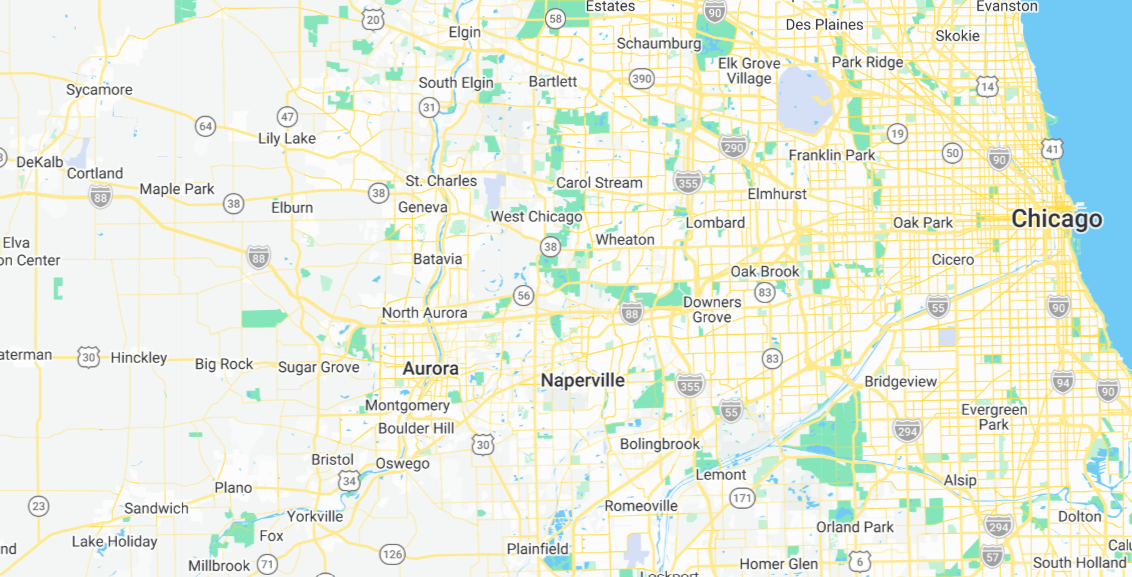
Aurora · Naperville · Elgin · Tri-Cities · Chicago · Full service area
Named as geography, not as clients. These are the corridors we cover; we do not claim any facility, park or employer on this page as a customer.
Warehouse & plant vending FAQ
What does it cost the facility?
Nothing.
No purchase price, lease, installation fee, stocking cost or monthly charge. There is no capital request, no PO and no line item on your facilities budget. GrabNGo owns the equipment, carries the insurance and earns its margin on what sells.
Your contribution is floor space, a standard outlet and a short walkthrough. Employees pay for what they take, at prices we keep in line with a nearby convenience store.
Will it actually be stocked on 2nd and 3rd shift?
That is the difference between this and a route machine.
Stock levels report to us remotely, so we restock around what your building buys down rather than on a fixed route day. If your 2nd shift clears the sandwiches every Wednesday, we see it in the data and we plan for it.
We can also service off-shift so nobody is in your aisle at peak. Tell us your windows at the walkthrough.
Do we get a commission?
Sometimes, and it depends entirely on volume.
A high-headcount, high-captivity building running two or three shifts can support a revenue share. A 60-person single-shift shop usually cannot, and we would rather say so than sign a number we cannot pay.
Bring it up at the walkthrough and we will give you a straight answer based on what your building actually does.
Can we subsidize it for our employees?
Yes, and a fair number of plants do.
You can cover a set amount per item or pick up a whole category outright — water and electrolytes through the summer, coffee on 3rd shift. Employees still tap their own card, the discount applies at the shelf, and you get one invoice for the difference.
It is optional. The standard setup costs you nothing, and this is a lever you can add later or drop at any point.
Will this create work for our maintenance team?
No. It never enters your work order queue.
We stock it, clean and sanitize it, rotate product by date and service the hardware. Employees contact us directly through the support number and refund QR code on the unit.
Stock levels and temperature are monitored remotely, so most problems are visible to us before anyone reports them. Nobody on your side makes change, chases a refund or opens a ticket.
Where can it physically go, and is it a safety issue?
A conditioned break room, lunchroom or dock office — not an open dock or an unheated bay.
It is placed out of forklift and powered-industrial-truck travel lanes, clear of exit routes and corridor clear width, with approach and reach kept within ADA clearances. Freestanding, no anchoring, no wall penetrations, nothing that touches your fire or sprinkler layout, and no cord run across a walking surface.
It needs one standard 120V grounded outlet and internet — no dedicated circuit, no plumbing, no drain, no electrician and no permit pulled by you. We confirm all of it with you at the walkthrough, and if your EHS lead wants to walk the placement first, that is normal and we plan for it.
Our workforce isn't all tech-savvy. How hard is it to use?
Tap a card or a phone, open the door, take it, close it.
No app to download, no account to create, no sign-up, no badge integration and no card to load. It works the same for a 25-year veteran and someone on day two who does not speak much English yet.
We put clear signage on the unit for the first few weeks, and the support and refund contact is printed right on it.
We run unstaffed overnight. Is theft a problem?
It is our problem, not yours, and that is not a figure of speech.
There is no coin box or bill stacker, so there is nothing worth breaking into. The door only opens after a card is authorized, and the session is tied to that card.
Ordinary shrink is priced into our model and is our cost. If the unit is damaged, it is our equipment and our insurance, so you are not filing anything or replacing anything.
Is there a contract? Other companies advertise "no contract."
Yes, and we would rather explain it than pretend otherwise.
We are placing our own equipment and inventory in your building at our cost, so the agreement protects that investment and puts our service obligations in writing for you. What matters is the exit: a 90-day mutual trial with 14-day notice and no fee.
If it is not working for either side, it ends quickly and cleanly, and we take the unit out with no restoration cost to the building.
Does our facility qualify? We're not a huge building.
Captivity matters as much as headcount.
A 180-person plant running three shifts where nobody can leave the property mid-shift often works better than a 500-person single-shift building with a strip mall next door. Multi-shift, gated, and far from food is our best-performing profile.
We will tell you at the walkthrough whether it works, and we would rather decline than install a market that sits half empty.

Cover every shift without a capex request
A free 15-minute walkthrough tells you whether your building is a fit. No pressure, no obligation, no cost either way.
- Walkthrough. 15 minutes, scheduled around your shift change. Straight yes or no.
- Sign. Plain-language agreement, certificate of insurance, one-page summary if you need to send it up.
- Install. Two to eight weeks. One visit, off-shift if you want it.
- Ongoing. Monitoring, restocks, date rotation, refunds. All ours.
Prefer email? info@getgrabngo.com · How it works · FAQ · All industries