

Vending Machines & Micro-Markets for Colleges & Campuses
A cashless, glass-front market for your residence hall lobby, library or student center, open at 1 a.m. when the dining hall has been closed for 5 hours. We own it, stock it, service it and insure it at zero cost to the institution. Tap a card or a phone, no app to download. Serving colleges, universities, student housing and school districts across DuPage, Kane, Cook, Will and Kendall counties.
$0 campus cost · Open 24/7 · No cash on site · COI before install
The dining hall closed at 8. The library is open until 2.
There are 300 students in that building and 1 machine on the 2nd floor, and it has been sold out of everything but pretzels since Sunday night.
So they order delivery with an $11 fee, or they walk off campus in February, or they just don't eat. Every one of those is a worse outcome than the one you could have had for nothing.

Meal plans cover the hours your dining team works. Residence halls, libraries and field houses run on their own schedule. That gap is the entire pitch on this page.
50 minutes and $11
to get a sandwich
Sophomore, fourth floor, paper due at 9 tomorrow. He hasn't eaten since 1. Here's how the next hour of his study time goes.
Down to the lobby.
The machine takes cards now, which is something. 2 rows sold out and the rest is candy.
Across the quad to the student center.
Closed at 9. He knew that and walked over anyway, because the alternative is leaving campus.
Opens the delivery app.
Fees, service charge, tip. $14 for a sandwich, 40 minutes out.
Waiting at a locked front door.
The driver can't get in and can't find the building. He goes down to meet him in a hoodie and slides.
Back upstairs, 1 hour gone.
The desk staffer dealt with a stranger at the door at 10:30. Nobody logged any of it.
9:40 down. 9:44 back at the desk.
He taps his card, takes a sandwich and a cold drink, and is back upstairs in 4 minutes. No delivery fee, no stranger at the front door, no resident propping it open.
It reads like a convenience story. For residence life it's a door-security story, and those are the ones that end up in an incident report.

3 crowds, 1 unit

Residents and late studiers
The reason this page exists.
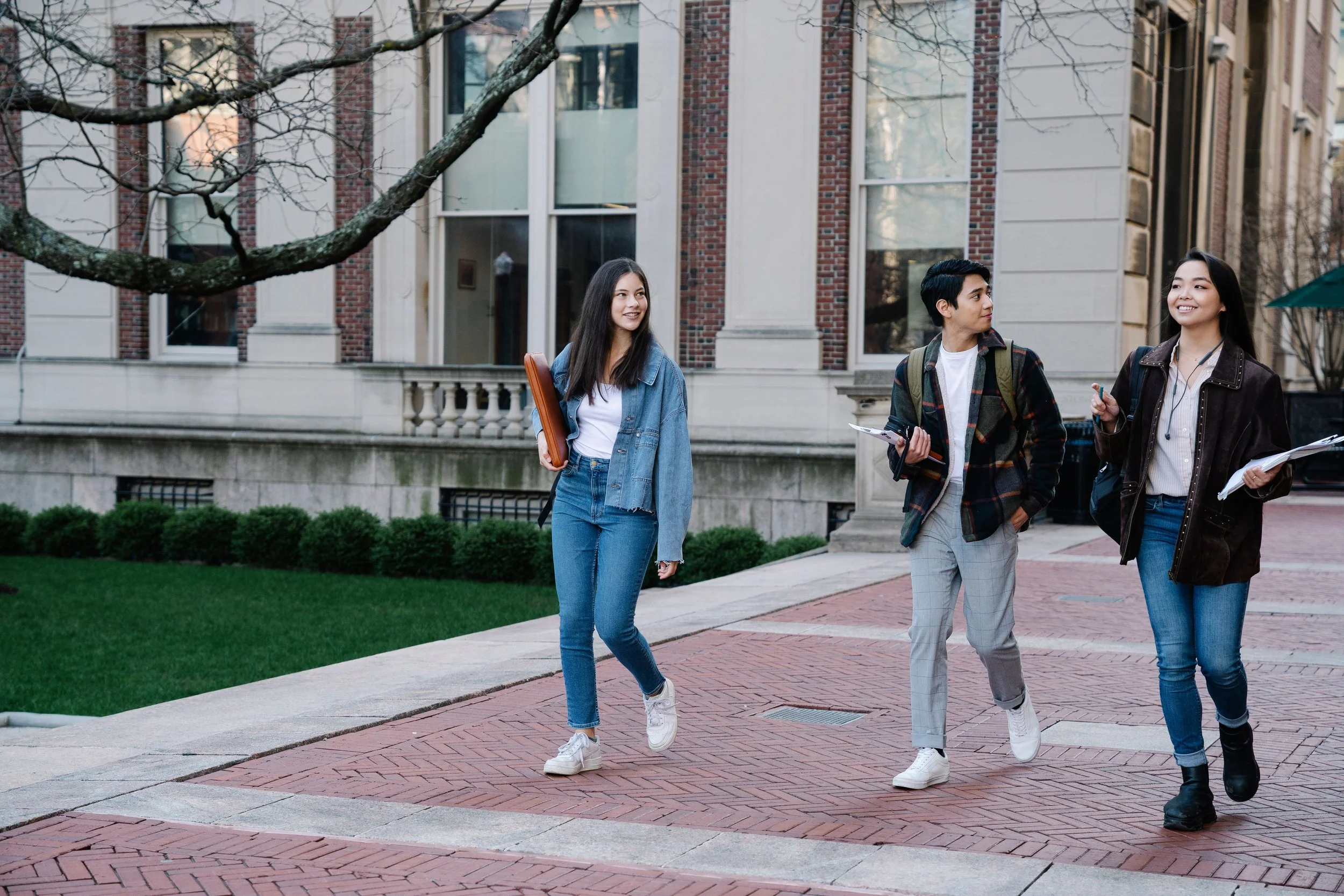
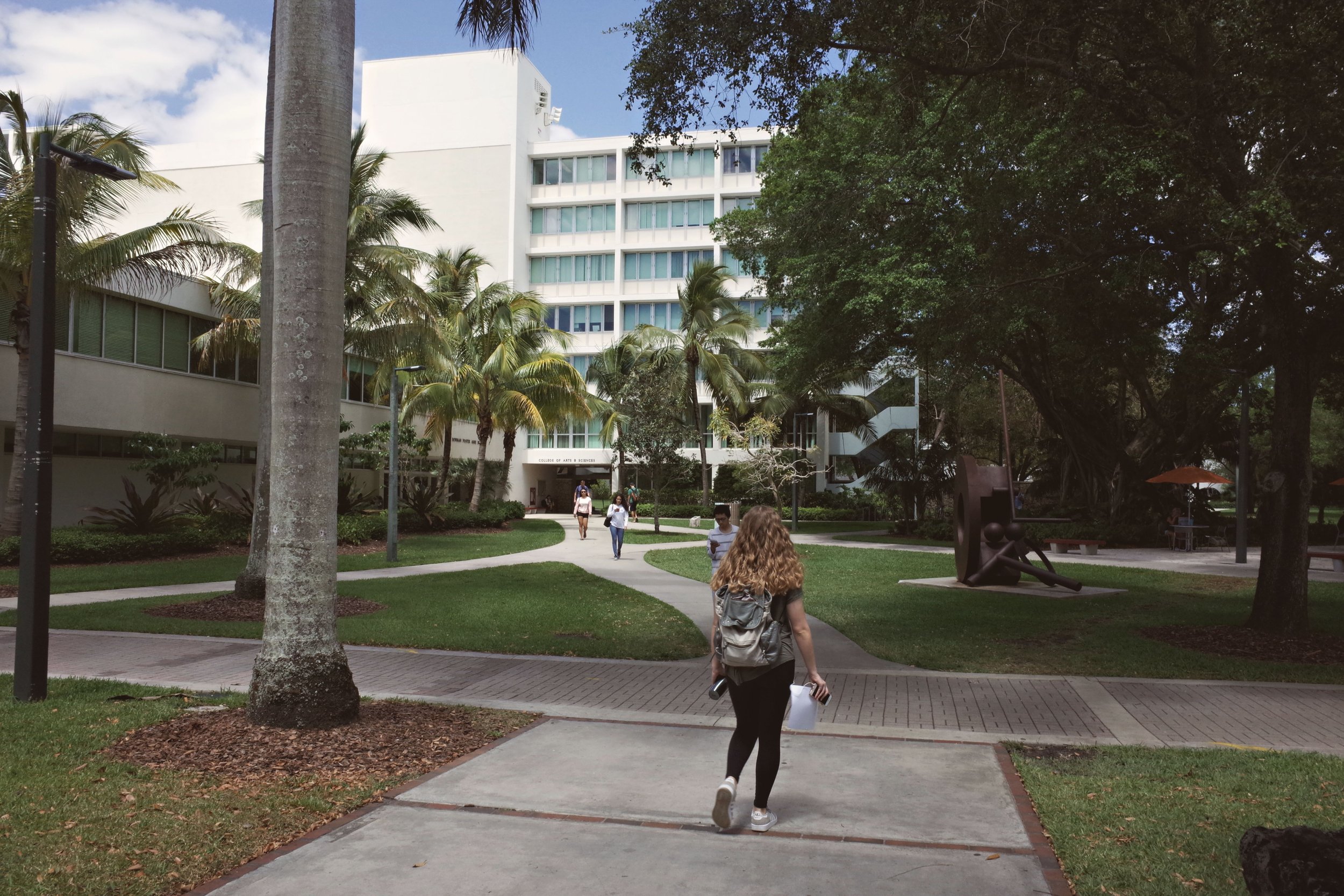
Residence halls, libraries and study commons after the dining hall closes. Sandwiches, protein, cold drinks, coffee and energy, not a wall of candy at 1 a.m. during finals.
Commuters and night classes
Community colleges live on this.
A 6 p.m. class after a full shift, with nothing open on campus and no time to stop on the way. Commuter lounges and academic building break areas are consistently the strongest placements.
Faculty, staff and athletics
The people still in the building at 9.
Custodial and grounds crews, desk staff, coaching staff, department offices, weekend tournaments and campus events. Same unit, same terms, 1 install.
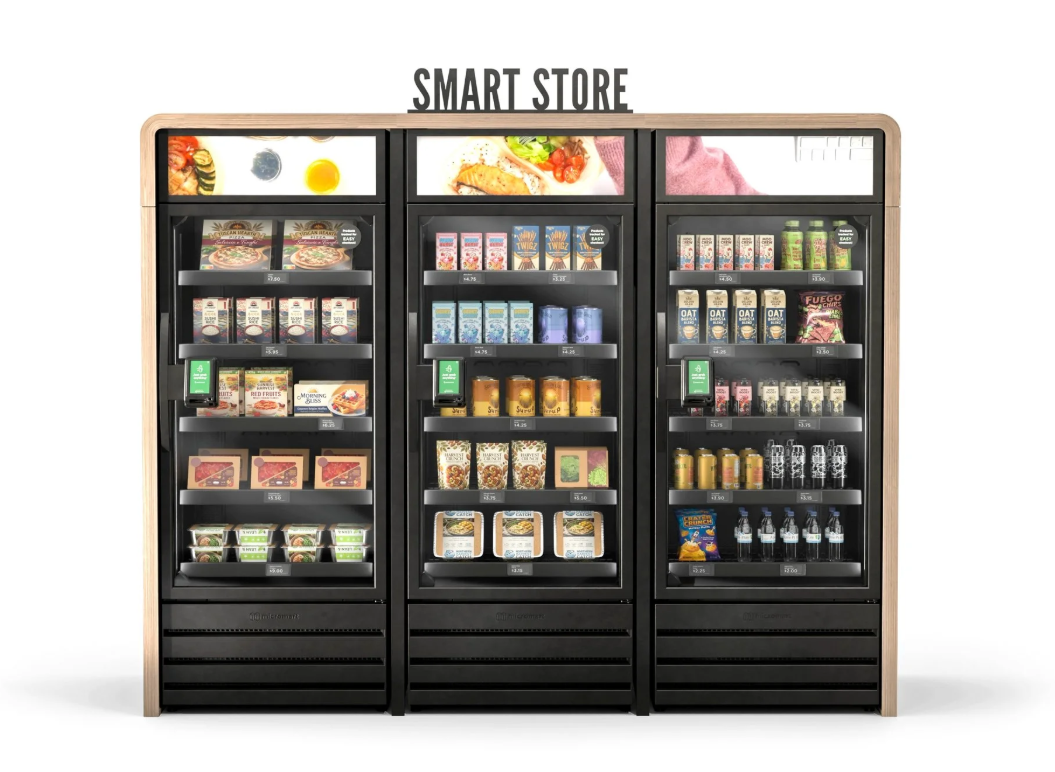
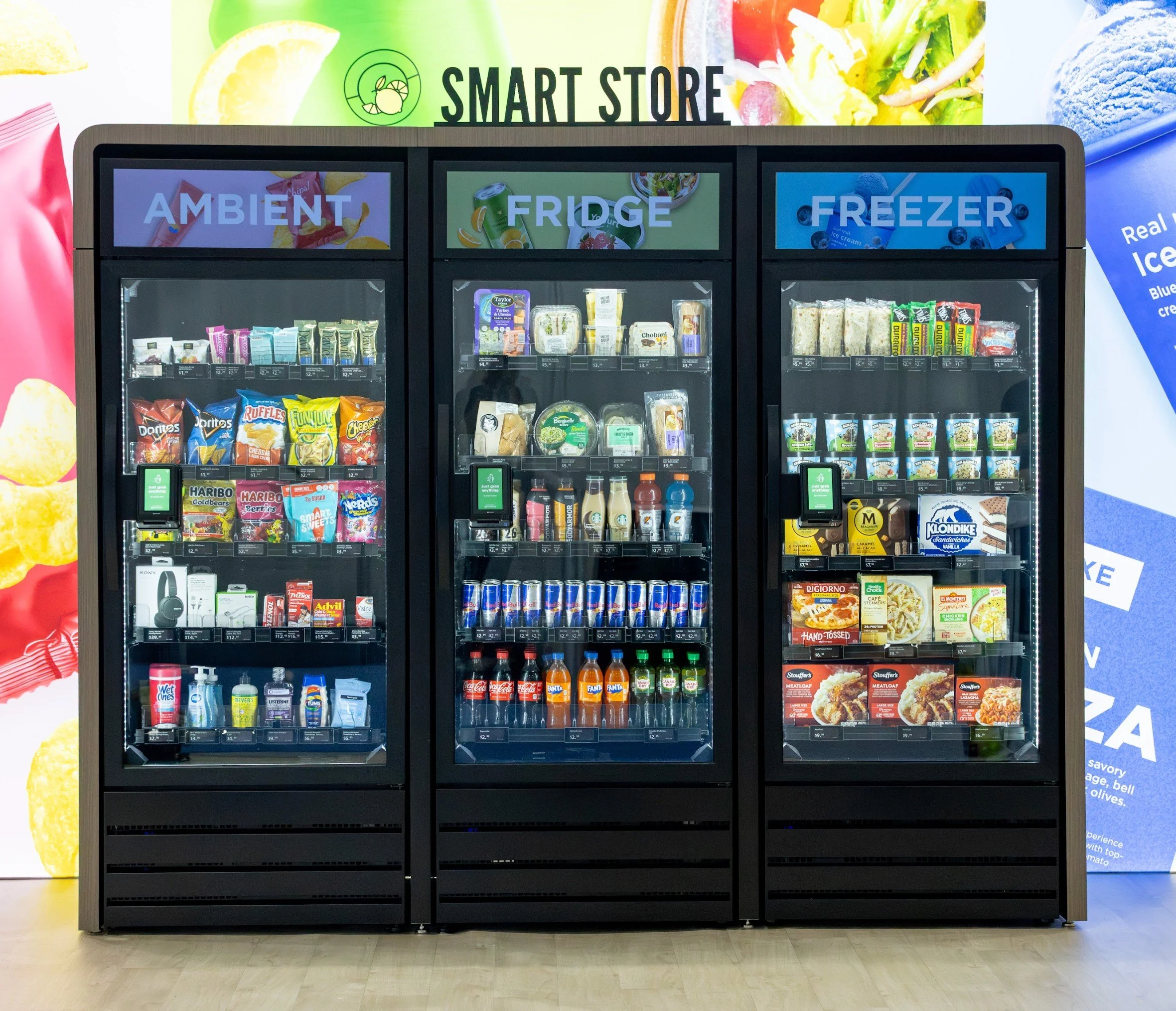
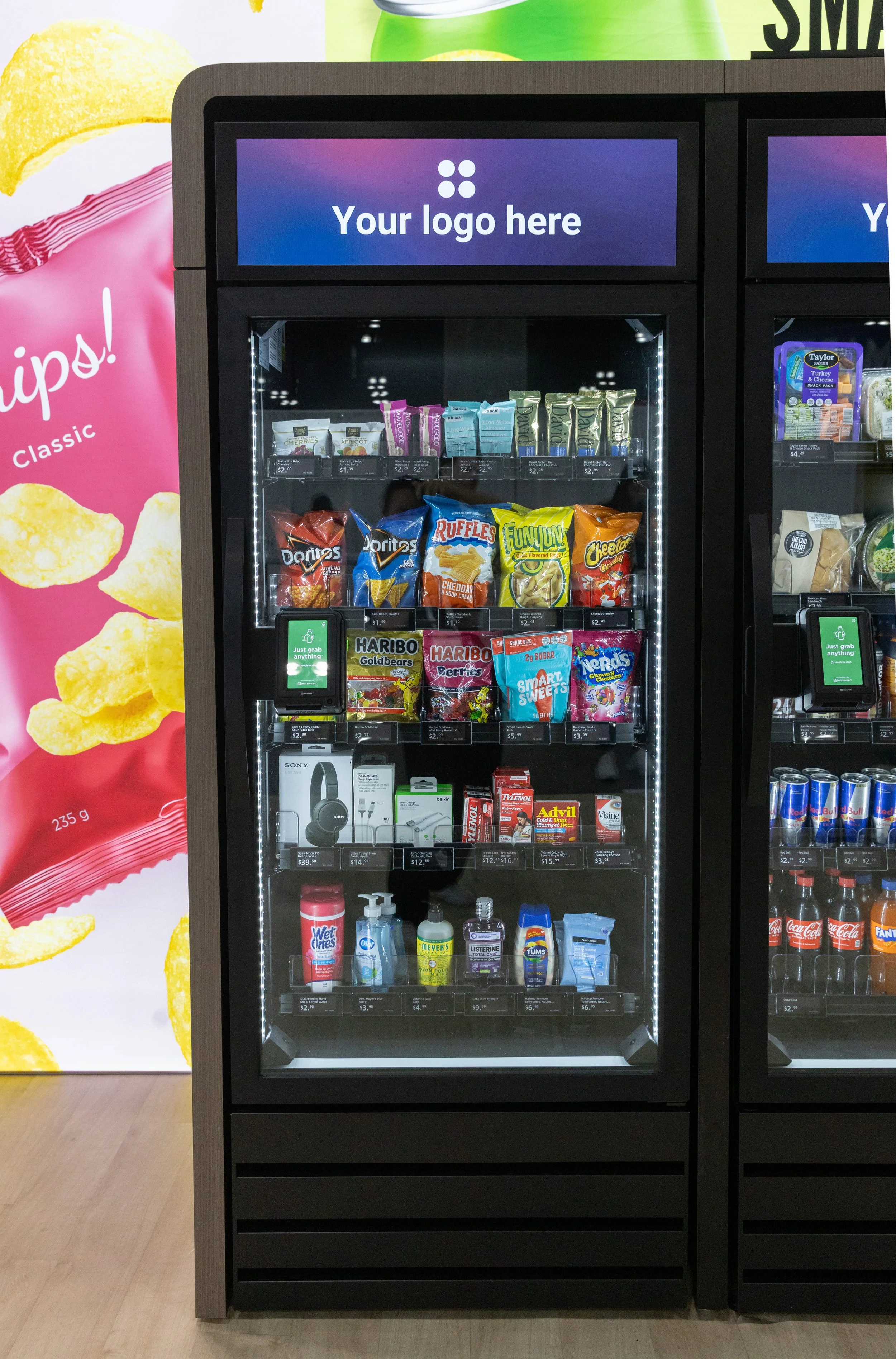
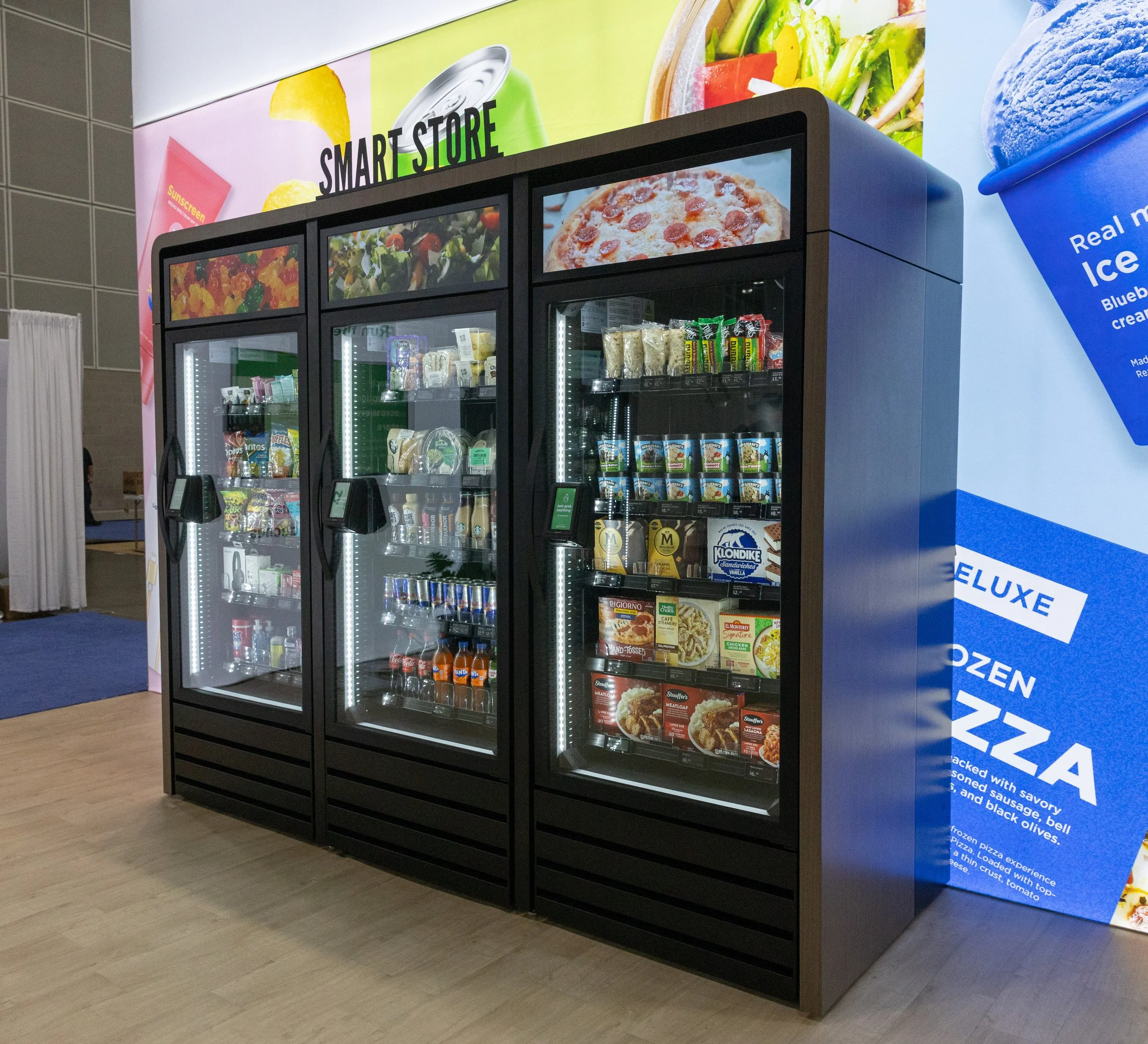
A small store, not a vending machine
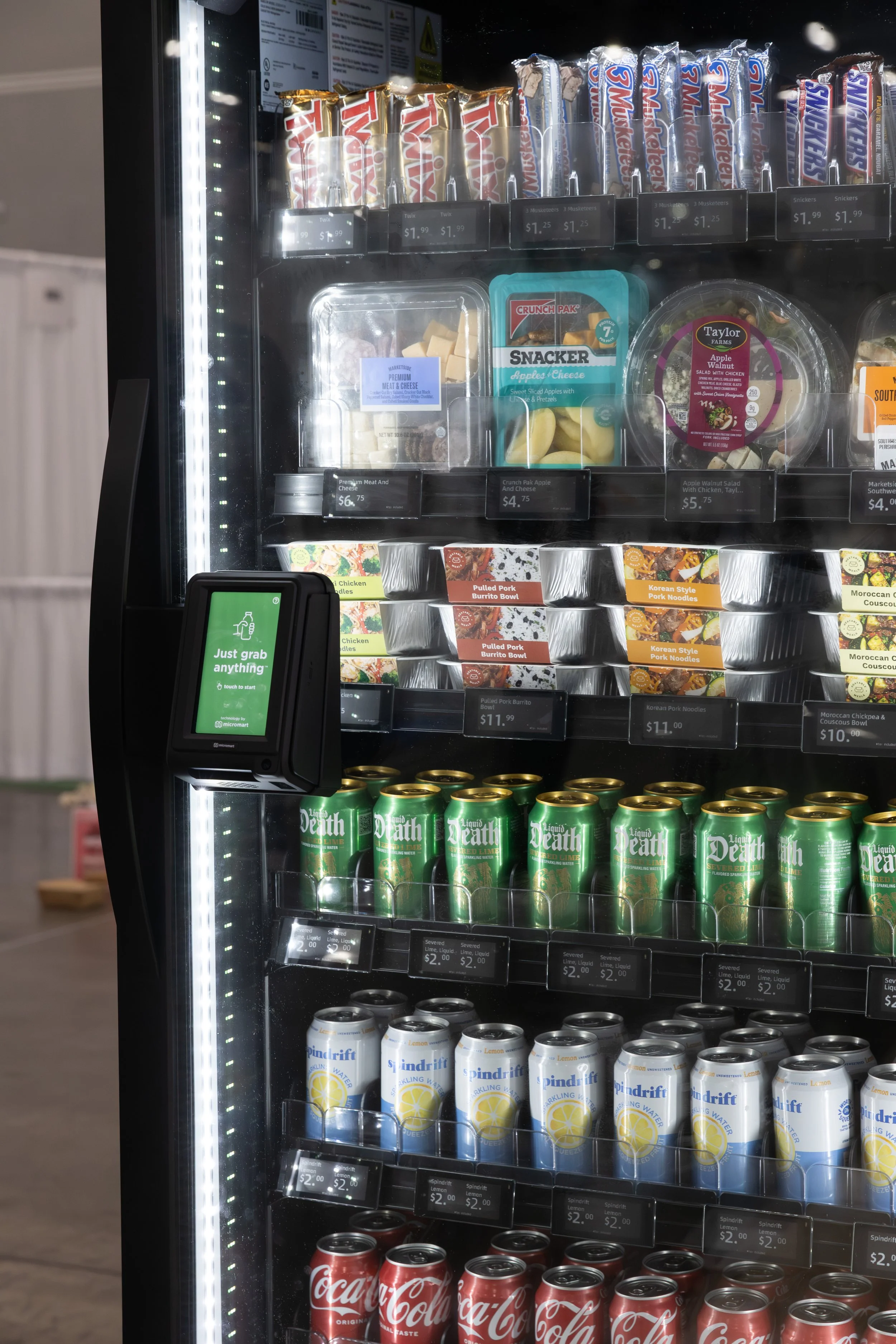
Tap a card, open the door, take it, close it. The charge posts on its own. No coins, no bill slot, no app to download, nothing your facilities team has to learn.
- 3–4x the selection of a coil machine, including sandwiches, protein, real meals, cold drinks and coffee
- Nothing to jam, because people take it by hand. No shaking, no rocking, no note taped to the glass
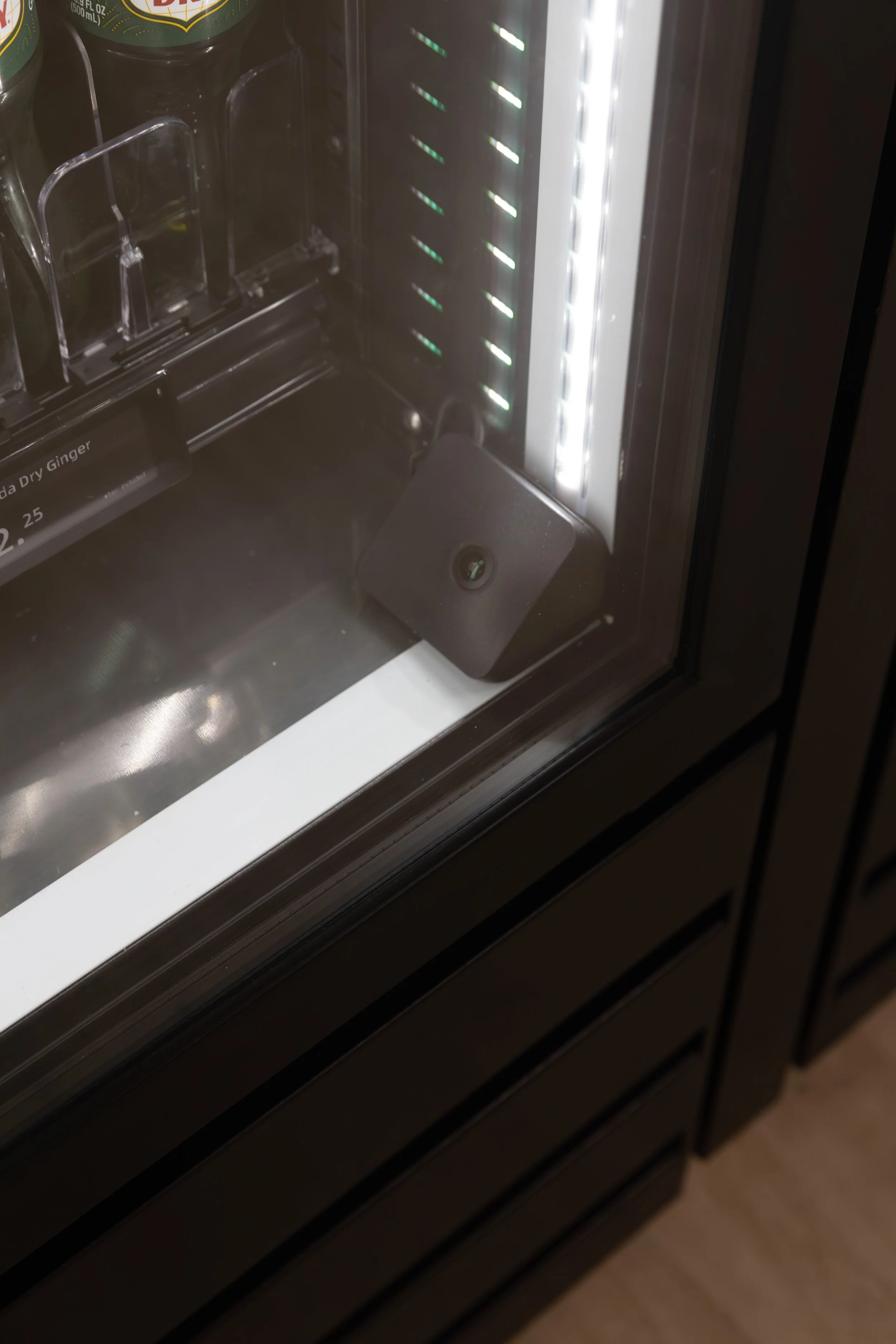
- No cash on site. Nothing worth prying open in an unstaffed lobby at 3 a.m.
- Tap a card or a phone. No app, no account, no sign-up, and nothing that touches your card office or your network
- $0 to the institution. We own, stock, service and insure it
One of these is in your
lobby right now
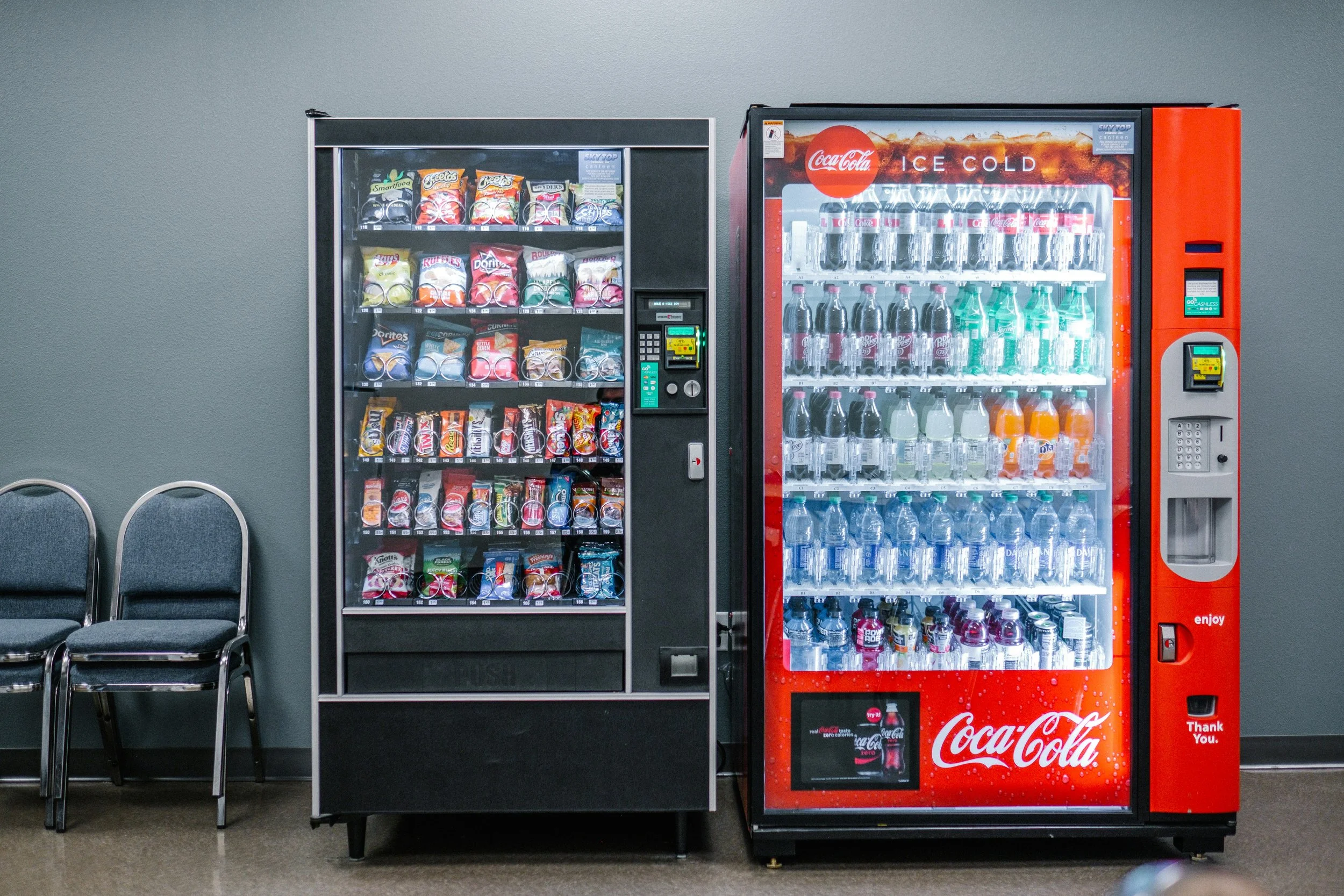
Coils, a bill slot, and a Post-it that says the dollar reader is broken.
Tap, take, go. Restocked on live sales data, not a route day.
See the full side-by-side comparison
| Vending machine | GrabNGo micro-market | |
|---|---|---|
| Selection | 30 to 40 items, snacks and soda | 100+ items: sandwiches, protein, real meals, cold drinks, coffee, better-for-you options |
| Payment | Cash, coins, maybe a reader that works | Tap a card or a phone. No app, no account, no cash on site |
| Jams | A standing complaint, and people rock the machine | Taken by hand. Nothing to jam, nothing to tip |
| Hours it sells | Whenever it happens to be working and stocked | Every hour, including finals week and move-in weekend |
| Restocking | A route day, whether it is empty or not | Live inventory. We come when your building actually buys it down |
| Product control | Whatever the route truck has on it | You approve the planogram. Categories in or out, in writing |
| Complaints | Land on your desk staff and your work order queue | Come to us. Support number and refund QR code on the unit |
| Cost to the campus | Varies, and there is usually a service call in it | $0. No capital request, no PO, no monthly |
Four numbers your business office will ask for
Institutional cost
No purchase, lease, install fee or monthly charge. Nothing to bid, nothing to route through capital, no PO number needed.
Work orders
Nobody on your side orders, hauls, stocks, counts or fixes anything. It never enters your facilities queue.
Standard outlet
120V, no dedicated circuit, no plumbing, no drain, no anchoring, no construction and no permit pulled by the campus.
Days to walk away
90-day mutual trial, 14-day notice, no fee. We unplug it and take it out with no restoration cost to the building.
We own the equipment, carry the insurance, absorb ordinary shrink and handle every student and staff question directly. Your part is a spot, an outlet, and 15 minutes.
The highest-captivity buildings
on any campus
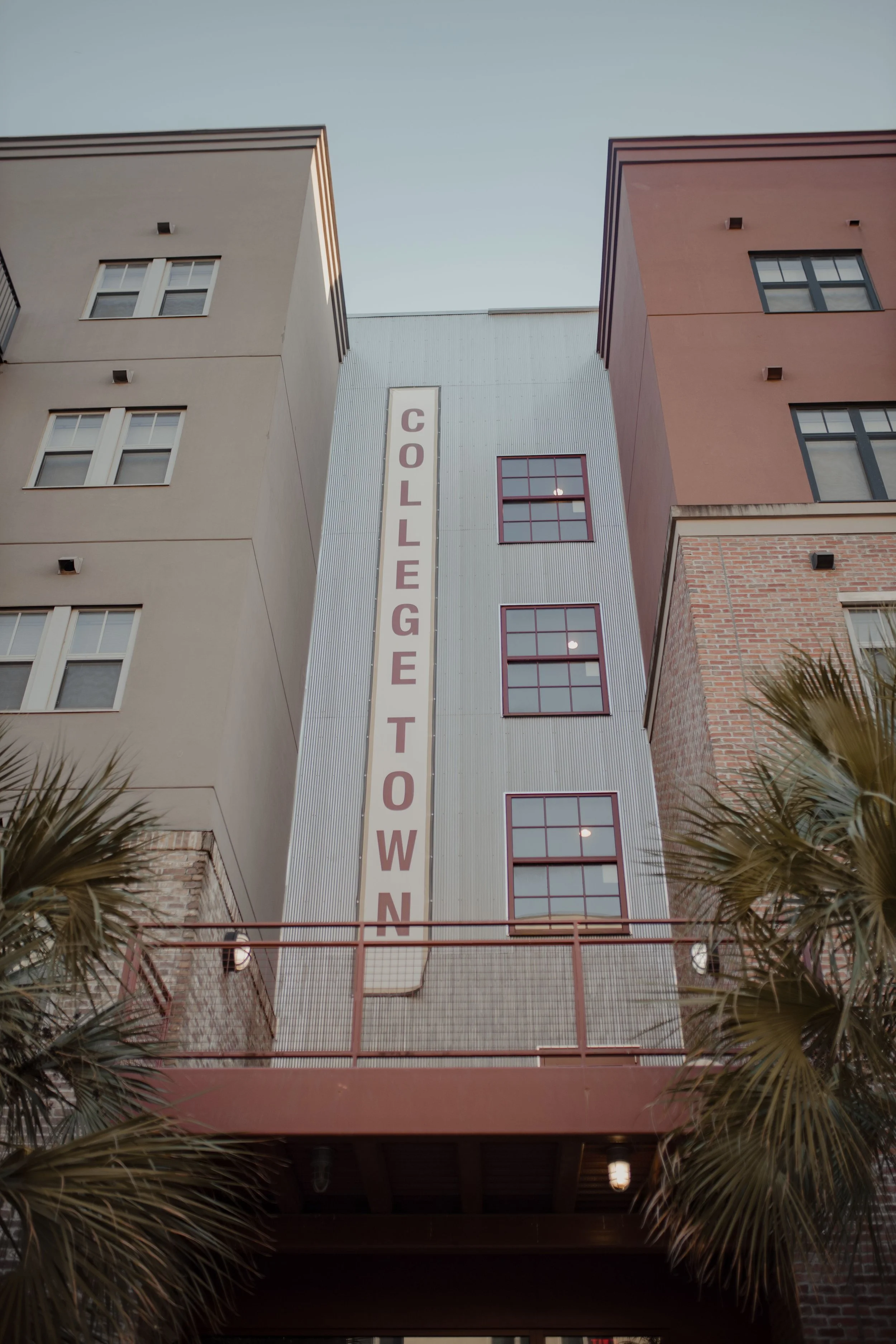
A few hundred residents, a locked front door, and nowhere to walk to at 1 a.m. in February. Residence halls and privately-operated student housing are the placements that perform, and they are the ones your residents notice on tour day.
Open every hour the building is
- Move-in weekend through finals, including the stretch between dining periods and the whole of reading week
- Fewer deliveries at the front door. Fewer strangers buzzed in at 10:30, fewer propped doors, fewer desk incidents
- Real food, not just candy: sandwiches, protein, cold drinks, coffee, plus laundry and personal-care items if you want them stocked
- No cash in an unstaffed lobby, and the door only opens on an authorized card
- A leasing talking point for privately-operated housing, added to the tour without a build-out or a capital request
Property managers: student housing is handled the same way as any multifamily property. Apartments & student housing →

Residence hall lobbies
Locked building, several hundred residents, no staff after 11. The single best-performing placement we install on a campus.

Libraries and study commons
The longest hours on campus and the fewest food options in the building. Cold drinks, coffee and something real at midnight.

Athletics, events and commuters
Field houses, commuter lounges, and the weekends when campus is full and every dining venue is closed.
Nothing here needs a bid, and nothing here needs a budget
There is no purchase, so there is no expenditure to approve. Most campuses handle a placement like this as a facilities-use or space agreement rather than a procurement item, but that is your policy's call, and we will fit whichever path you name.
- No institutional funds change hands. Not at install, not monthly, not ever
- Not exclusive. The agreement does not touch your dining contract, your beverage pouring rights or an existing vending arrangement
- Certificate of insurance naming the institution as additional insured, to your limits, before the install date. W-9 and references on request
- No IT involvement. The unit runs on its own cellular connection. No campus network, no card office integration, no student data
- Termination in writing. 90-day mutual trial, 14-day notice, no fee, no restoration cost
If your counsel wants language changed before it goes to signature, send it back marked up. That is normal and we plan for it.
A real amenity in your buildings, with nothing on your budget.
You either have machines
you're tired of, or nothing at all
You already have vending
And you can probably describe its exact failure mode from memory.
- The bill reader rejects anything that has been folded once
- The route driver comes when the route says, and the hall is empty again by Thursday
- A student's card got charged twice, so it's an email to housing, then to facilities, then to you
- Nobody knows what actually sells in that building, including the vendor
What we do: walk the buildings and give you a configuration and a timeline before you give anyone notice, so there is no gap between the old machines leaving and the market going live. Check the notice period in your current agreement first. Most are 30 days and many are month to month.
You have nothing
Which usually does not mean nothing. It means somebody is doing it by hand.
- An RA-run snack drawer that runs on a Venmo request and somebody's patience
- A warehouse-store run a department assistant makes on a Sunday before an event
- Water and snacks bought out of a residence life budget for move-in and finals week
- Everybody agrees the building needs something. Nobody has the hours or the line item
What we do: replace an unmanaged side project with a real assortment that runs itself, at no capital cost and no ongoing expense. If there are 6 things your building already expects to be there, tell us and they stay in the mix.
In a school building, we place it staff-only
Faculty and support-staff break rooms, not student corridors. That one decision is what keeps a placement off the wellness committee's agenda and out of a competitive food conversation.
USDA's Smart Snacks in School standards apply to food and beverages sold to students on campus during the school day. Food sold to adults sits outside that. If your local wellness policy goes further than the federal rule, send it to us and we will build the planogram to it.
- $0 district cost, so there is no expenditure to approve and nothing to bid
- A 1-page summary written to be forwarded to a superintendent, a board packet or an attorney
- Certificate of insurance naming the district as additional insured, before install
- Background-checked, badged technicians who sign in at the office and can service outside student hours

Where we cover
Community colleges, four-year campuses, student housing, private schools and school districts across the western suburbs: Naperville, Aurora, Wheaton, Lisle, Downers Grove, Bolingbrook, Warrenville and Carol Stream; the Tri-Cities of St. Charles, Geneva and Batavia; plus North Aurora, Montgomery, Oswego, West Chicago, Elgin and DeKalb.
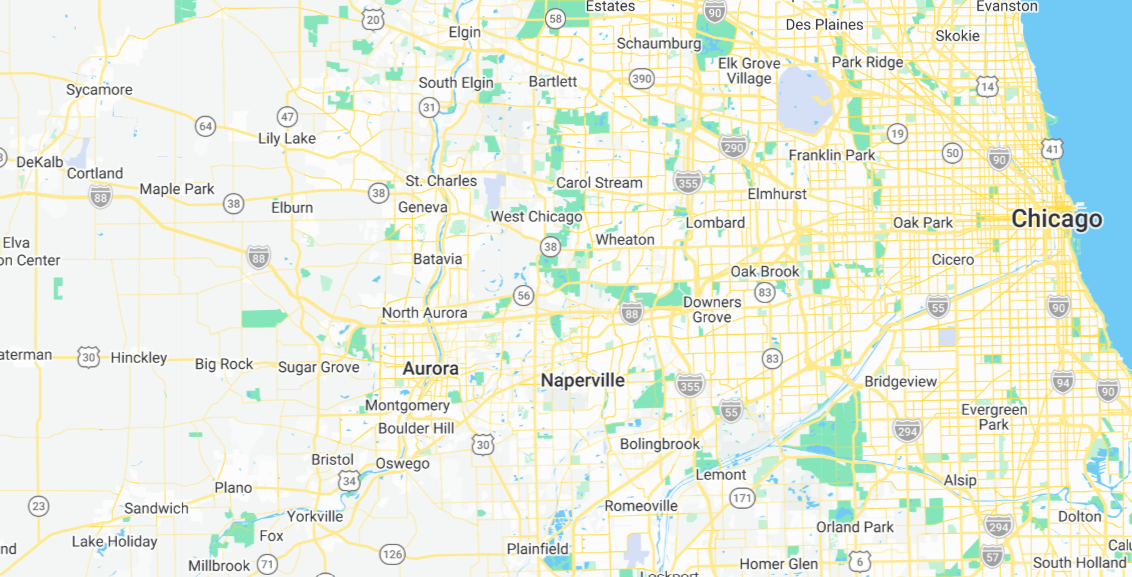
Naperville · Aurora · Elgin · DeKalb & Sycamore · Tri-Cities · Full service area
Named as geography, not as clients. These are the communities we cover; we do not claim any campus, district or school on this page as a customer.
College & campus vending FAQ
Is there any cost to our campus?
No.
No purchase price, lease, installation fee, stocking cost or monthly charge. There is no capital request, no PO and no line item on your budget. GrabNGo owns the equipment, carries the insurance and earns its margin on what sells.
Your contribution is floor space, a standard outlet and a short walkthrough. Students and staff pay for what they take, at prices we keep in line with a nearby convenience store.
What locations on campus work best?
Residence hall lobbies, first. Then libraries and commuter lounges.
Captivity is what makes a market work: a locked building with a few hundred residents and nowhere to walk to beats a high-traffic corridor next to a dining venue every time. Study commons, student centers, field houses and academic building break areas all perform well.
We recommend the spot at a free walkthrough and you approve it before anything is ordered. On a multi-building campus that is often 2 or 3 placements, not 1.
Do the machines work after hours?
Every hour, which is the entire point.
The dining hall closes at 8 and the library is open until 2. Finals week, move-in weekend, reading days, holiday breaks and weekend tournaments are exactly when this earns its floor space.
Stock levels report to us remotely, so we restock around what your building actually buys down rather than on a fixed route day.
Can we control what products are offered?
Yes, and it goes in writing before install.
You approve the planogram. Categories in or out: energy drinks, allergen considerations, a minimum share of better-for-you options, laundry and personal-care items in a residence hall.
We also see what actually sells in your building and will tell you when something isn't moving, so the mix stays useful instead of drifting back to candy.
Does it touch our network, our card office or student data?
No. It runs on its own cellular connection.
No campus Wi-Fi, no network access, no card office or student ID integration, and nothing for your IT department to approve or support. Students pay with an ordinary card or phone, so there is no account to create and no balance to load.
The sensors look at the shelf, not at the room and not at anyone's face. There is no facial recognition and no video of your building.
Is there cash in it? What about theft or vandalism?
There is no cash on site, and that matters in an unstaffed lobby.
No coin box, no bill stacker, nothing worth breaking into over a long weekend. The door only opens after a card is authorized, and the session is tied to that card.
Ordinary shrink is priced into our model and is our cost. If the unit is damaged it is our equipment and our insurance, so nobody in your business office is filing anything.
Who is liable, and what about food safety?
Our equipment, our inventory, our insurance.
The institution is not purchasing, storing, selling or reselling food. We stock pre-packaged product, monitor refrigerated units remotely for temperature, and rotate by date ourselves. Nothing is prepared, portioned or handled by your staff.
You get a certificate of insurance naming the institution as additional insured, to your limits, before the install date. Health department requirements vary by county, and we will tell you exactly what we are placing so you can confirm it with yours.
Will this create work for our facilities staff?
No. It never enters your work order queue.
We stock it, clean and sanitize it, rotate product by date and service the hardware. Students and staff contact us directly through the support number and refund QR code on the unit.
Stock levels and temperature report to us remotely, so most problems are visible to us before anyone reports them. Nobody on your side makes change, chases a refund or opens a ticket.
What happens over summer and semester breaks?
We plan the academic calendar with you at the walkthrough.
Buildings that stay busy through summer (summer session, conference housing, athletics, administration) keep running on a lighter stock plan. Halls that genuinely close get drawn down before break so nothing sits, and restocked before students return.
You are never billed for a slow month, because you are never billed at all.
Do we get a commission? And does our building qualify?
Revenue share is genuinely on the table at campus volumes.
A residence hall with several hundred residents, a busy library or a multi-building campus can support it. A 30-person department office cannot, and we would rather say so than sign a number we cannot pay.
Captivity matters as much as headcount. A locked building far from food beats a bigger one with a strip mall across the street. We will tell you at the walkthrough whether it works, and we would rather decline than install a market that sits half empty.
Is there a contract? Other companies advertise “no contract.”
Yes, and we would rather explain it than pretend otherwise.
We are placing our own equipment and inventory in your building at our cost, so the agreement protects that investment and puts our service obligations in writing for you. It is not exclusive and it does not touch your dining contract or beverage pouring rights.
What matters is the exit: a 90-day mutual trial with 14-day notice and no fee. We take the unit out with no restoration cost to the building.
We're a K–12 district. Is this different for us?
Yes. In a school building we place it staff-only, in the faculty or support-staff break room.
USDA's Smart Snacks in School standards apply to food and beverages sold to students on campus during the school day. Staff-only placement sits outside that, which is why we recommend it: it keeps the program off the wellness committee's agenda entirely.
Because no district funds change hands there is no expenditure to approve and nothing to bid. You get a plain-language agreement, a 1-page summary written to be forwarded, and a certificate of insurance naming the district as additional insured.

Cover the hours the dining hall is closed
A free 15-minute walkthrough tells you whether your buildings are a fit. No pressure, no obligation, no cost either way.
- Walkthrough. 15 minutes, scheduled around your day. Straight yes or no, building by building.
- Paperwork. Plain-language agreement, certificate of insurance, one-page summary for whoever signs.
- Install. 2 to 8 weeks. 1 visit, outside class hours if you want it.
- Ongoing. Monitoring, restocks, date rotation, refunds. All ours.
Prefer email? info@getgrabngo.com · How it works · FAQ · All industries