
Vending Machines & Micro-Markets for Offices & Break Rooms
A cashless, glass-front market in your break room. We install it, stock it, service it and insure it at zero cost to the company, and every employee question comes to us instead of your team. Naperville, Aurora, Oak Brook, Lisle, DuPage and the I-88 corridor.
$0 capital & $0 ongoing · Zero facilities tickets · 24/7 employee access · Installed in 2–8 weeks
The break room is on your engagement survey. Again.
It is 2:45. Someone wants a cold drink. The machine is cash only, half the rows are empty, and the good stuff sold out Tuesday.
So they take their keys and drive somewhere.
A market in the break room makes it ninety seconds. It is also the rare fix you can announce at a town hall without asking Finance for anything.
Nobody scores the benefits deck.
They score the Tuesday afternoon.
The break room shows up in engagement surveys and exit interviews because people touch it every single day. That is also why fixing it registers immediately.
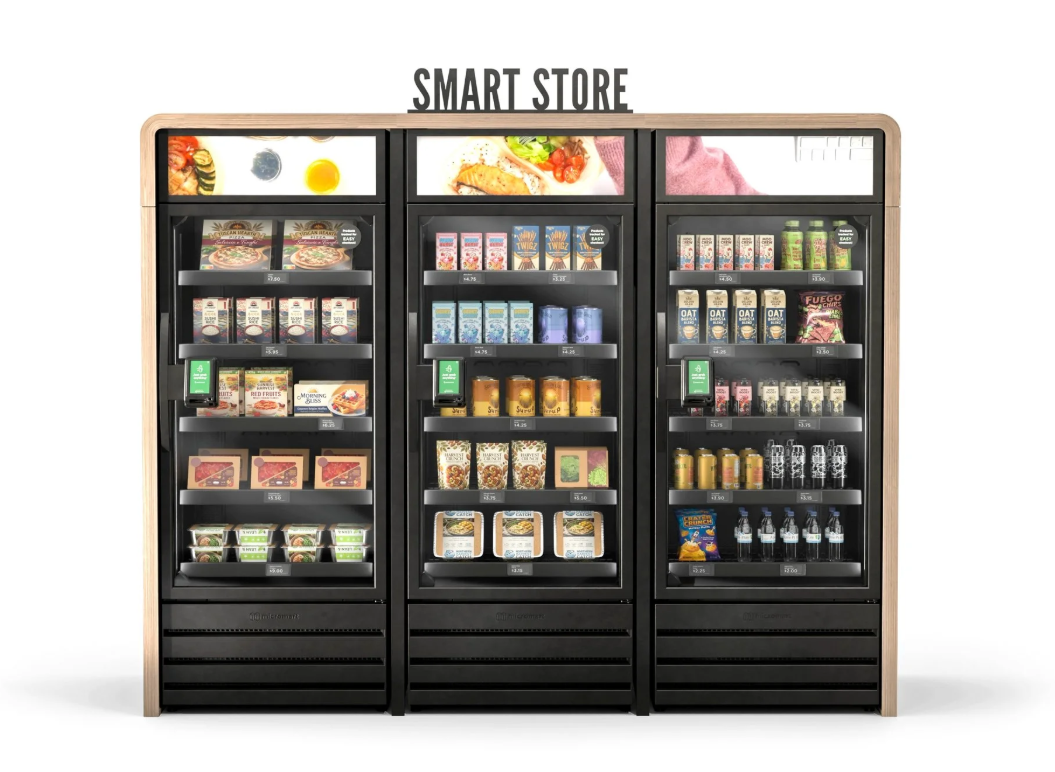
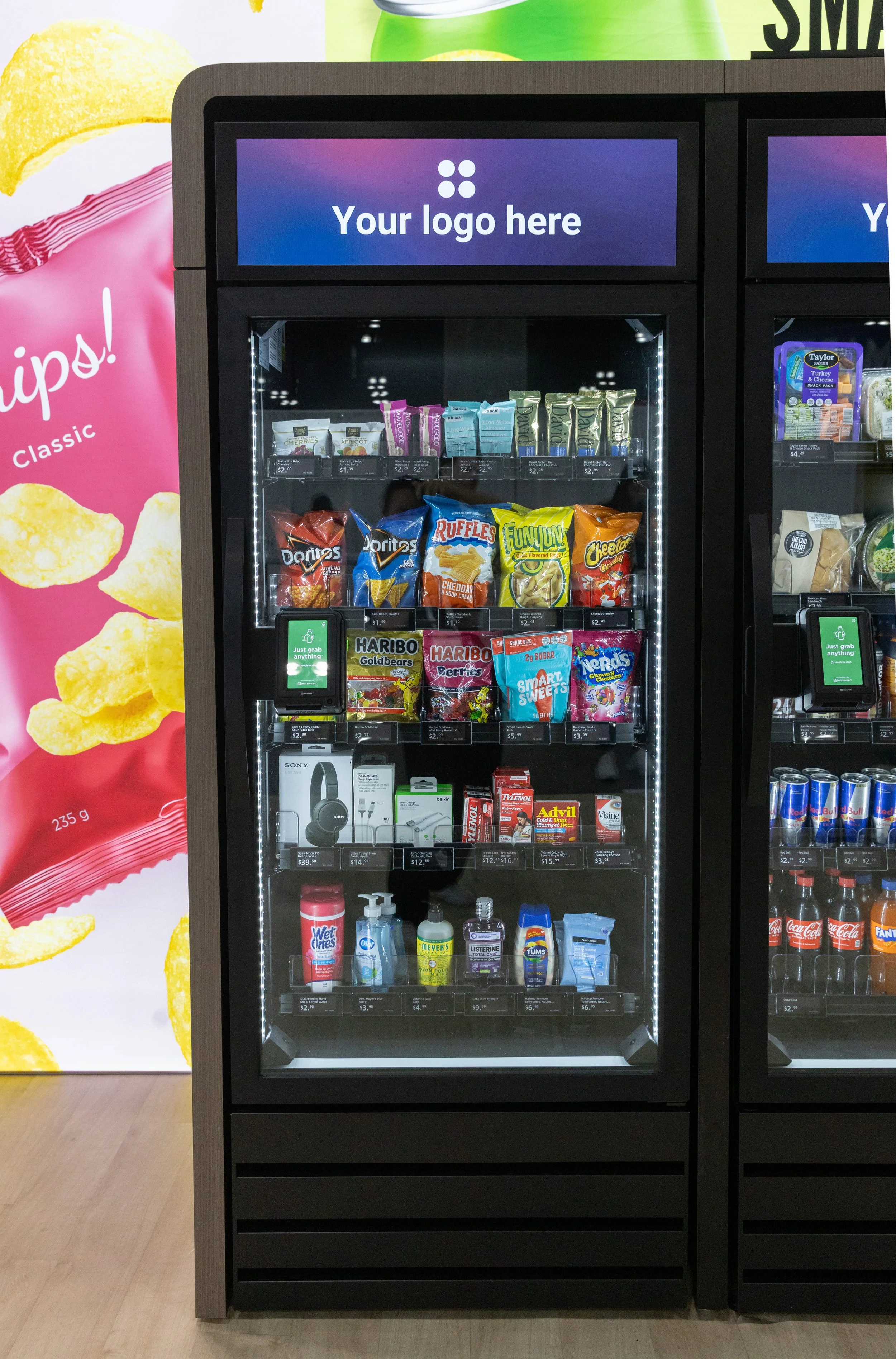
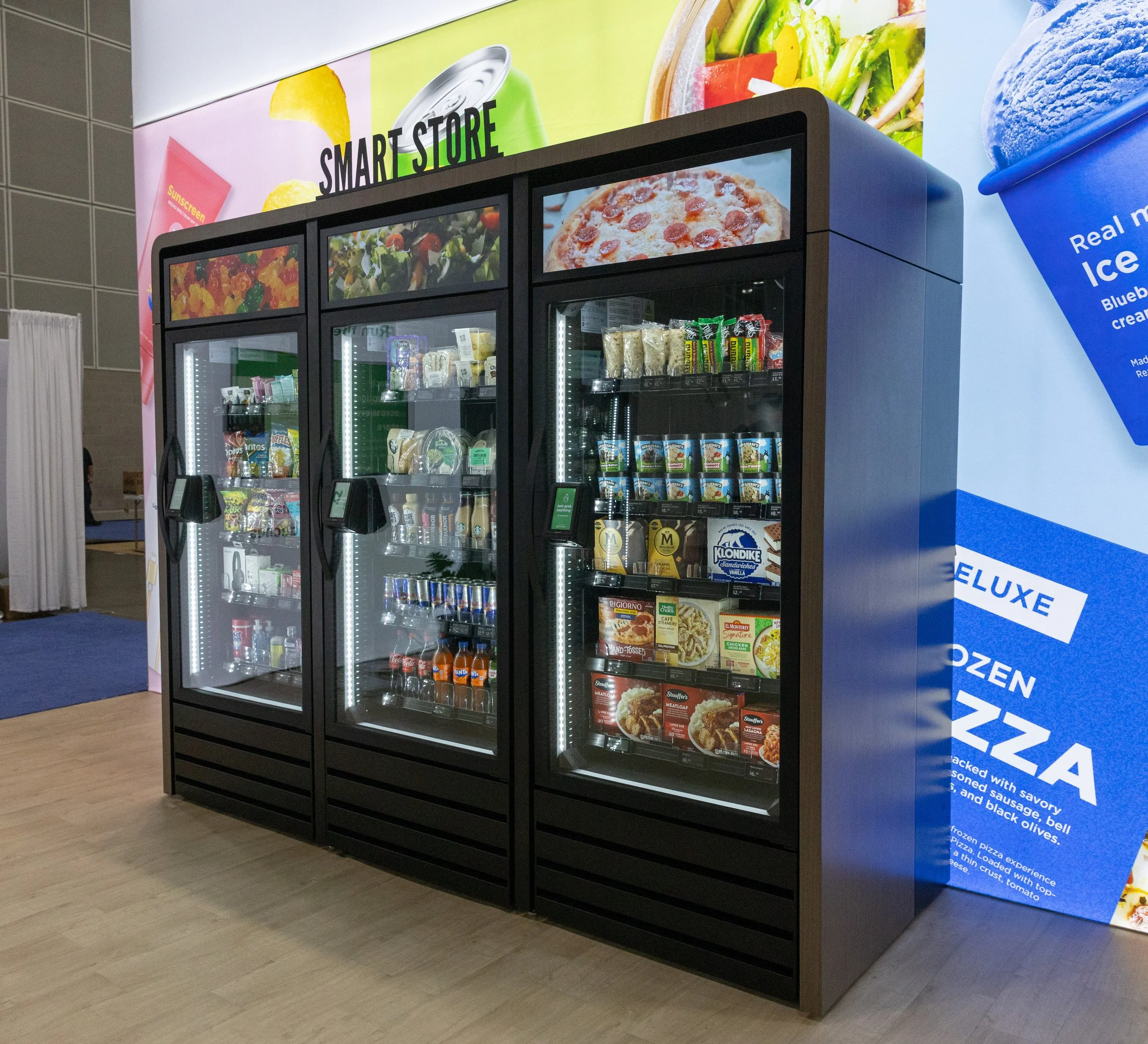
A small store, not a vending machine
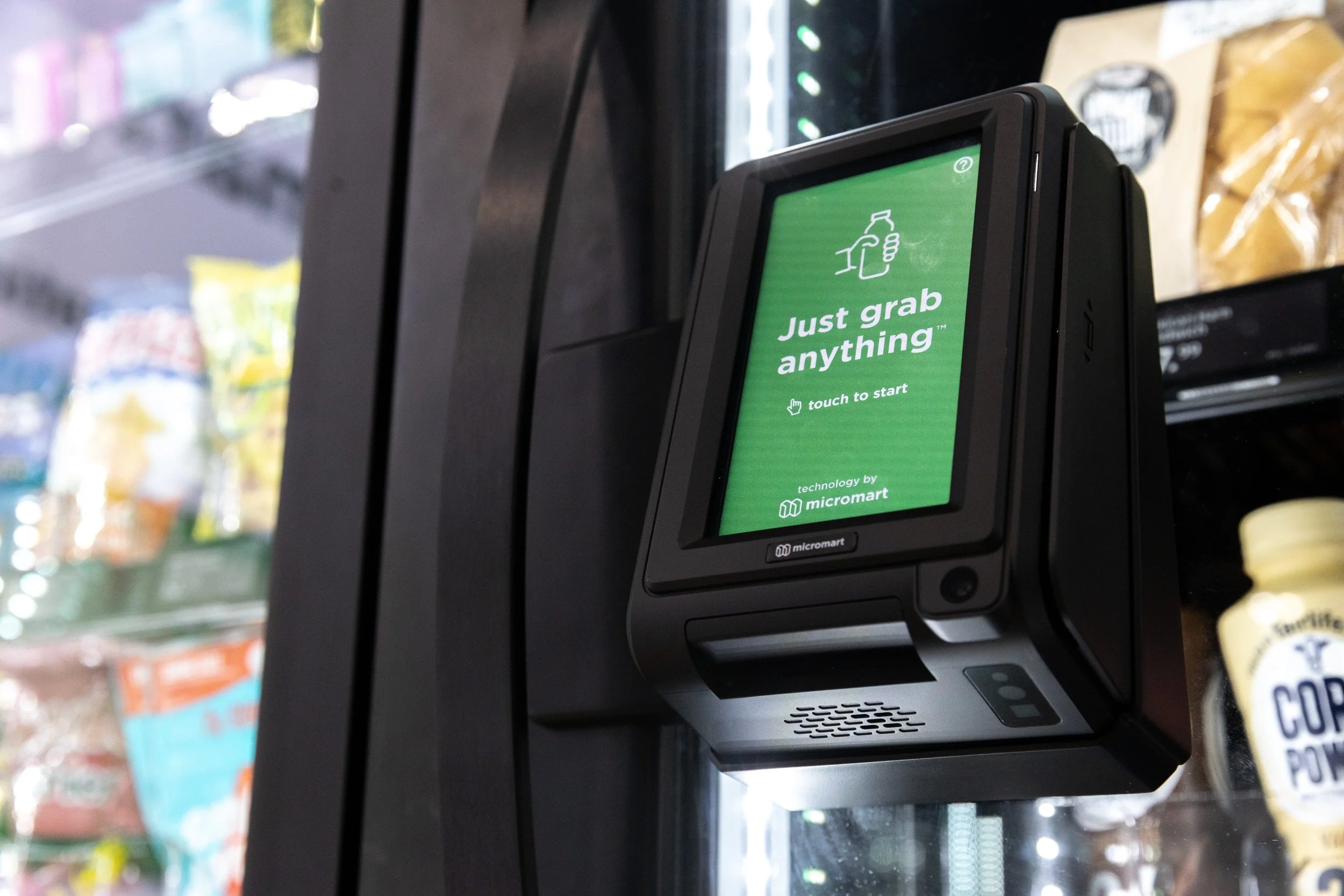
Tap a card, open the door, take it, close it. The charge posts automatically. No coins, no bill slot, no app to download, nothing to train anyone on.
- 3–4x the selection of a coil machine
- Nothing to jam. Employees take it by hand
- Restocked on live data, not a route day
- $0 to the company. We own, stock, service and insure it
One of these is in your
break room right now
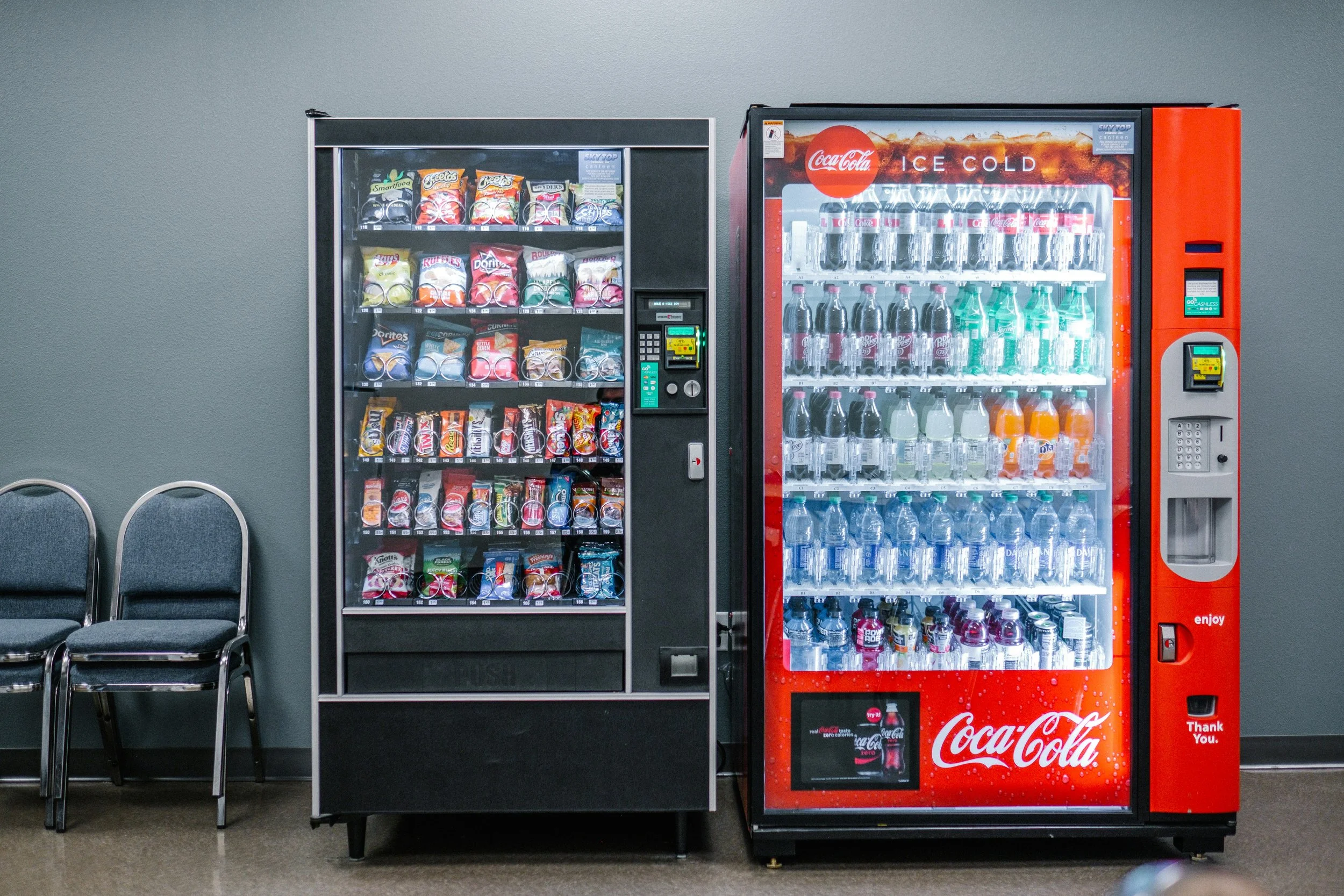
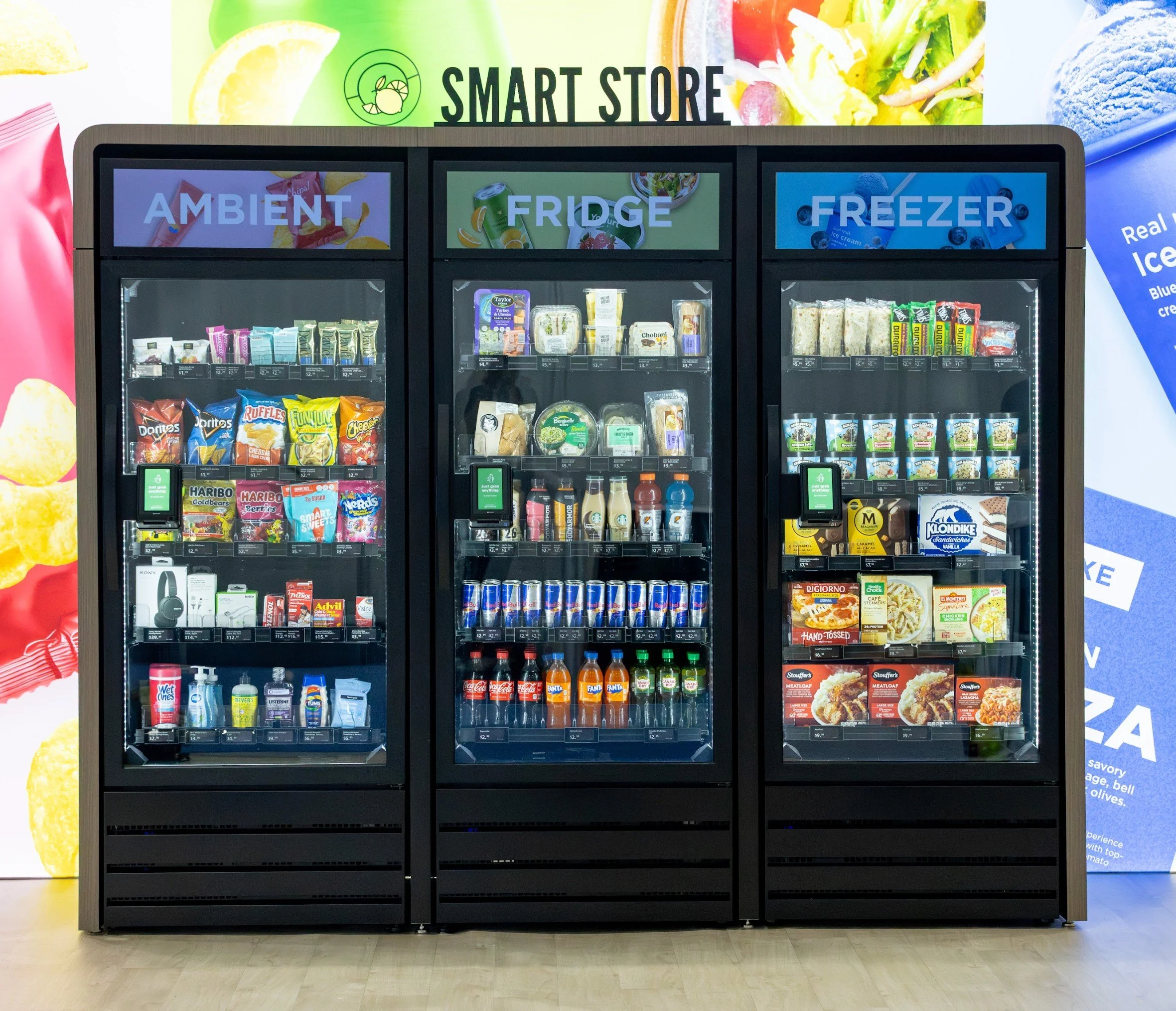
Coils, a bill slot, and a note taped to the front.
Tap, take, go. Stocked on live data.
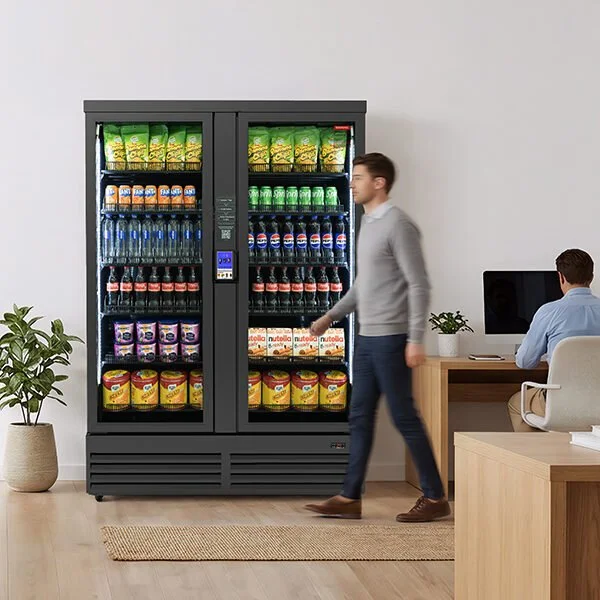
Same room. Three ways we can build it.
You already have the footprint. A break room wall, the alcove by the elevators, the corner with the old machine in it.
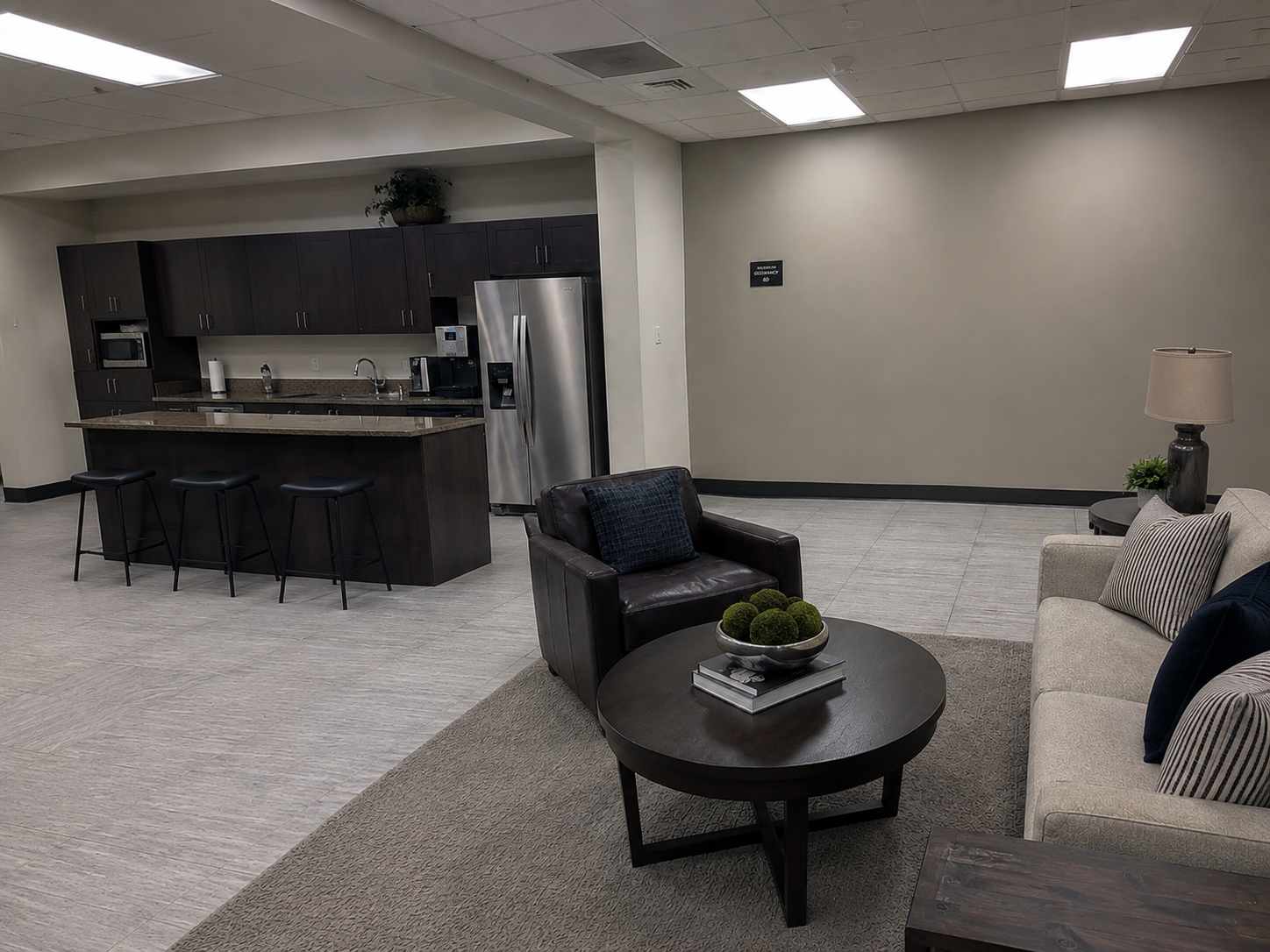
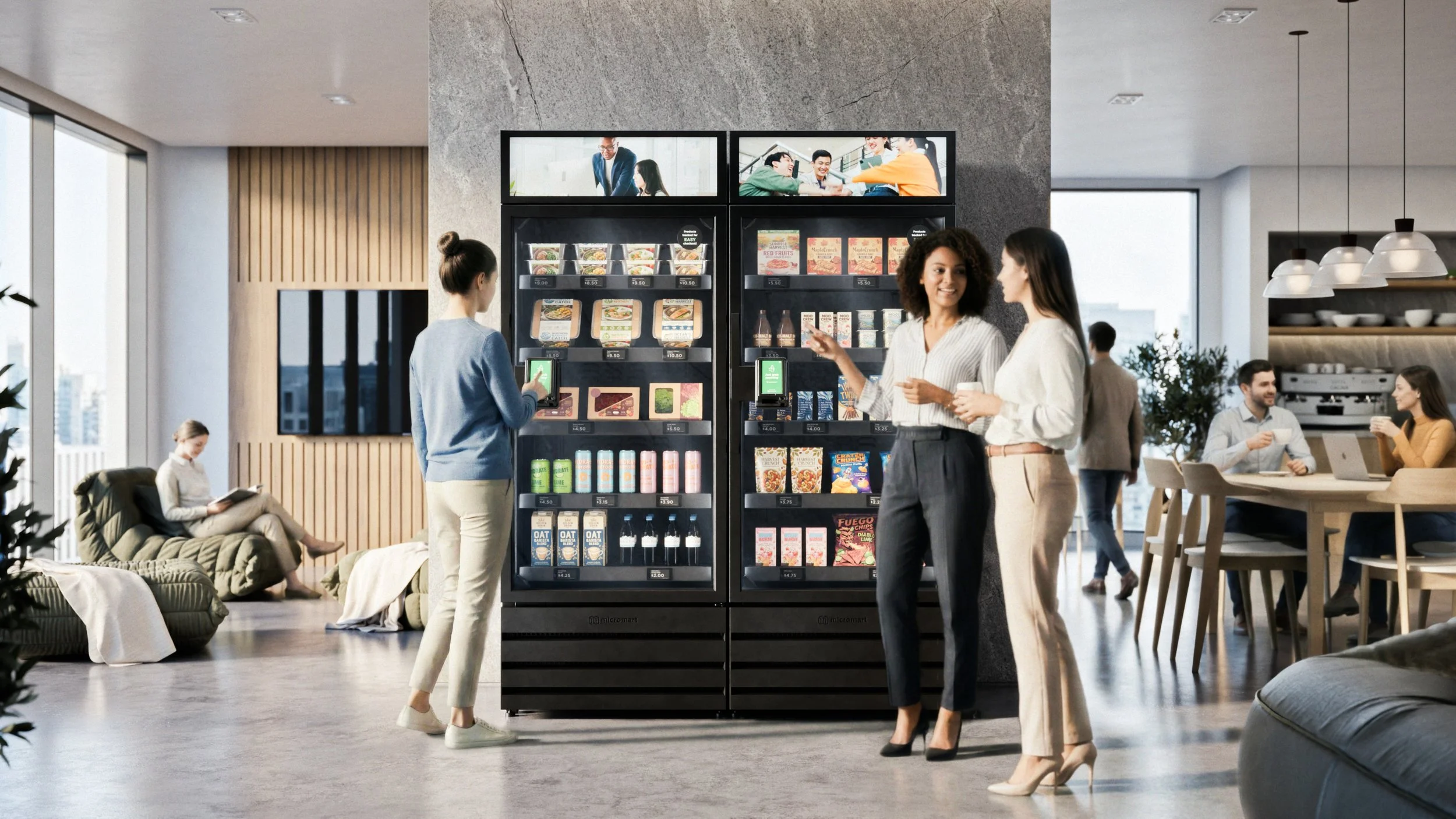
Break room refresh
The wall the coffee maker is already on.
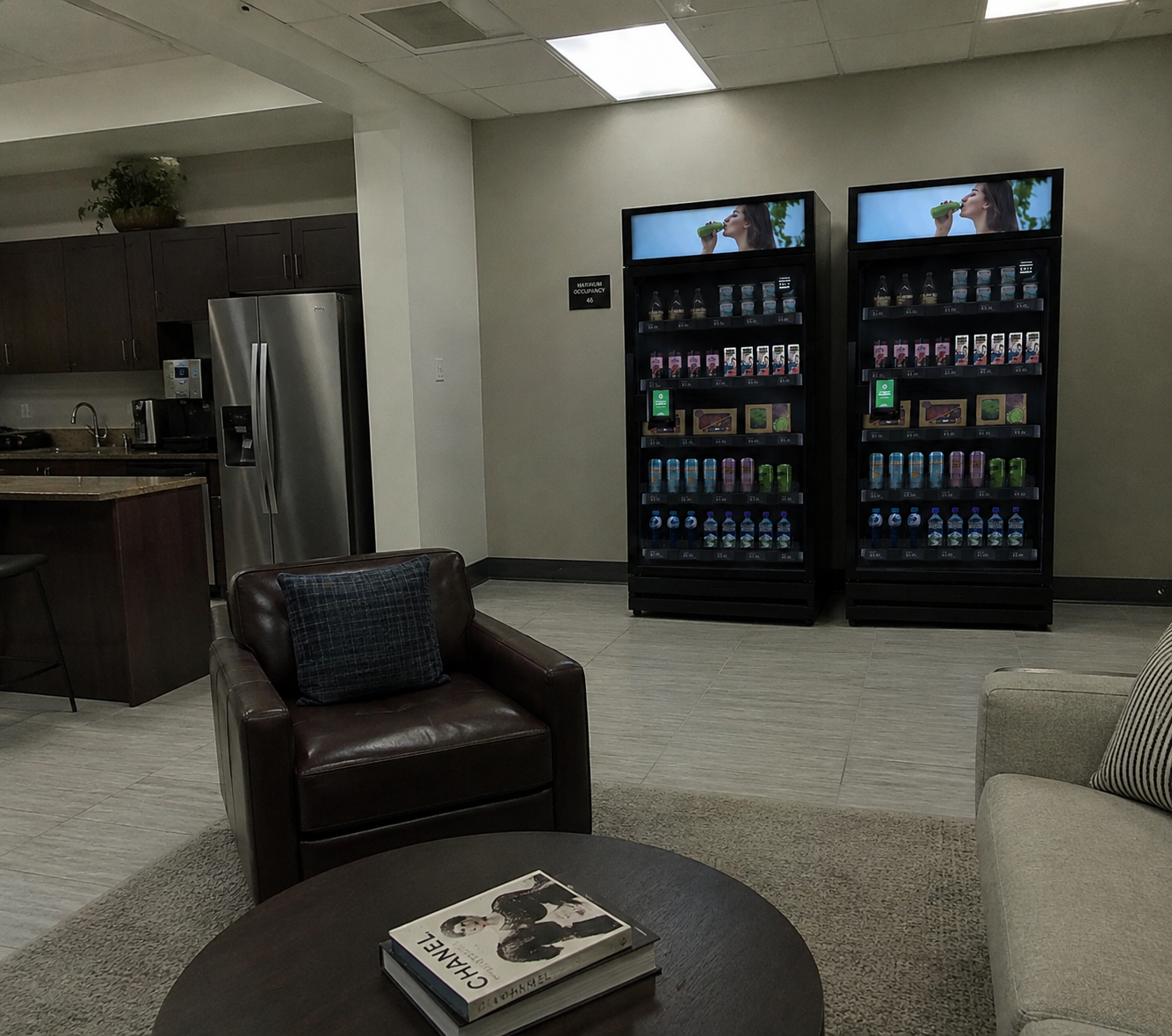
Two units
Cold drinks plus real food.
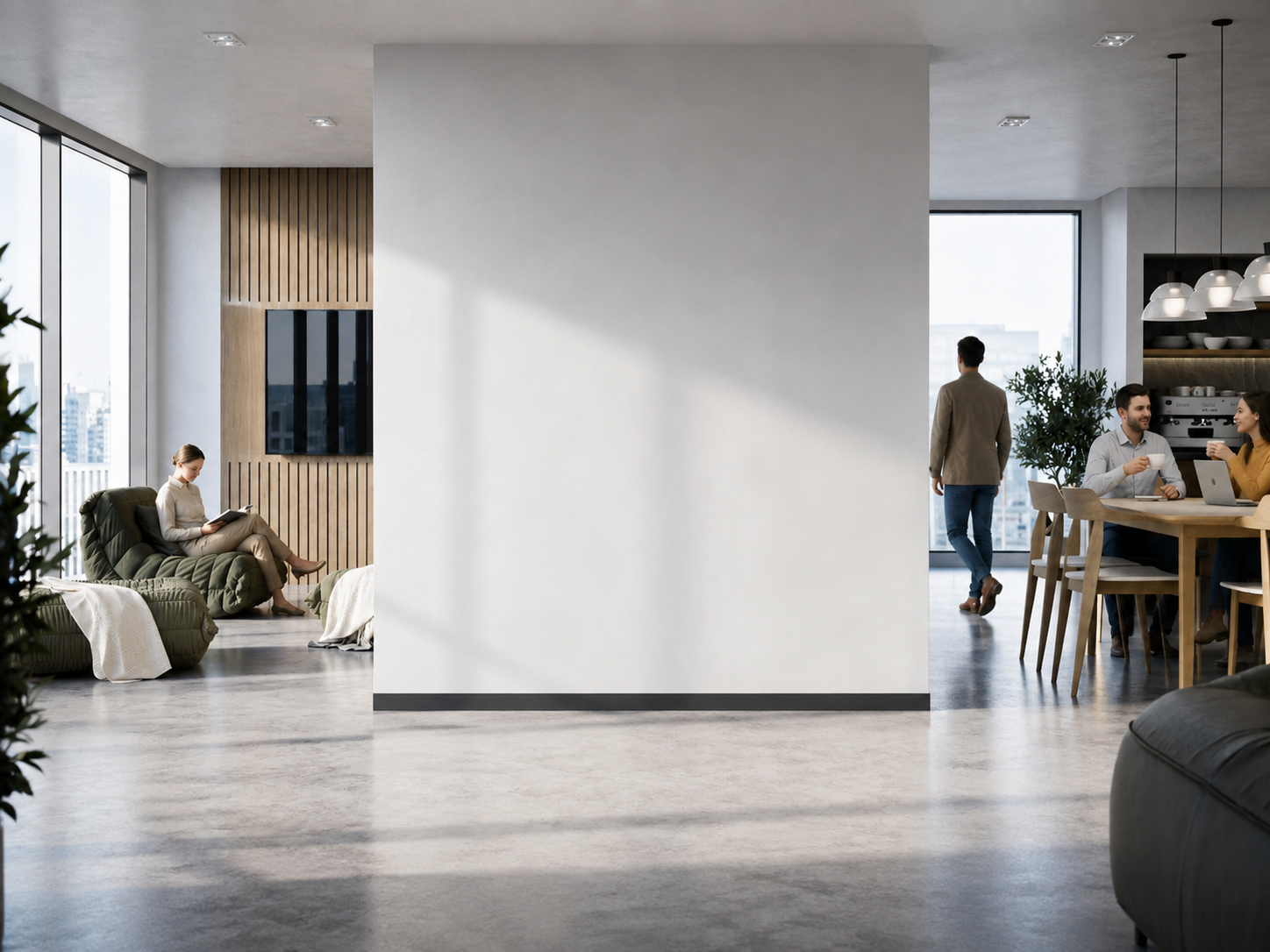
Replacing old vending
A real break room, mid-swap.
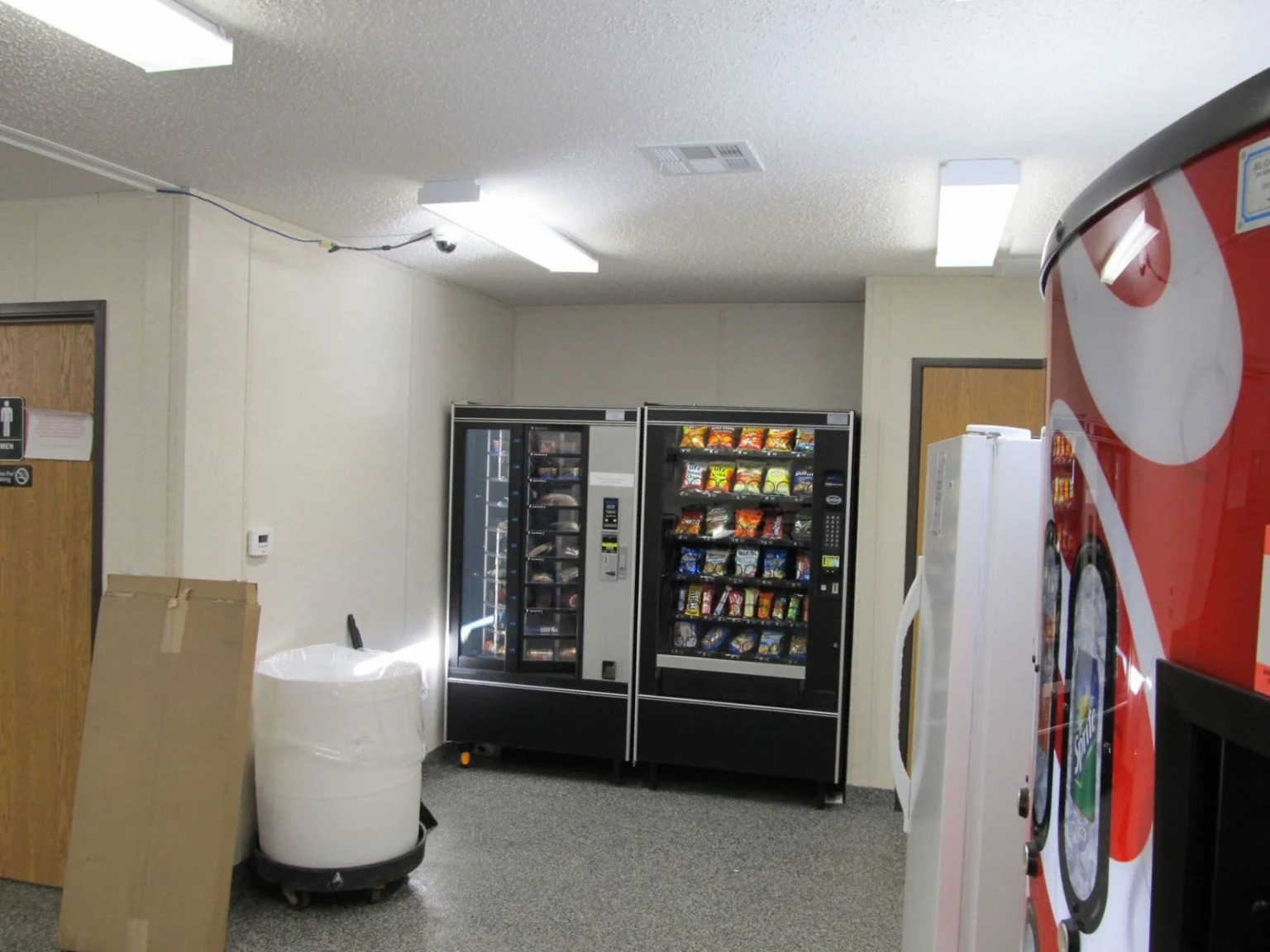
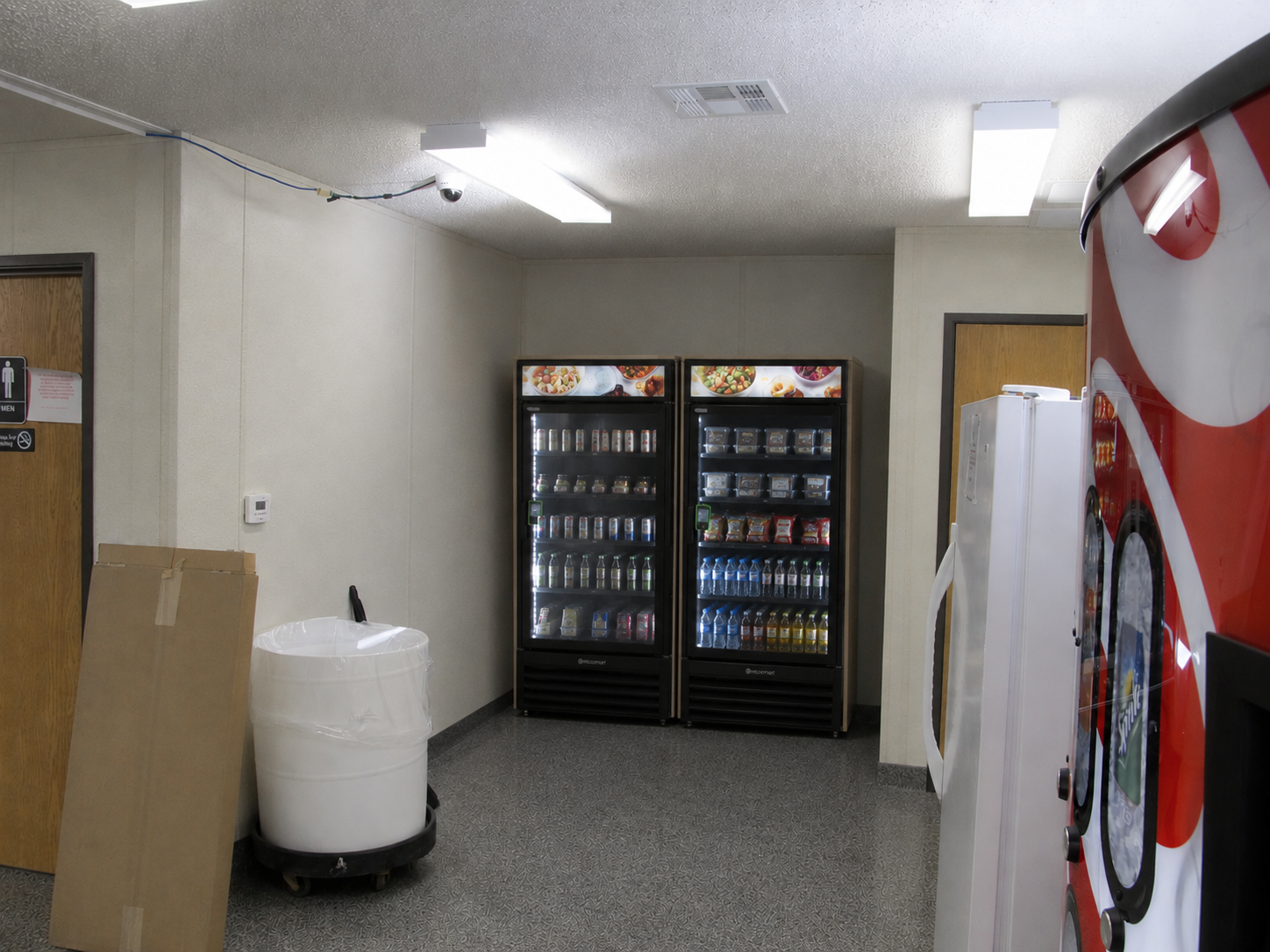
AI-generated renderingsThe images in this section are AI-generated, made to show scale and placement in a typical break room. The one exception is the before frame under “replacing old vending,” which is a real site photo.
See the full side-by-side comparison
| Vending machine | GrabNGo micro-market | |
|---|---|---|
| Format | Fixed coils, small snacks only | Open shelves and cooler. Lunches, multipacks, better-for-you options |
| On a walkthrough | A metal box in the corner | A lit market that reads like a company that invests in its people |
| Selection | 30 to 40 items | 100+ items |
| Payment | Cash, coins, maybe a reader | Tap only. No cash on site |
| Jams | A routine complaint | Employees take it by hand. Nothing to jam |
| Restocking | Fixed route day | Live inventory drives the visit |
| Complaints | Land on HR or facilities | Come to us. Not you |
| Cost to the company | Varies | $0. Nothing. Ever |
Four numbers leadership will ask you for
Your perks budget is frozen. This does not touch it, or the facilities queue, or your team's calendar.
Out of your budget
No purchase, lease, install fee or monthly charge. There is no line item to defend, because there is no line item.
Tickets for facilities
Nobody on your side stocks it, pulls expired product or resets a reader. Our number is on the unit. Employee issues come to us.
Documents to review
A plain-language vendor agreement and a certificate of insurance. That is the packet Legal and Procurement get.
Cash on site
Cashless only. No coin box, no petty cash, no cash-handling question for your office manager.
What your reviewers actually get
Most of the delay on a vendor like us is not the decision. It is waiting on paperwork you have to chase. Here is the whole packet, and you can have it before the walkthrough.
- Vendor agreement in plain language, no capital outlay and no ongoing expense
- Certificate of insurance for your file, additional insured on request
- W-9 and business details for vendor onboarding
- 60-day mutual trial, 30-day notice, no fee, so the downside is a plug removed from a wall
- Privacy note: the in-unit sensors identify products, not people, and no employee data goes to you or to us
If your Procurement team has a standard questionnaire, send it over and we will fill it out. We have not met one yet that this does not clear.
Somebody is doing a Costco run. It should not be your office manager.
Typical monthly hours for a 100 to 500 person office that stocks its own break room. The work does not disappear when you run it in house. It lands on an admin, an office manager, or facilities.
- Ordering and buying product3 hrs
- Hauling and stocking shelves4 hrs
- Receipts, expense reports, reimbursements2 hrs
- Jams, complaints, work orders2 hrs
- Cleaning and pulling expired items1 hr
- Vendor calls and coordination1 hr
About a day and a half of somebody's month, on snacks.
- Ordering and buying product0
- Hauling and stocking shelves0
- Receipts, expense reports, reimbursements0
- Jams, complaints, work orders0
- Cleaning and pulling expired items0
- Check-in with us on how it's going~1 hr
Not zero, and we won't pretend it is. Expect a few short messages when something needs your call, and one monthly check-in: how it's selling, what your employees are asking for, anything you want changed. The walkthrough at the start is about 45 minutes, once.
“So what does this cost us?”
Nothing. That is the whole answer.
The deal, in plain numbers
No purchase. No lease. No install fee. No stocking cost. We own the equipment, carry the insurance, absorb ordinary shrink and handle every employee issue directly. Your part is a spot, an outlet, and 15 minutes. Contract and exit terms are in the FAQ.
The machine tells us before an employee does
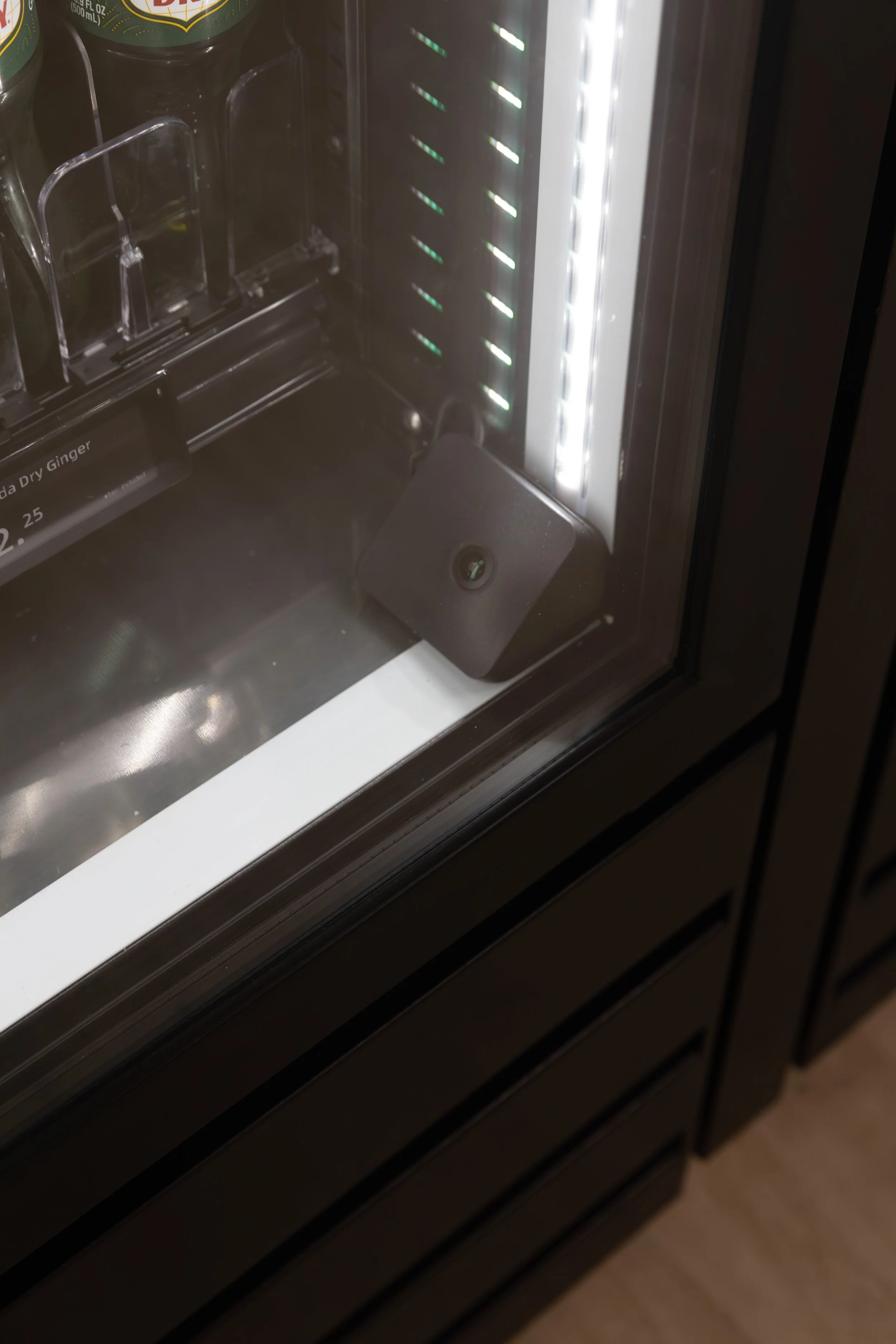
Vision, not coils
Sensors identify what leaves the shelf. 99.5% product recognition, 99.9% payout accuracy. The charge matches what somebody carried out.
Live inventory
Stock levels report remotely, so we restock around what your office actually buys down. Not a route day, and not after someone complains.
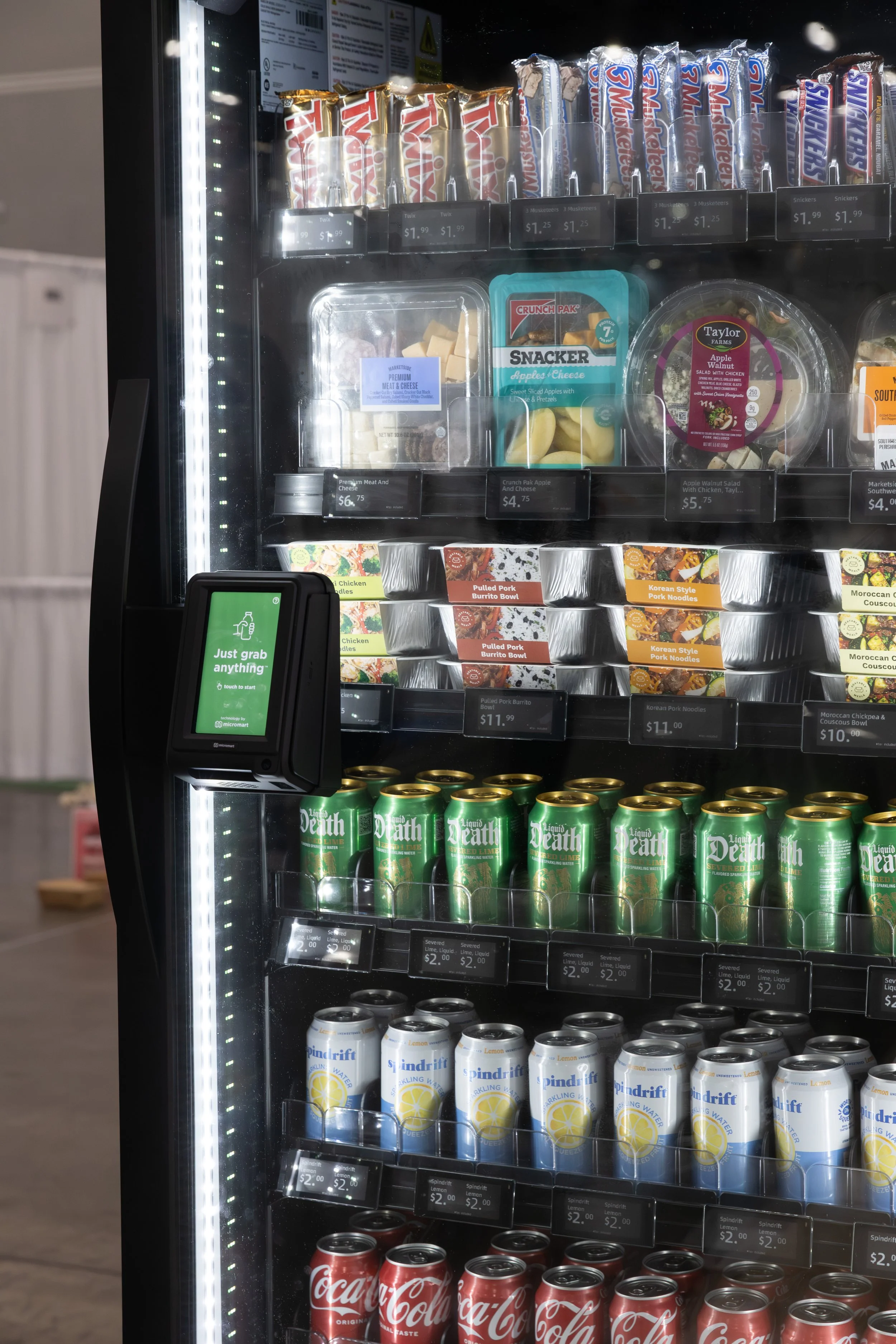
Locked to a card
The door opens only after a card is authorized and the session is tied to it. Ordinary shrink is our cost, not yours.
Where it goes in your building
Placement decides whether a market works, so we pick the spot at the walkthrough. You approve it. If the room you had in mind is the wrong one, we will say so.
- Main break room. Where people already go, and where the complaint originates
- Floor pantry or kitchenette. Multi-floor offices where nobody wants to take an elevator for a coffee
- Lobby or elevator alcove. Catches every arrival, every visitor, every shift
- Adjacent to the fitness room if your building has one. Different products, same unit
From you: floor space, a standard outlet, internet. That is the list.
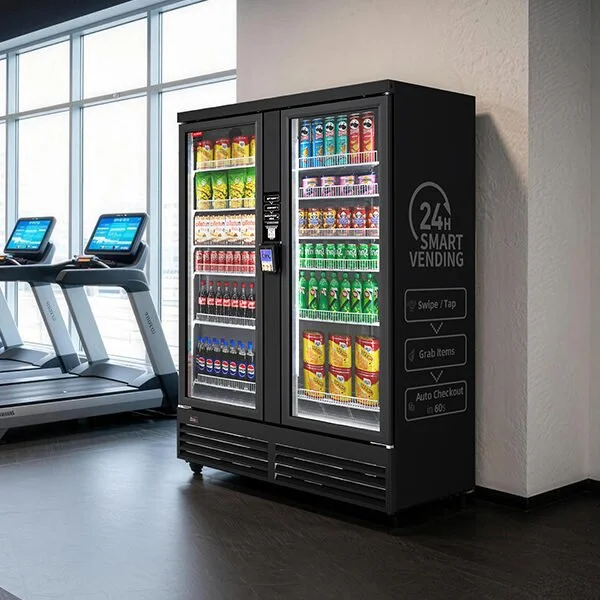
Getting one into your office
- Free walkthrough. 15 minutes on site. Straight yes or no.
- Configure and sign. Plain-language agreement, insurance certificate for your file, no financial obligation on the company.
- Install. Two to eight weeks. We deliver, install, stock and test. Your team does nothing.
- Ongoing. Remote monitoring, data-driven restocks, every refund handled by us.
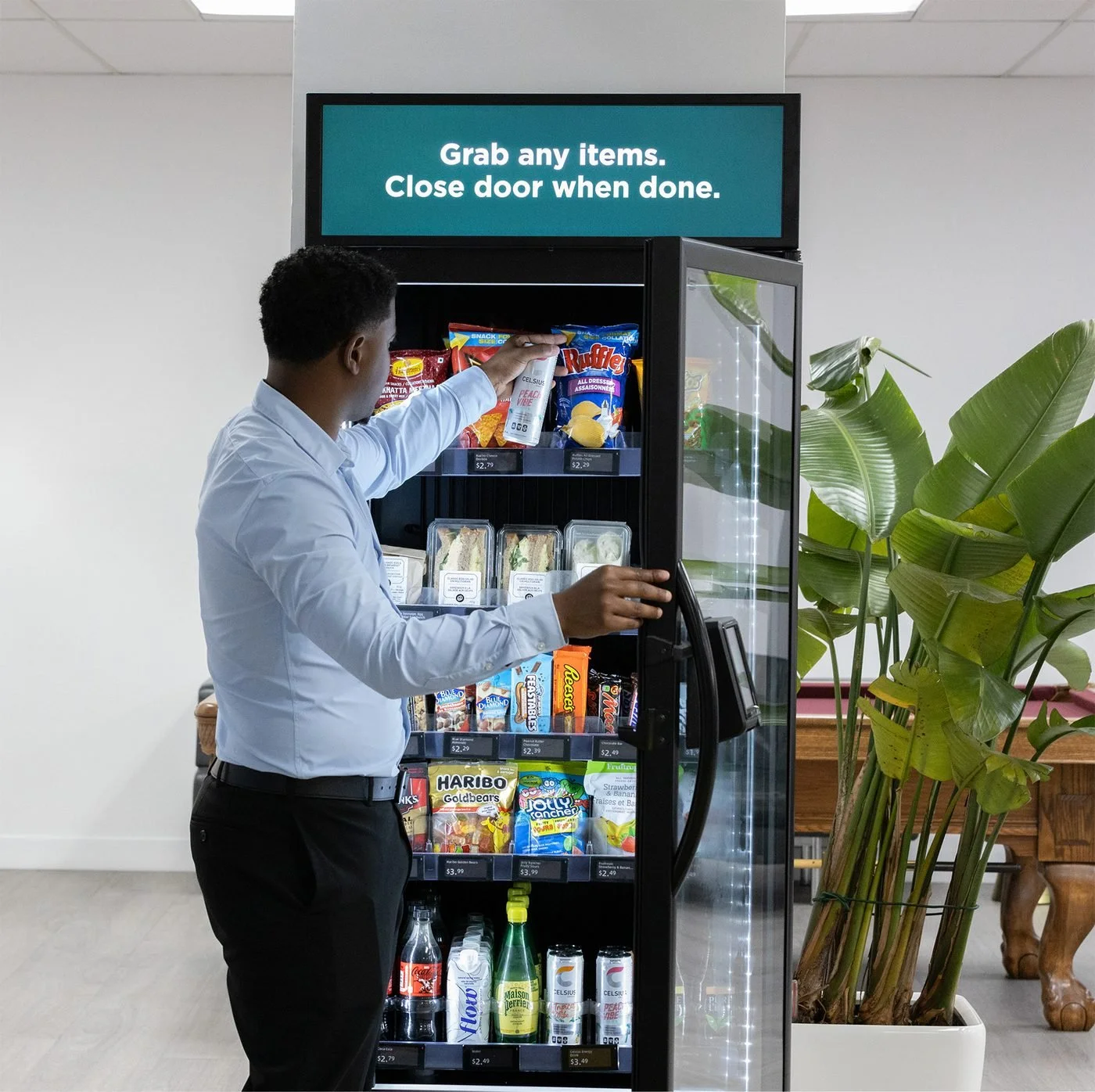
If your office fits, we'll tell you.
If it doesn't, we'll tell you that too.
What decides it is daily foot traffic through the space, not headcount on the org chart. A 300-person office at 40% in-office attendance behaves like a 120-person office, so we size the configuration to the days people are actually there. A half-empty market with our name on it helps neither of us.
One market, twelve tenants, no cafeteria
If you manage the building rather than the company inside it, the math is different: no single tenant will fund a break room amenity, and every one of them will ask you for it.
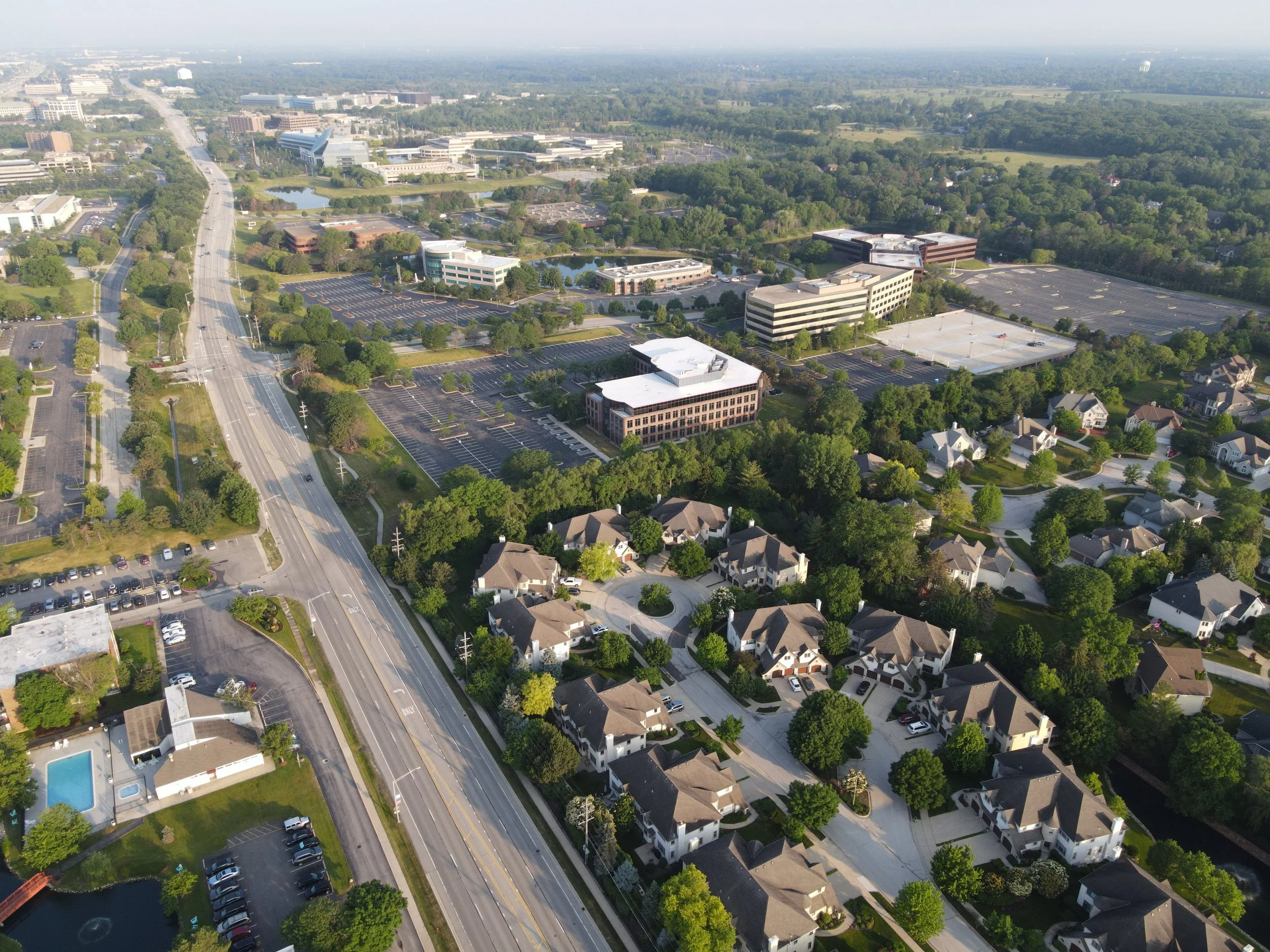
Multi-tenant office
A shared amenity nobody has to fund.
Lobby or shared break room placement, common area electric, one point of contact for every tenant question: us.
Business parks
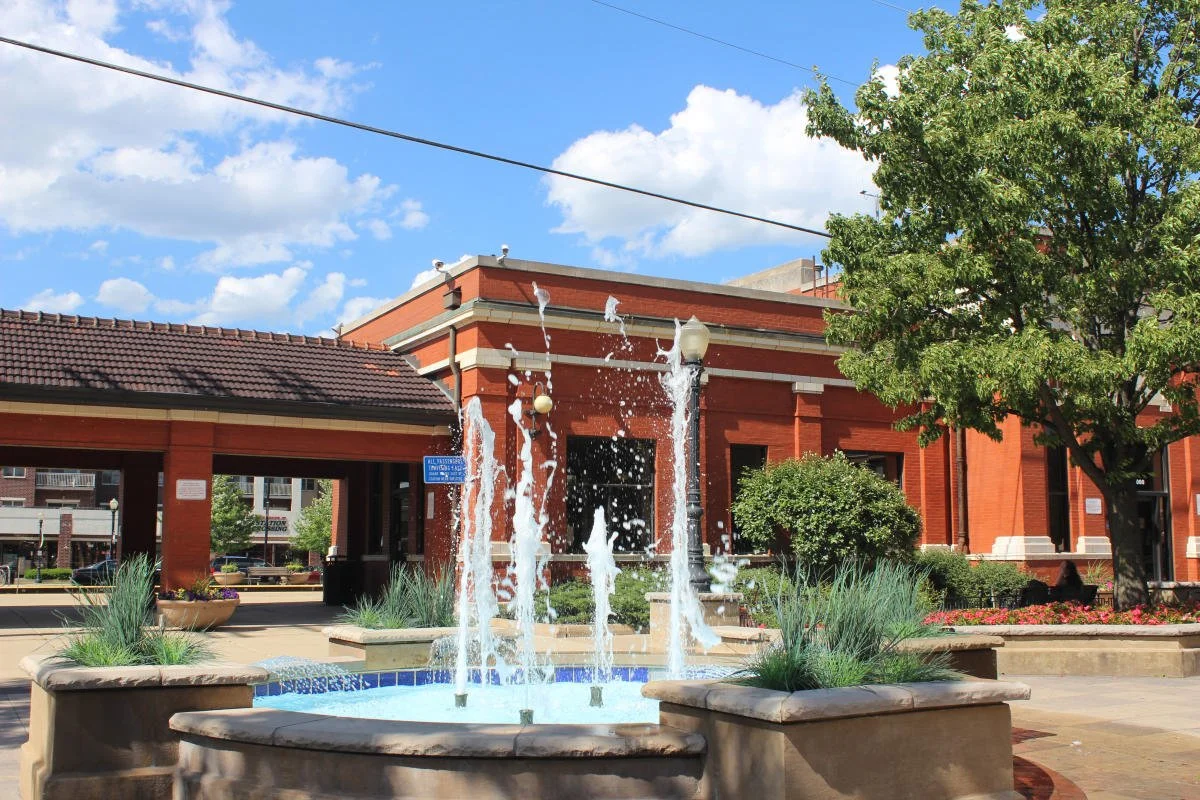
The I-88 corridor is our backyard.
Oak Brook, Downers Grove, Lisle, Warrenville, Naperville. Buildings where the nearest coffee is a drive.
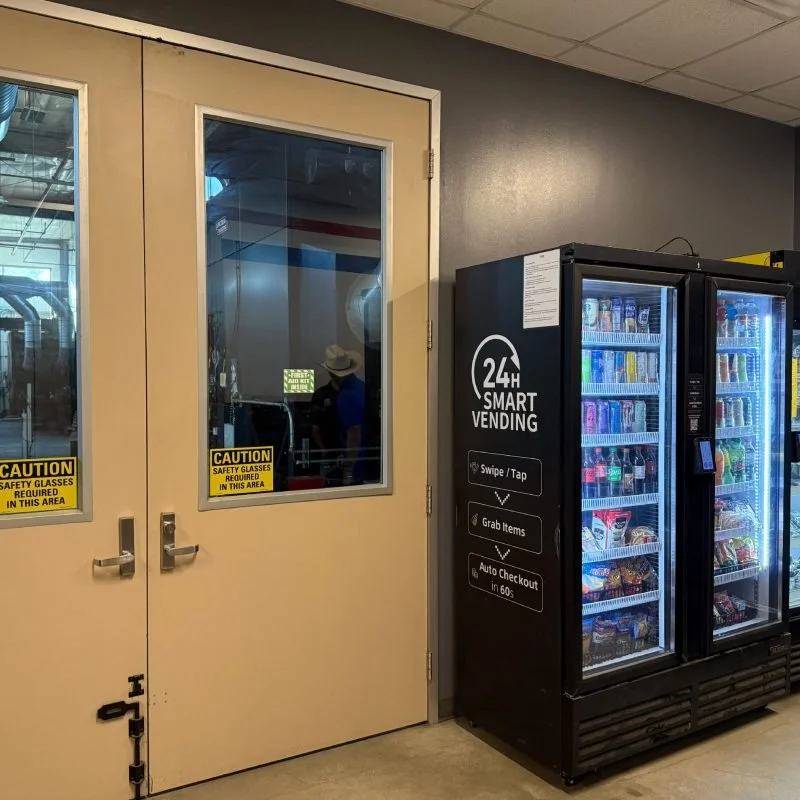
Mixed office and plant
Shifts that start before the store opens.
Office up front, floor out back, two very different product mixes. Warehouses →
Whose electric is it. A standard 120V outlet on common area power. Draw is comparable to a beverage cooler you already have in the building.
Who tenants call. Our support number and refund QR code are on the unit. Nothing routes through your management office.
Where we place office markets
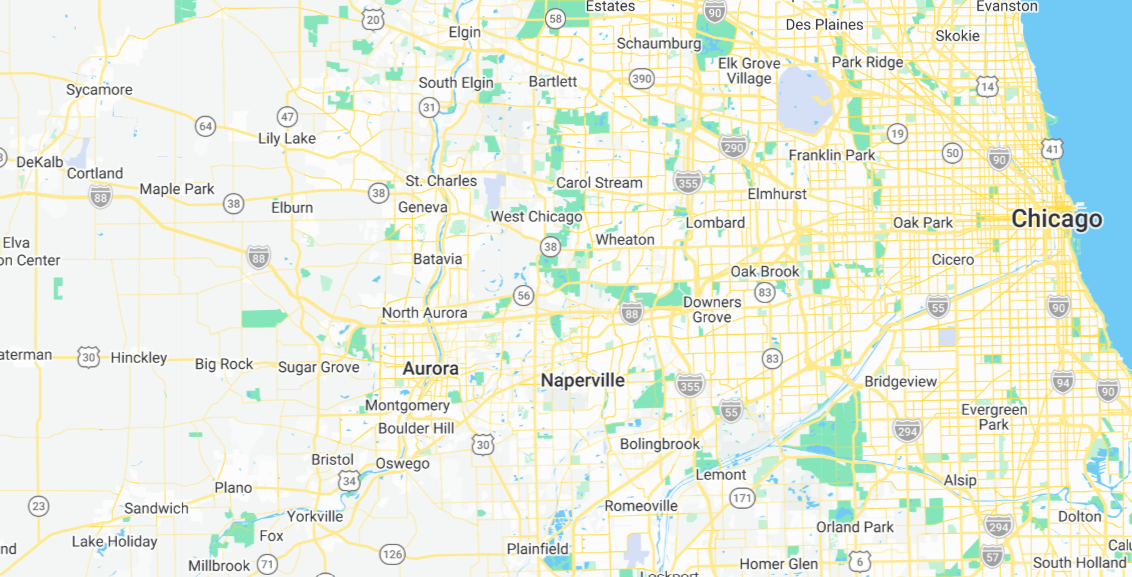
Naperville
Corporate offices along Warrenville Road and the Route 59 corridor. Naperville →
Aurora
Home base. Butterfield Road offices and the Fox Valley business parks. Aurora →
Oak Brook & DuPage
The 22nd Street office cluster, Downers Grove, Lombard, Lisle. DuPage →
Elgin
Randall Road offices and the northwest manufacturing belt. Elgin →
Tri-Cities
St. Charles, Geneva and Batavia office and light industrial. Tri-Cities →
Chicago
Loop and near-west offices, and the corridor in between. Chicago →
Not sure if you are inside the radius? Full service area →
One owner, one phone number
Independent and owner-operated out of Aurora. Not a route company, not a franchise, not a territory somebody bought.
Which matters on the only part you care about: who picks up when something is wrong. You get the owner, not a ticket number and a call center three states away.
We are early in building our footprint here, and we would rather say that than pad a page with logos you cannot verify. What we put in writing is the service standard, the insurance, and an exit that costs you nothing.
Office vending FAQ
What does it cost the company?
Nothing. No purchase price, lease, installation fee, stocking cost or monthly charge. GrabNGo owns the equipment, carries the insurance and earns its margin on what sells. Your contribution is floor space, a standard outlet and a short walkthrough. Employees pay for what they take, at prices we keep in line with a nearby convenience store.
Will this create work for facilities or my team?
No. We stock it, clean it, rotate product and service the hardware. Employees contact us directly through the support number and refund QR code on the unit. System status is monitored remotely, so most problems are visible to us before anyone reports them. Nothing routes through HR or the facilities queue.
What will Legal and Procurement need from us?
A vendor agreement in plain language, a certificate of insurance, and a W-9. We provide all three, and we can send them before the walkthrough so the review runs in parallel. Because there is no capital outlay, no lease and no ongoing expense, it does not touch the operating or capital budget, which is usually the shortest path through a procurement review. If your team has a standard vendor questionnaire or security form, send it and we will complete it.
Is there a contract? Other companies advertise "no contract."
Yes, and we would rather explain it than pretend otherwise. We are placing our own equipment and inventory in your building at our cost, so the agreement protects that investment and puts our service obligations in writing for you. What matters is the exit: a 60-day mutual trial with 30-day notice and no fee. If it is not working for either side in the first two months, it ends cleanly. Read the terms before you sign anything, ours included.
Are the cameras watching employees?
No. The sensors inside the unit look at the shelf to identify which product was taken, so the right item gets charged to the card that opened the door. They are not a surveillance system, they are not pointed at the room, and there is no employee-level reporting delivered to you or reviewed by us. What we see is inventory and transactions.
Can we choose what gets stocked? We have dietary requests.
Tell us what your office wants and we build the mix around it, including better-for-you, low sugar and common allergen-conscious options, and including requests after we go live. Final selection stays with GrabNGo because we carry the inventory cost and the spoilage risk, and sales data tells us quickly what a building actually buys. In practice the mix ends up shaped almost entirely by your employees.
Does our headcount qualify? We are hybrid.
Daily foot traffic through the space matters more than total headcount. A 300-person office at 40% attendance behaves like a 120-person office, so we look at the days people are actually in and size the configuration to that, sometimes down to a single unit. We will tell you at the walkthrough whether it works, and we would rather decline than install a market that sits half empty.
What about theft or vandalism?
The door unlocks only after a payment card is authorized, and the session is tied to that card, which removes most of the anonymous risk a coin machine carries. There is no cash on site. Ordinary shrink is absorbed by us, not billed to the company.
We already have a vending company. What now?
Check your existing agreement for its notice period and whether it grants exclusivity. Most allow an exit with written notice and many are month to month. We can walk the office and give you a configuration and timeline before you give notice, so there is no gap between the old machine leaving and the new market going live.
How long does installation take, and how disruptive is it?
Two to eight weeks from signature, depending on configuration and lead times. Install itself is a delivery and a plug-in, done in one visit, and it can be scheduled outside business hours. No construction, no plumbing, no electrical work beyond a standard outlet.

Fix the break room without a budget request
A free 15-minute walkthrough tells you whether your office is a fit. No pressure, no obligation, no cost either way.
Prefer email? info@getgrabngo.com