
7 Questions to Ask Before Choosing a Local Vending Company

Pull up three vending companies in Chicagoland and read their homepages back to back. Zero cost. Free installation. Fully managed. Fill out the form. You will not be able to tell them apart, and that is the actual problem you are trying to solve.
I am on the other side of these calls, so I know which questions are uncomfortable to answer and which ones anybody can breeze through. These are the seven worth asking. For each one I have written down what a good answer sounds like, so you have something to measure against — including where the honest answer is "it depends" and where that is a dodge.
1. Is it actually free, or is there a fee somewhere?
Ask it first, and ask it bluntly. Almost everyone in this industry says "no cost," and most of them mean it, but the word covers a few different arrangements.
What a good answer sounds like: a specific list of who pays for what, without you having to pull it out of them. Equipment, installation, product, restocking, service, cleaning, support, refunds, insurance, removal at the end. Then what you provide, which should be short.
Ours: you provide a spot and a dedicated 120V outlet that stays on around the clock. We cover everything on that list. By default the host receives no revenue share — the amenity is the value — and a share can be negotiated and written into the agreement, but nobody should be promising you income before they have seen your building. Here is the full breakdown of what free actually covers.
Red flag: a monthly revenue figure quoted on the first call. Ask where that number appears in the contract they want you to sign.
2. How often do you restock, and how do you know when to come back?
This is the question that predicts whether your machine is full in six months. An empty machine is the single most common complaint about vending, and it is almost always a scheduling problem rather than a product problem.
What a good answer sounds like: they can tell you how they know what is selling. Modern equipment reports its own inventory remotely, so the provider should be watching sales data and adjusting, not driving a fixed loop and hoping. "Every other Tuesday" is not wrong on its own, but if that is the whole answer, ask what happens when the cold drinks run out on the Wednesday.
Ours: the units report remotely and we set the visit rhythm to what your building actually goes through, then adjust after the first few weeks. What the right cadence is depends on the property, so I would rather tell you that on a walkthrough than publish a number that turns out to be wrong for you.
3. What happens when something breaks?
Refrigeration fails, screens freeze, a card reader stops reading. It is not a question of whether, it is a question of who you call and how fast someone shows up.
What a good answer sounds like: a named contact and a realistic window. Some providers publicly commit to responding within 48 hours, which is a reasonable industry benchmark to hold a quote against. Also ask who handles a customer's refund when a product does not drop — if the answer is your front desk, that is a real cost to you.
Ours: support contact information is posted right on the unit, and we are solely responsible for customer service, transactions, and refunds. Nobody on your staff has to handle a charge dispute or a stale product. Response time depends on where you are in the service area, which is really Question 7.
4. What technology is actually in the machine?
There is a wide gap between equipment that is currently being installed and equipment that has been sitting in a warehouse since 2015. The tell is payment.
What a good answer sounds like: cashless as the default, including tap-to-pay and mobile wallets, and remote monitoring so the provider sees inventory and faults without visiting. Cash-only or bill-acceptor-first equipment means cash on site, jams, and someone collecting money in your building.
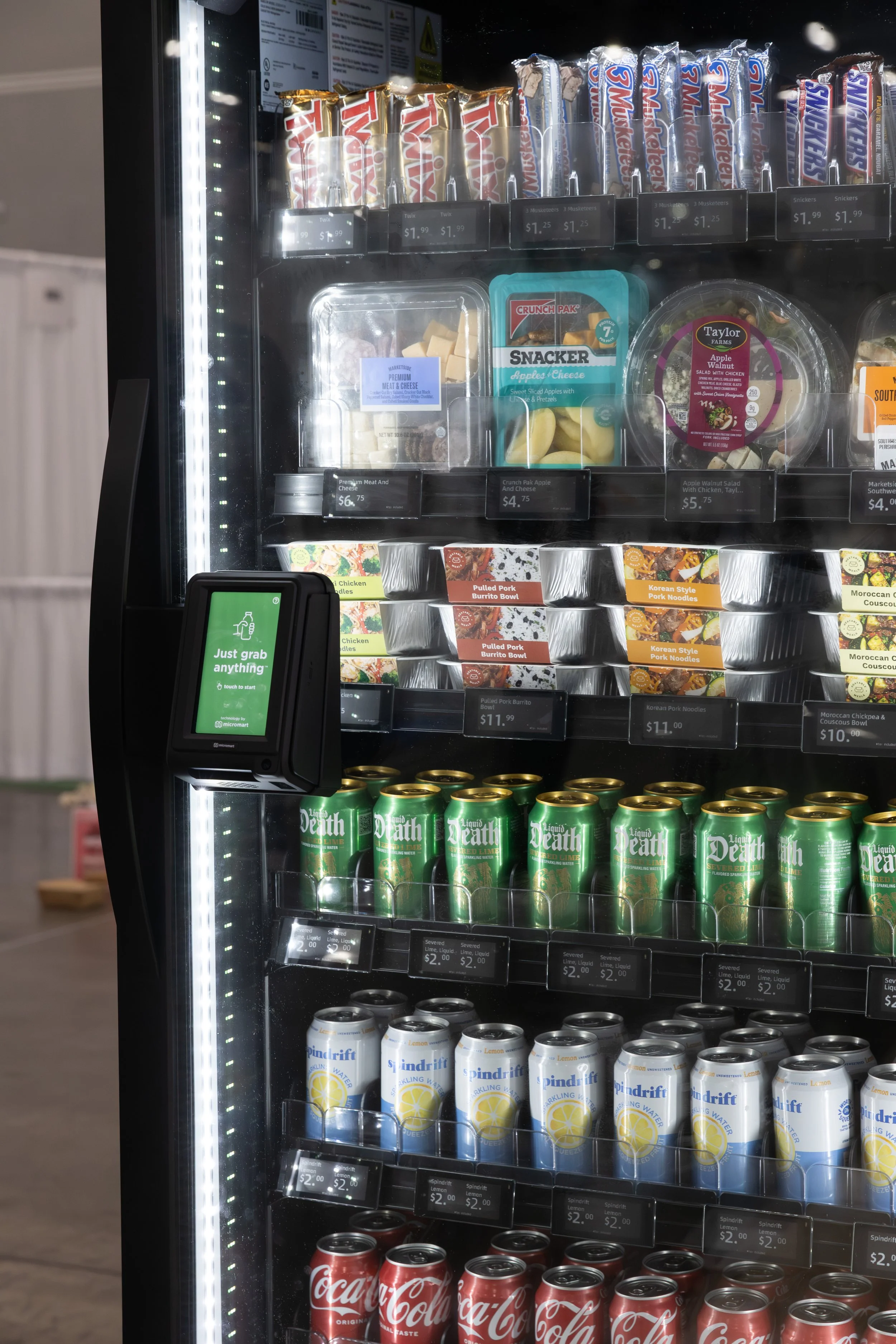
Ours: cashless only. Tap a card or a phone, the door unlocks, take what you want, close it. No cash on site and nothing for anyone at your property to count or secure.
5. Can we have a say in what gets stocked?
Some providers run one planogram everywhere because it is simpler. That is fine until your building is full of people who wanted something else.
What a good answer sounds like: yes, with a process. Ask specifically about healthier options, sugar-free drinks, and whether they will add a requested item and keep it if it sells. A provider that tracks sales per item can answer this concretely rather than vaguely agreeing.
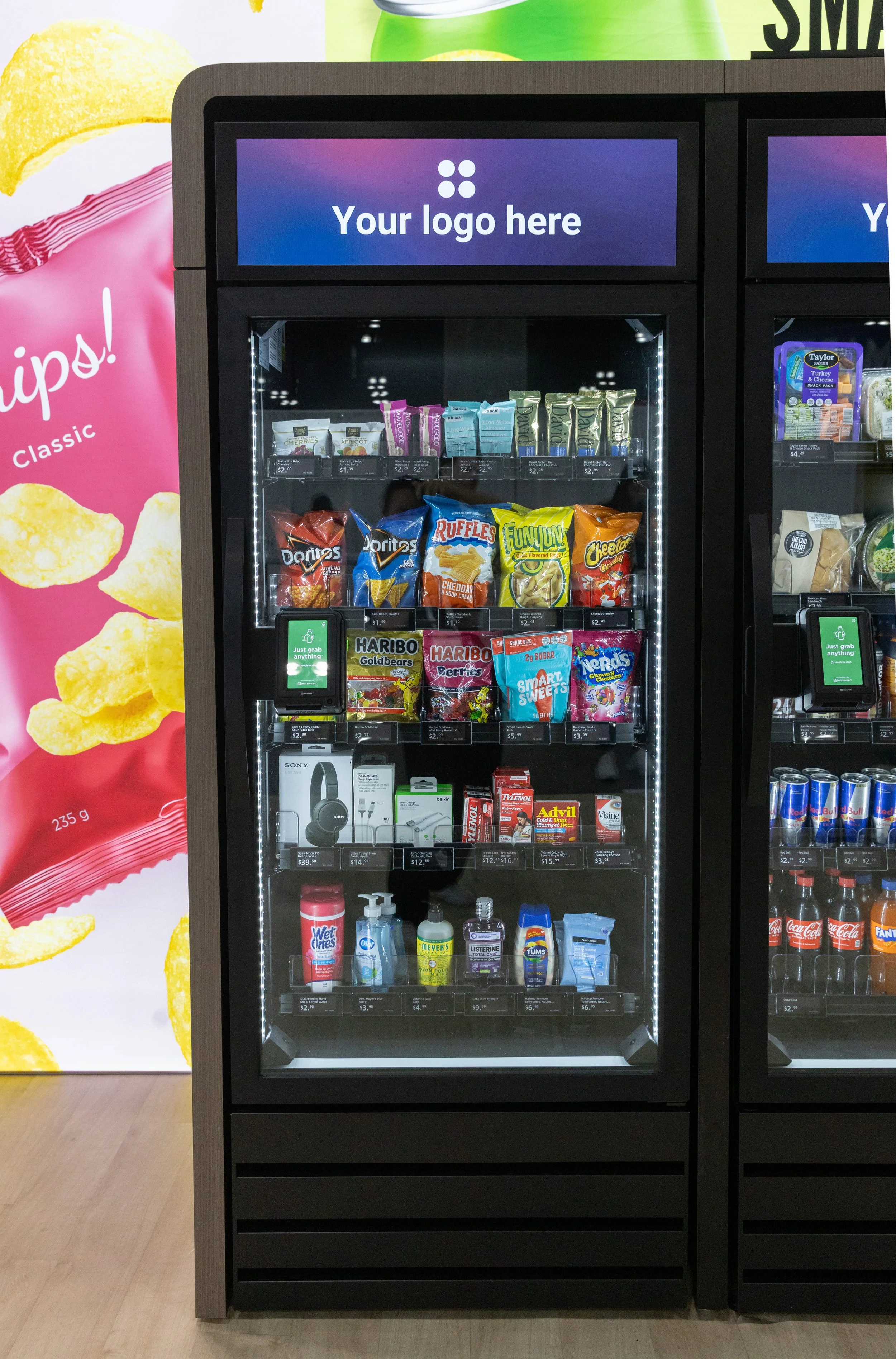
Ours: we build the mix around the building and adjust it based on what actually moves. A warehouse off Route 59 and a downtown Naperville office do not buy the same things, and after a few restocks it stops being a guess. If your people ask for something, tell me and I will try it.
6. What am I signing, and how do I get out?
Free equipment usually implies a term, and this is where you want to slow down and read. Ask for the agreement before the call ends, not after you have said yes.
What a good answer sounds like: a clear initial term, a stated notice period, and a straight answer on early-termination fees. Also ask whether termination rights run both ways, because a one-sided exit clause tells you how the relationship is going to go.
Ours: within the first 90 days either party can end the agreement for any reason with 14 days' written notice. After that, either party can terminate for convenience with at least 45 days' written notice. The initial term is set per property and renews in one-year increments unless either side gives 45 days' notice not to renew. There is no early-termination fee in the agreement.
While you have the document out, ask for proof of insurance. We carry commercial general liability at $1,000,000 per occurrence and $2,000,000 aggregate, insure our own equipment, and will provide a certificate naming you as an additional insured on request. Your risk or legal team will ask for that anyway.
7. Are you actually local?
Everyone claims Chicagoland. It is a metro that runs from the lake out past DeKalb, so the claim is close to meaningless without a follow-up: where are you based, and who specifically services my building?
What a good answer sounds like: a real base of operations and a named person, not a regional call center that dispatches whoever is closest. Ask how far you are from where their trucks start the day. That distance is what your response time actually is.
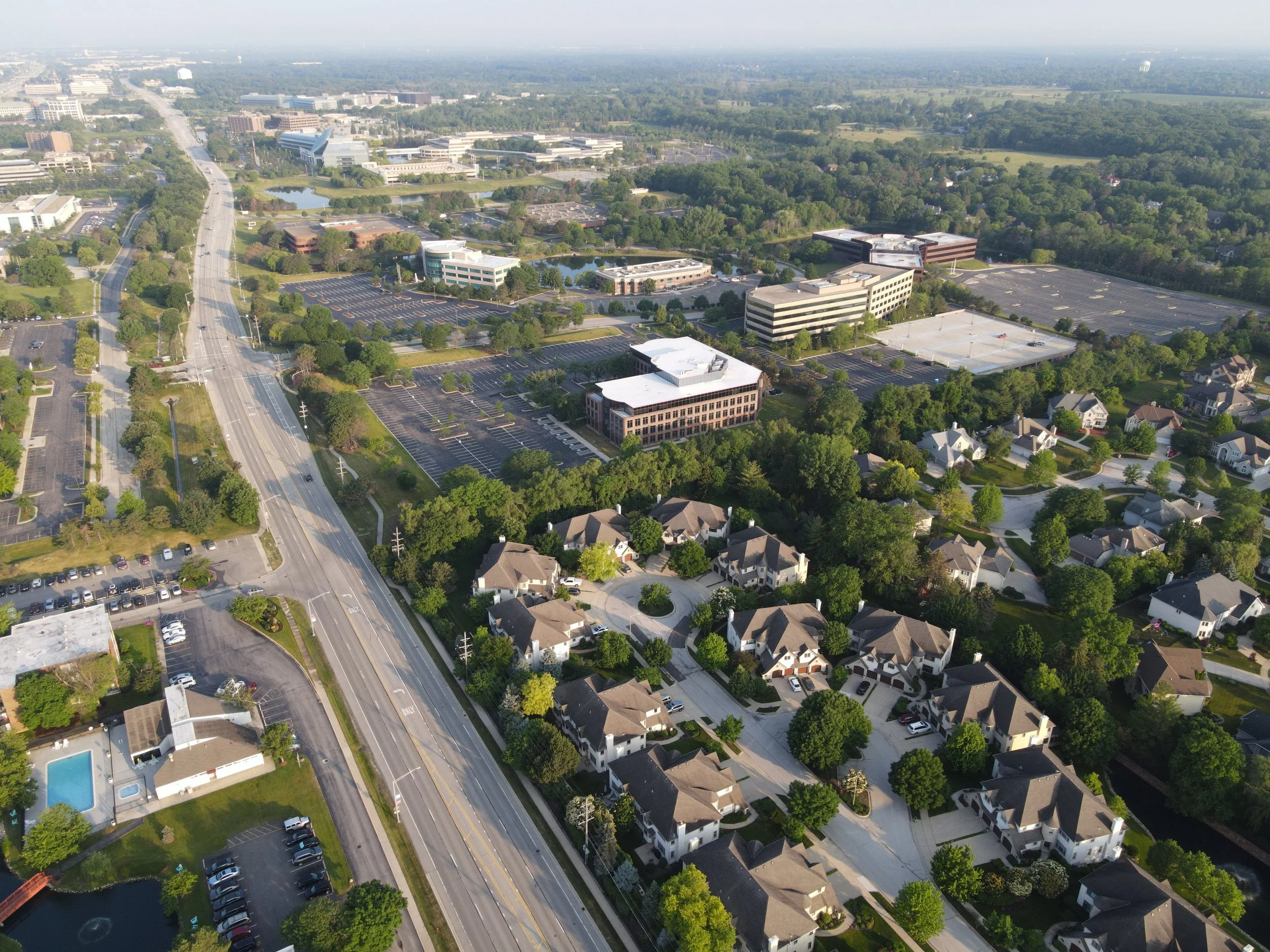
Ours: GrabNGo is me. I install, stock, and service every unit myself across Chicago and the western suburbs — Aurora, Naperville, Elgin, the Tri-Cities, DuPage. There is no dispatch layer between you and the person who shows up, and if something goes wrong I am the one driving over.
The checklist, in one place
Bring this to the call. If a provider handles all seven cleanly, you are in good shape regardless of who they are.
| Ask | You want to hear |
|---|---|
| What exactly do I pay for? | An itemized list, and a short list of what you provide. |
| How do you know when to restock? | Sales data and remote inventory, not just a fixed route day. |
| Who do I call when it breaks? | A named contact, a realistic window, and refunds handled by them. |
| How do people pay? | Cashless and contactless as the default. No cash on site. |
| Can we change the product mix? | Yes, with a process for requests and a way to see what sells. |
| Can I read the agreement now? | Yes. Clear notice periods, mutual exit rights, no surprise fee. |
| Where are you based? | A real location and the name of the person servicing your building. |
If you are still deciding between formats rather than providers, this comparison of vending machines and micro markets covers that side of it.
Frequently asked questions
Is it normal for a vending company to charge nothing at all?
Yes. In a placement model the provider owns the equipment and inventory and earns from what people buy, so your building is what makes the machine worth stocking. What is not normal is a vague answer about it. Ask for the itemized list of who covers what, and ask what you are expected to provide.
How do I know if a vending company's restocking promises are realistic?
Ask how they know what is selling. Equipment that reports inventory remotely lets a provider adjust to your building instead of driving a fixed loop. A provider working blind will tell you a day of the week and nothing else.
What's a reasonable repair response time to expect?
Some providers publicly commit to responding within 48 hours, which is a fair benchmark to hold quotes against. What matters as much is who takes the call and whether refunds and customer complaints route to the provider rather than your front desk.
Should I be worried about signing a long contract?
Be worried about a one-sided one. Look for mutual termination rights, a clear notice period, and no early-termination fee. Ours allows either party to end the agreement for any reason within the first 90 days on 14 days' written notice, and for convenience on 45 days' notice after that.
Does it matter if a vending or micro-market company is locally based?
In a metro this large, yes. "We serve Chicagoland" can mean a truck starting an hour and a half from your building. Ask where they are based and who specifically services your property, because that distance is your real response time.
Call (630) 864-5679, email info@getgrabngo.com, or request a walkthrough.
Owner and operator of GrabNGo. Joshua installs, stocks, and services every micro market and cooler himself across Aurora, Naperville, and the greater Chicago suburbs. More about GrabNGo