
How to Get a Free Vending Machine for Your Business

Search for a free vending machine and you will find a hundred pages that use the same three words: zero cost, no catch. Almost none of them tell you what the agreement actually says.
So here is the model in plain terms, taken from the placement agreement we actually sign with property hosts. What you provide, what we cover, what you are committing to, and how you get out if it does not work. If a detail below sounds like marketing language rather than a contract term, it is not in here.
- You provide two things: an approved spot for the market and a dedicated 120V outlet available around the clock.
- We cover the rest at our expense: equipment, installation, product, restocking, service, cleaning, support, refunds, insurance, and removal at the end.
- Fit is judged per property, not against a published headcount number.
- By default the host receives no revenue share. The amenity is the value. A share can be negotiated, but no income is ever guaranteed.
- Either side can walk for any reason in the first 90 days on 14 days' written notice, and on 45 days' notice after that.
What "free vending machine" actually means
Two different people search this phrase. One wants to buy machines and run a route as a side business. The other has a building full of people and wants a place for them to get a drink without leaving. This article is for the second one.
For a host, free means a placement model. The vending operator owns the equipment and the inventory and earns its money from what people buy. You are not a customer in that arrangement, you are the location. That is why there is nothing to pay: your building is what makes the machine worth stocking.
It applies the same way across property types. An office covers employees, a multifamily building covers residents and guests, a gym or medical office or industrial facility covers whoever is on site. The question underneath all of them is identical, which is whether free is genuinely free and what hosting will actually ask of you.
What you provide vs. what's covered
The host obligations in our agreement are short enough to list in one line. You provide a single approved spot for the market, and a dedicated, grounded 120V outlet that is available 24 hours a day, every day of the year. That is the entire physical ask.
Everything else sits on our side of the agreement, at our expense.
| Item | Who covers it |
|---|---|
| A spot for the market | Host |
| A dedicated 120V outlet, available 24/7 | Host |
| Equipment | GrabNGo |
| Installation | GrabNGo |
| All products and restocking | GrabNGo |
| Servicing, cleaning, maintenance | GrabNGo |
| Customer support and refunds | GrabNGo |
| Insurance | GrabNGo |
| Removal at end of term | GrabNGo |
The outlet is the one thing worth checking early. It needs to be dedicated and grounded, and it cannot be on a circuit that gets shut off overnight or over a holiday weekend. Refrigeration runs continuously. If the wall you want does not have the right power, that is usually the only real prep work in the whole process.
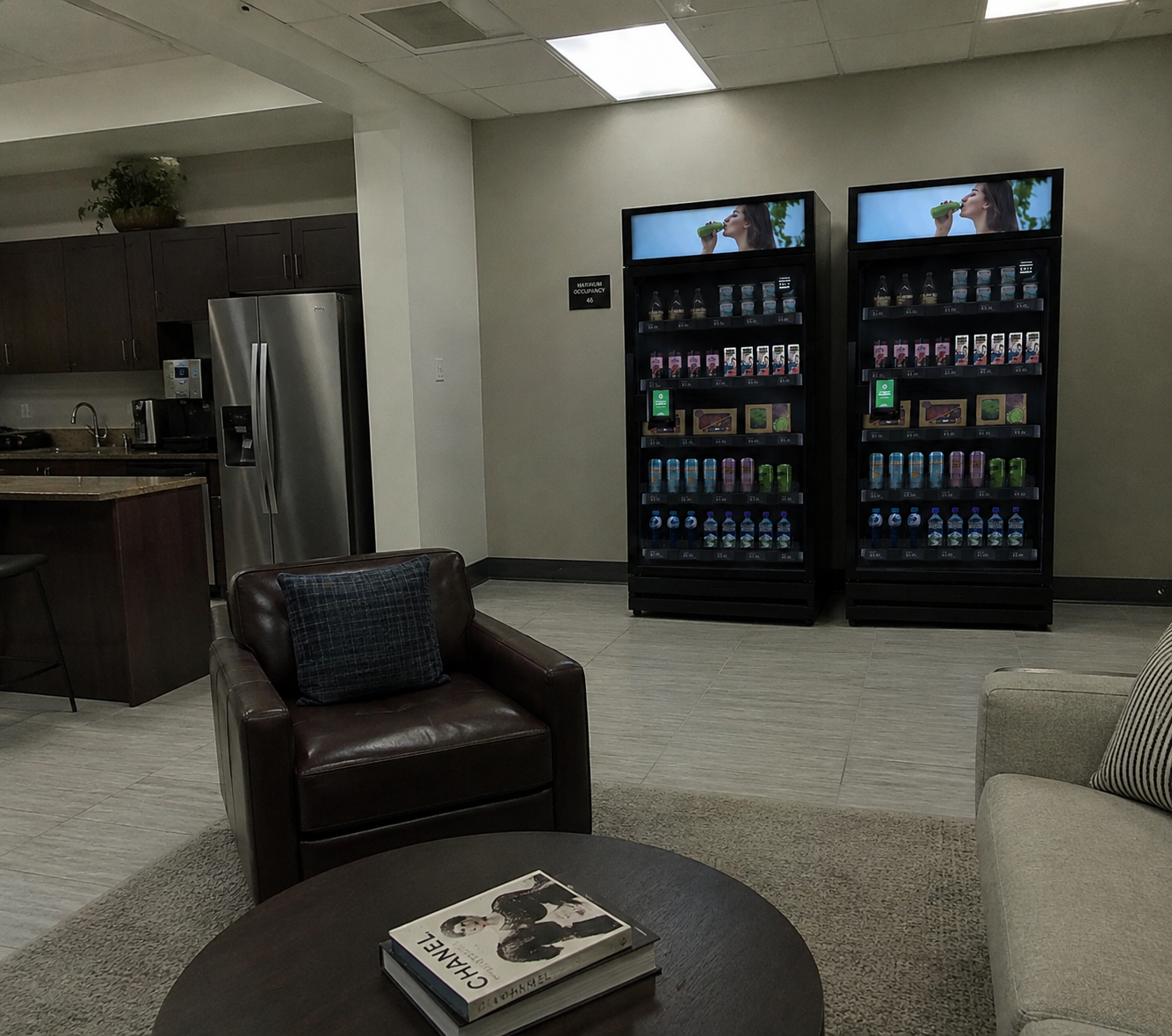
This mockup image was generated with AI to illustrate placement. It is not a photo of a specific property.
Is your property a fit?
You will see companies publish a minimum headcount, usually a round number that sounds authoritative. We do not, because in practice the number is not what decides it.
A smaller building where everyone is on site five days a week can support a market comfortably. A larger one that is half remote, or that sits across the street from a coffee shop and a corner store, may not. Shift patterns matter, and so does whether people can easily leave the building on a break. The honest answer is that fit is assessed property by property, by looking at your specific space and traffic.
What we actually look at during a walkthrough:
- Who is in the building, and during which hours
- What else is within easy walking distance
- The wall you have in mind, and the power at it
- How we get in to restock without disrupting anyone
- Whether one unit or a small market suits the space
It takes about twenty minutes, and if the answer is no, you will hear that instead of a proposal.
Is there money in it for you?
By default, no. GrabNGo keeps the revenue and the host receives none. The value to you is the amenity itself, provided without a cost, a capital request, or a line item.
A revenue share can be negotiated and elected in the agreement. If it is, it is written into your specific agreement rather than promised in advance. No revenue or profit is guaranteed either way, and it would be dishonest to imply otherwise before a single transaction has happened in your building.
This is worth applying to any vendor you talk to. If someone quotes you a monthly income figure before they have seen your property, ask where that number appears in the contract they want you to sign.
How committed are you, really?
This is where most of the hesitation actually lives. People assume free equipment means a long lock-in with a penalty attached.
- First 90 days: either party may end the agreement for any reason, with 14 days' written notice.
- After that: either party may terminate for convenience with at least 45 days' written notice.
- Initial term: set per property in your agreement rather than a fixed universal length, then renewing automatically in one-year increments unless either side gives 45 days' notice not to renew.
- Early termination fee: there is none stated in the agreement.
The trial window runs both directions, which is the point of it. If the market is not getting used, neither of us benefits from leaving it in your lobby.
Old vending machine vs. modern micro market
The phrase "vending machine" pulls up a mental image of a coil-and-glass box that eats dollar bills. That is not what gets installed.
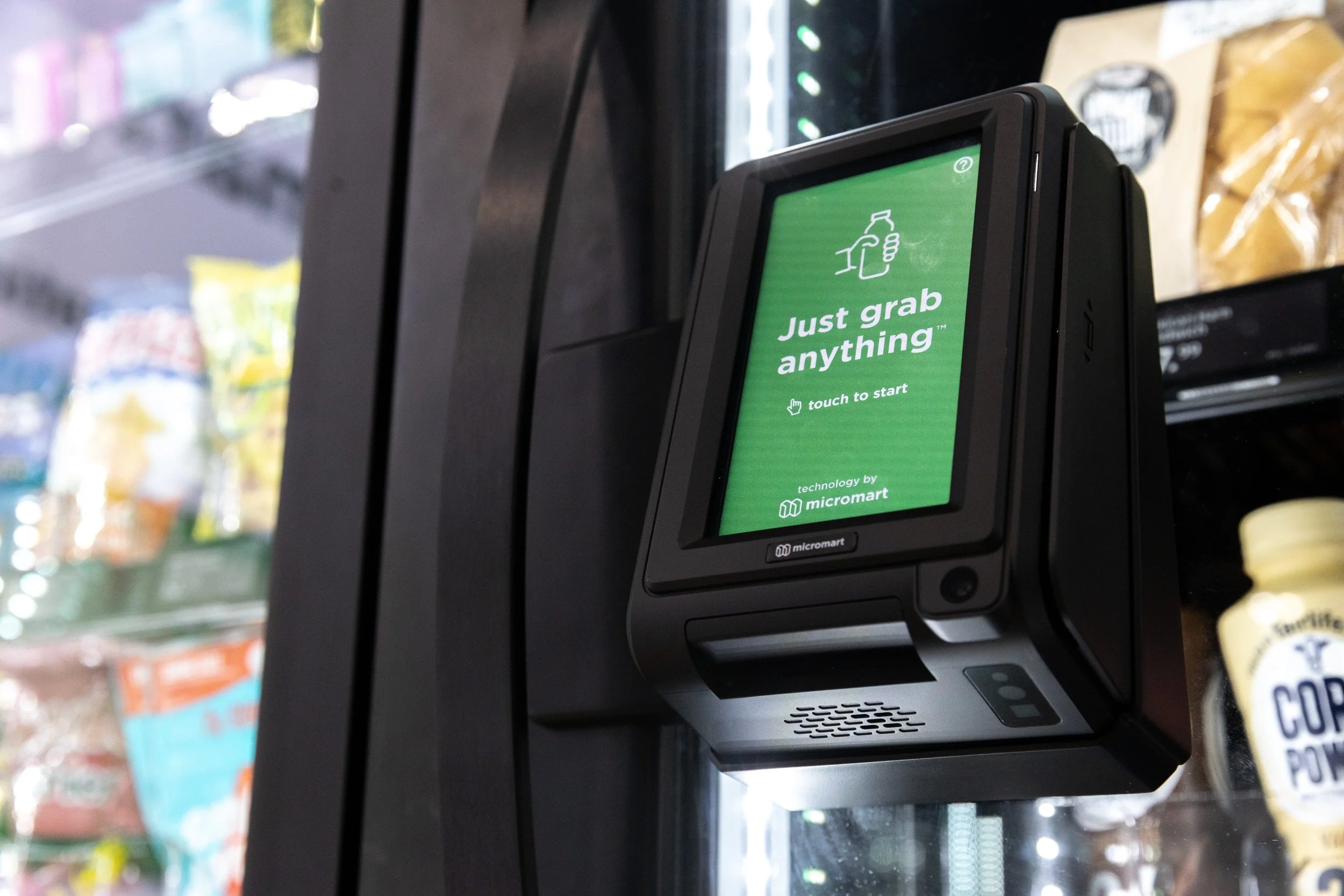
A micro market is a small self-serve setup: glass-front coolers and open shelving with self-checkout. Payment is cashless, so there is no cash sitting in your building and nothing to collect. People can see and pick up the product before they buy it, which is a meaningfully different experience from choosing a number off a keypad and hoping.
Practically, it also means the selection is not limited to what fits on a coil, and a jammed product is not a customer service event. Here is the full walkthrough of how it works.
What happens if something goes wrong
Three questions come up every time, usually from whoever handles risk rather than whoever wants the snacks.
Insurance
GrabNGo carries commercial general liability insurance at $1,000,000 per occurrence and $2,000,000 aggregate, and insures its own equipment. A certificate naming you as an additional insured is available on request, which is usually what your legal or risk team will ask for first.
Theft and damage
We bear the risk of loss from theft or vandalism. The exception is loss caused by the host's own personnel, guests, or contractors, and ordinary wear and tear is excepted as well. You are not being asked to insure our inventory or guard the equipment.
Complaints and refunds
We are solely responsible for customer service, transactions, and refunds. Support contact information is posted at the unit, so a charge dispute or a stale product goes to us and not to your front desk. Your staff has no obligation to handle any of it.
How to get started
The process is short because there is nothing to price out.
- Walkthrough. About twenty minutes on site to look at the space, the traffic, and the power.
- A straight answer. Whether a market fits, a single cooler fits, or nothing does.
- Agreement. One placement agreement, with the term and any elected revenue share filled in for your property.
- Install and stock. We deliver, install, and fill it. Your people start using it that day.
It helps to know two things before the walkthrough: roughly how many people are in the building and when, and where the nearest dedicated outlet is to the spot you have in mind.
Frequently asked questions
Is a free vending machine or micro market really free, or are there hidden costs?
There is no cost to the host. GrabNGo pays for the equipment, installation, product, restocking, servicing, cleaning, maintenance, support, and insurance, and removes the equipment at the end of the term at its own expense. What you provide is the space and a dedicated 120V outlet available at all times. Users pay for what they buy.
Does my property need a certain amount of foot traffic to qualify?
There is no published minimum, because the same headcount performs very differently depending on schedules, on-site days, and what is nearby. We look at your specific space and traffic before recommending a fit, and we will tell you if it is not one.
Do I get paid anything for hosting a market?
By default, no. GrabNGo keeps the revenue and the host receives none, with the amenity itself as the value. A revenue share can be negotiated and elected in the agreement, but no revenue or profit is guaranteed.
What happens if the equipment is damaged or something goes missing?
GrabNGo bears the risk of loss from theft or vandalism, except where it is caused by the host's own personnel, guests, or contractors, with ordinary wear and tear excepted. We carry commercial general liability coverage at $1,000,000 per occurrence and $2,000,000 aggregate and insure our own equipment, and a certificate naming you as an additional insured is available on request.
How long am I committed to, and how do I get out if it is not working?
Within the first 90 days, either party may end the agreement for any reason with 14 days' written notice. After that, either party may terminate for convenience with at least 45 days' written notice. The initial term is set per property and renews automatically in one-year increments unless either side gives 45 days' notice not to renew. There is no early-termination fee in the agreement.
If you have a wall, an outlet, and people in the building, the rest is our problem. The fastest way to find out whether it works at your property is to have someone look at it.
Or call (630) 864-5679, email info@getgrabngo.com, or request a walkthrough.
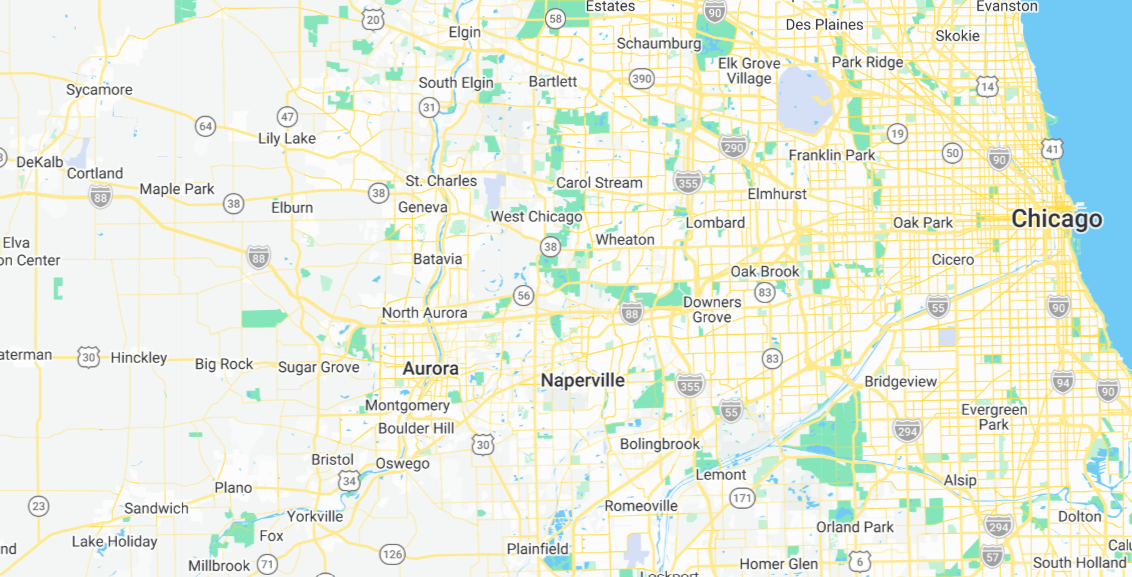
Owner and operator of GrabNGo. Joshua installs, stocks, and services every micro market himself across Aurora, Naperville, and the greater Chicago suburbs. More about GrabNGo